Unified Government of Wyandotte County

Indian Springs redevelopment nears $1 billion with updated plans.

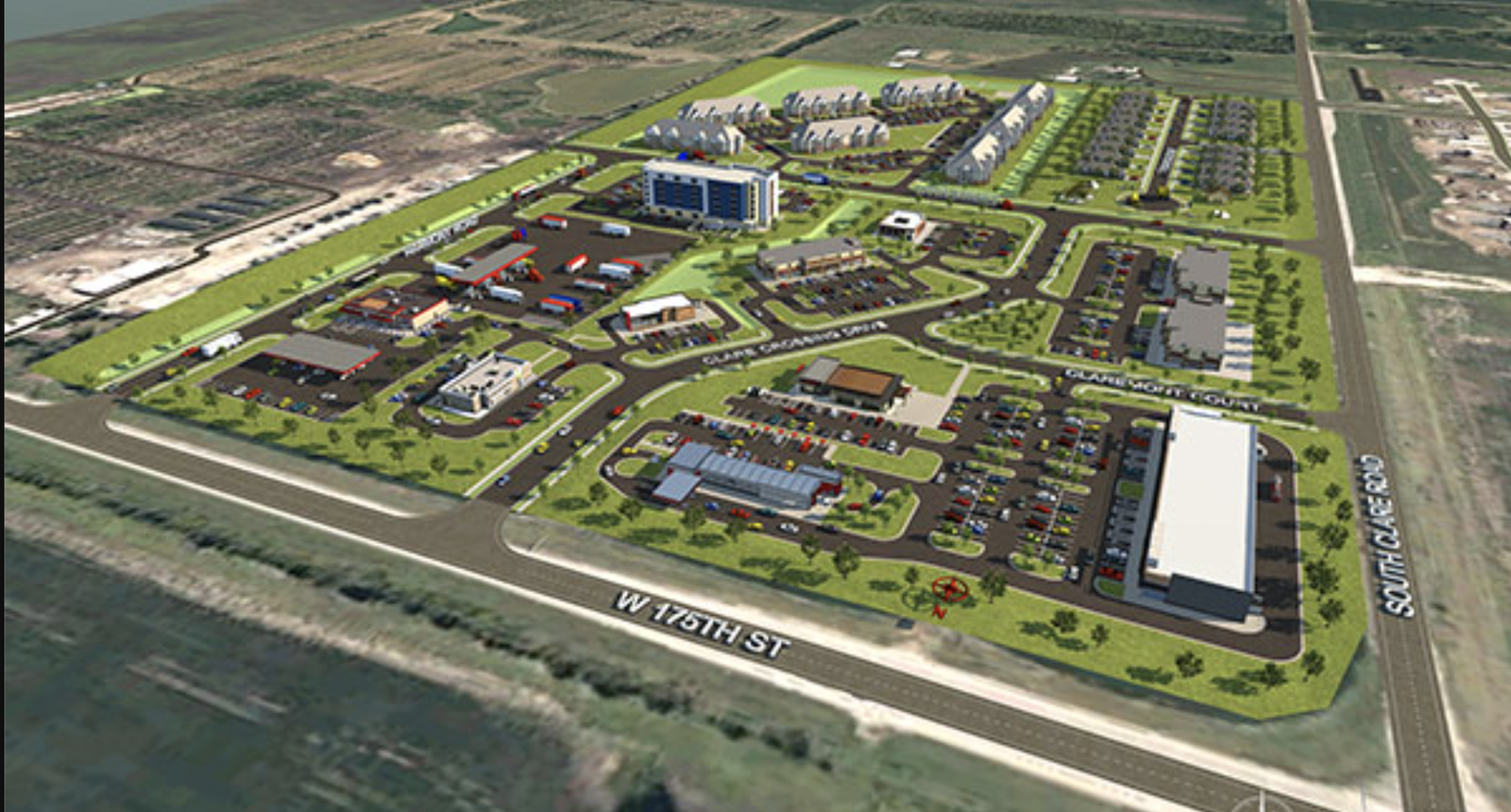
The redevelopment of the former Indian Springs Mall site in Kansas City, Kansas, led by Eastside Innovation Kansas LLC in partnership with Arnold Development Group, has entered a new phase of expansion and escalation in cost. The site, a 90-acre parcel near the intersection of Interstate 635 and Interstate 70, will be renamed Midtown Station and is envisioned as a vibrant, mixed-use destination encompassing residential, retail, sustainable infrastructure and transit-oriented amenities. 

Under the initial plan, the development was expected to include approximately 1,475 apartment units, 63 single-family homes and 150 townhomes, around 280,000 square feet of retail space, a 168-room hotel with conference facilities, a grocery store and a 30-acre solar microgrid powering the site. The projected cost at that time was up to $700 million. 

Recent reports, however, indicate the plan has grown in both scale and cost. As of November 2025, the estimated investment has increased to approximately $951 million. 

This reflects the added complexity and ambition of the project, including deeper commitments to sustainability, transit connections and inclusive housing. According to local coverage, the full build-out may extend over six to twelve years, depending on market conditions and partner negotiations. 

The redevelopment will remain oriented around transit, walkability and sustainability. The design leverages the site’s proximity to major highways and public transit hubs, while the inclusion of the solar microgrid and green building practices underscores its emphasis on future-proof infrastructure. Community stakeholders view Midtown Station as a long-awaited catalyst for renewal in eastern Wyandotte County, replacing the decades-old mall footprint that had become a symbol of decline. 

Approval of a formal development agreement with the Unified Government of Wyandotte County and Kansas City, Kansas is expected in early 2025, with construction slated to begin by mid-2025. 

As details continue to evolve, the expanded budget and enriched program signal a strong commitment by Eastside Innovation and its partners to deliver a transformative project that redefines the site’s future and its place in the region’s growth.


Header image: An aerial rendering of the Indian Springs Mall redevelopment, Midtown Station, in Kansas City, Kan. Image | Arnold Development Group

Revitalized Rock Island Railroad Bridge reimagines riverfront entertainment

 Revitalized Rock Island Railroad Bridge reimagines riverfront entertainment

FEATURED RENDERING CREDIT: MULTISTUDIO/GOULD EVANS

Taking transportation priorities skyward in Wyandotte County

Taking transportation priorities skyward in Wyandotte County

Aerial lift view from State Line Road and West 9th Street (for illustrative purposes only). Rendering credit: Skidmore, Owings & Merrill LLP.

Infrastructure funds connect KC with Google Fiber

“This project for me personally has been a game-changer, and as we’ve seen, it’s been a game-changer for Kansas City,” said Rick Usher, former assistant city manager at the City of Kansas City, Missouri, and founder of The Usher Garage LLC.

The project to which Usher was referring in his virtual presentation to KC Downtowners on September 8, was bringing Google Fiber to Kansas City.

Although it’s been a decade since Google Fiber chose both Kansas City, Missouri and Kansas City, Kansas as the first communities to get its digital symmetric gigabit-speed internet service, the region has an opportunity to apply lessons learned from the Google Fiber project to benefit from the federal infrastructure bill.

“This is really a once in a century opportunity for funding of projects of this scale, so how the cities reacted to Google Fiber, how we worked with them to build out the network, these are lessons learned that can be applied to moving forward as a region with this infrastructure bill,” said Usher.

In 2010, Google Fiber announced plans to build experimental, ultra-high-speed broadband networks and released its Fiber for Communities RFI.  A group of entrepreneurs at one of Kansas City’s co-working spaces (of which there were only two at the time), Office Port KC, began a response to the RFI.

Those entrepreneurs needed assistance and reached out to Cindy Circo, a member of the Kansas City Missouri City Council.  The request made its way to Wayne Cauthen, then the city manager of the City of Kansas City, Missouri, who assigned Usher to help facilitate the response. 

Usher said putting together the response to the RFI was a community-wide collaborative effort, with more than 117 participants contributing to the response.

Representatives from the Kansas City, Missouri proposal team first suspected that they might not be the only recipients of the Google Fiber opportunity when the receptionist at Polsinelli, where negotiations occurred, asked the Kansas City, Missouri city attorney if he was with the Unified Government of Wyandotte County.  

“So we at that point started seeing that it would be two Kansas Cities in this announcement,” Usher said.

On March 30, 2011, Google Fiber announced that it would be rolling out its fiber network in Kansas City, Kansas.  On May 17, 2011, Google Fiber made the award to Kansas City, Missouri.

Usher said there were discussions of a joint announcement.  But, Kansas City, Kansas was able to come to an agreement with Google Fiber more quickly because its Board of Public Utilities was essentially a city department; whereas, Kansas City, Missouri had to work with Evergy.

“On the Missouri side, we were working closely with Evergy, then Kansas City Power and Light, to assist them in really vetting and doing the due diligence on how a privately-held public utility would show benefit not only to the City and the Kansas City region but to their customers and their shareholders,” said Usher. 

Evergy entered an agreement with Google Fiber to allow use and access to Evergy’s utility poles and easements, which Usher said was crucial.

In September 2011, the then mayors of Kansas City, Missouri and Kansas City, Kansas formed the Bi-State Innovation Team, which was charged with figuring out how the region would be able to take advantage of this gigabit network opportunity that Google was bringing.  

“So we got a lot of experience then in how cities can share the right of way, share infrastructure.  As you can see now, Google Fiber and others are partnering with jurisdictions on cooperative agreements, public-private partnerships,” Usher said.

In 2012, Google’s executive chairman, Eric Schmidt, declared that the Google Fiber project was not an experiment, but was actually being run as a business.  Shortly thereafter, Google Fiber announced it was expanding to Austin, Texas, and then to other cities around the country.  

“Today we have 22 cities in the Kansas City region that have entered into agreements with Google Fiber,” said Usher.

Usher said the success of the region’s Google Fiber project serves as an example of the Kansas City region’s history of helping prove new ideas.

With respect to benefiting from infrastructure bill funds, Usher recommends that the region looks to more public-private partnerships with other internet providers to build out their fiber networks.

“We have a really unique situation I think in the Kansas City region on the number of internet providers we have, the quality of the services and the speeds that are offered. So partnering with them to assist any number of internet providers to complete the build-out of their gigabit infrastructure and their fiber infrastructure would be our best investment of those infrastructure dollars,” Usher said. 

Wyandotte County wins Homefield advantage

Wyandotte County wins Homefield advantage

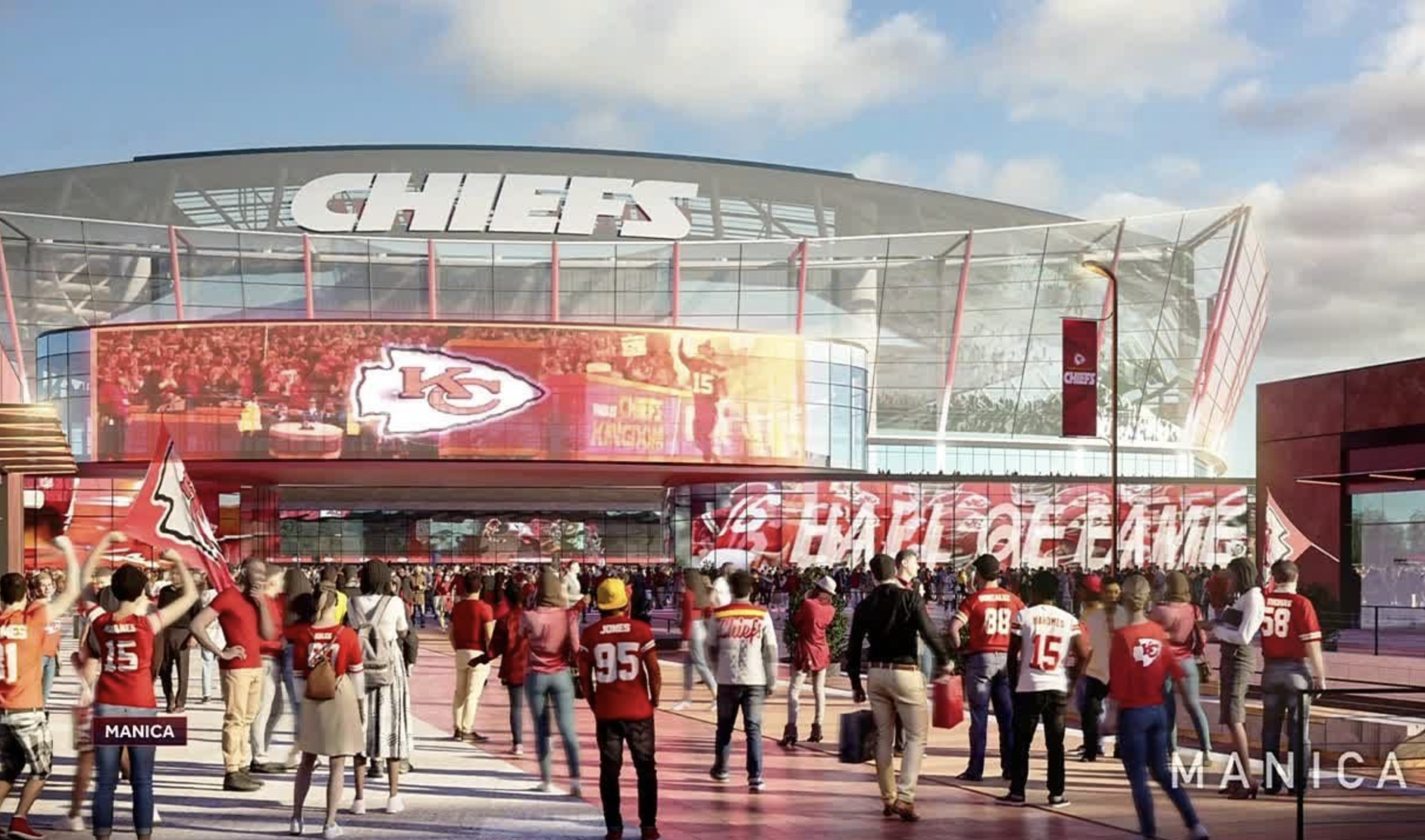
Image credit: Populous