MetroWire Media Kansas City

Royals Stadium debate pits economic promise against community pushback

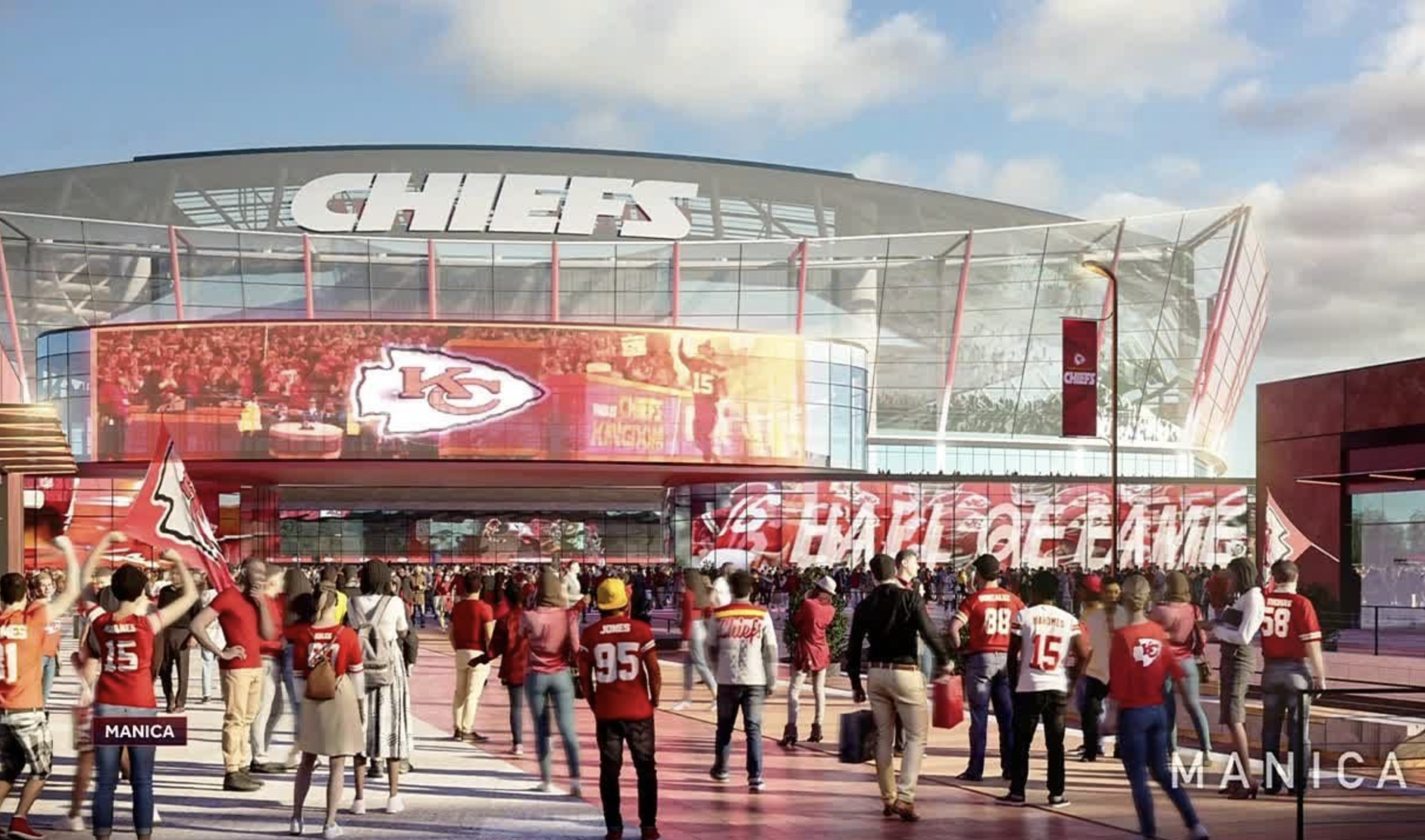
The Kansas City Royals are weighing three potential locations for a new ballpark as their lease at Kauffman Stadium approaches its end, but a growing wave of local opposition — most loudly voiced in Johnson County — has turned the search into a high-stakes political and economic tug of war.

Team officials have identified North Kansas City, a site just south of downtown Kansas City, and the Aspiria campus area in Overland Park as the primary options under consideration. The Aspiria site, near 119th Street and Nall Avenue, drew public attention after a Royals affiliate purchased the property’s mortgage as part of a broader site-evaluation process.

Supporters of a move point to potential economic benefits: a modern stadium could spur mixed-use development, increase hotel and restaurant business, and expand the region’s entertainment footprint, particularly if paired with residential and office projects that promote walkability and year-round use. Proponents say a thoughtfully designed ballpark can act as a catalyst for urban renewal and new tax revenues without forever burdening taxpayers.

But the proposal at Aspiria has encountered intense resistance from suburban neighbors and municipal leaders worried about traffic, neighborhood character and the loss of existing jobs. T-Mobile, which maintains a major presence at the former Sprint campus, warned it could relocate more than 3,500 employees if a stadium were built on the site, saying the campus cannot accommodate both a corporate workforce and a major-league ballpark. That threat has become a central talking point for opponents who say the immediate economic costs could outweigh long-term gains.

Leawood and other Johnson County communities have hosted town halls, organized petitions and issued formal letters opposing the Overland Park option, arguing residents were left with more questions than answers about traffic mitigation, public financing and the long-term master plan for the area. More than 1,300 signatures have been collected on a petition opposing a stadium at the Aspiria campus, and local elected officials have publicly registered their concern.

North Kansas City and the downtown site offer different trade-offs. North Kansas City supporters emphasize better connectivity to existing transit arteries, shorter commutes for many metro residents and the chance to integrate housing and retail around the ballpark. A downtown-adjacent location promises higher foot traffic and tourism synergies but raises familiar worries about displacement, parking strain, and whether increased development around a stadium will serve longtime residents or primarily outside investors.

State and local deadlines add urgency. Kansas and Missouri lawmakers have moved incentives into place, and advisory deadlines this winter and next year have focused attention on the timetable for a deal — elevating both public pressure and political risk for officials who must decide whether to back taxpayer support for infrastructure and transit improvements.

The Royals insist no final decision has been made and that they are continuing to evaluate options in both states, but the path forward will require negotiating a delicate balance: placating anxious suburbs, retaining major employers, protecting neighborhood character and building a venue robust enough to anchor future development. Whatever site is chosen, the outcome will reverberate beyond baseball — reshaping traffic patterns, employment locations and the economic map of the Kansas City region for decades. 


Header image: A rendering of a new Kansas City Royals stadium proposed just south of downtown Kansas City, Mo. Image | Kansas City Royals

Children’s Mercy moves forward adding new medical office building to Overland Park campus

City planners have given preliminary approval for Children’s Mercy to add a four-story medical office building and lobby extension to its Overland Park hospital campus, a move officials say will consolidate outpatient services, add parking, and support a wider $152 million expansion of the facility.

The Overland Park Planning Commission this summer unanimously approved a revised development plan and forwarded the proposal, which covers the site near 5808 West 110th St, to the City Council with conditions that address stormwater, signage, mechanical screening, and pedestrian access.

Hospital officials have said the office building is a central element of the system’s multi-phase program to modernize the Kansas campus, consolidate outpatient clinics now scattered across multiple locations and free up space inside the hospital for renovated inpatient and procedural services. The health system announced the broader $152 million project in April, describing the medical office building as part of work that also includes surgical upgrades, new service offerings and exterior and parking improvements.

Children’s Mercy’s public materials and local news reports say the new outpatient facility is intended to create a more seamless experience for patients and families and to concentrate specialty clinics and administrative offices that currently occupy a variety of sites. Project schedules published by the hospital indicate the medical office building is slated to open in the summer of 2027, with other campus renovations rolling into 2029.

The planning documents submitted to the city include site maps, stormwater studies and design standards that will guide the next stage of approvals; they require the hospital to resolve engineering and landscaping details before a building permit is issued. Those conditions are typical for campus expansions that abut established neighborhoods and major arterials, city staff wrote in a companion report.

If the City Council approves the plan, the project will move into final development review and permitting. Hospital leaders have framed the work as an investment in regional pediatric capacity, saying improvements at Overland Park will benefit families across Kansas while complementing Children’s Mercy’s larger system campuses. 


Header image: A rendering of the preliminarily approved new four-story medical office and lobby extension of Children's MercyOverland Park, Kan. Image | Children's Mercy credit: HDR

Kansas City TIF Commission approves $484 million redevelopment plan for historic Scarritt Building

Kansas City’s Tax Increment Financing (TIF) Commission has approved backing for a roughly $480 million redevelopment plan that would transform the Scarritt Building, a historic downtown skyscraper, into a mixed-use complex featuring a luxury hotel, apartments, retail, and a music venue.

Under the plan, the Scarritt Building at 818 Grand Boulevard would be adaptively reused as a 167-room destination hotel branded by Universal Music. The broader project, located on the 800 block of Grand Avenue, would also include a residential tower with 319 multi-family units, about 28,000 square feet of ground-floor retail, and a 1,400-seat music and entertainment venue.

Port KC, the public development authority driving the project, approved the resolution to issue up to $480 million in taxable revenue bonds to support the development. Construction is expected to take place in two phases over roughly five years, with work on the Scarritt Building renovation slated to begin in 2026.

The Scarritt Building, completed in 1907, is one of downtown Kansas City’s oldest skyscrapers. It has been largely vacant in recent years but carries historic significance, having been added to historic registers.

The redevelopment effort seeks to pair preservation of the landmark building with catalytic growth for the surrounding Grand Corridor. Officials argue that restoring the Scarritt Building — alongside new housing, retail, and entertainment — aligns with broader goals of revitalizing the city’s core and driving long-term economic vitality.

If all goes according to plan, the development could bring new residents, visitors, and cultural amenities to downtown Kansas City, anchored by the historic Scarritt Building and powered by modern investment.


Header image: An aerial rendering highlighting the historic Scarritt Building at 818 Grand Blvd. in the Grand Corridor of downtown Kansas City. Image | Hoefer Welker

Country Club Plaza owners file Master Plan, detailing vision for revitalization

The new owners of the Country Club Plaza have filed a comprehensive master development plan with the City of Kansas City, outlining a long-term vision to preserve the district’s historic character while reshaping its future as a modern, mixed-use destination.

Submitted by Gillon Property Group, the master plan serves as a roadmap for improvements over the next 10 to 20 years across the landmark shopping center. It aims to balance the Plaza’s century-old charm with new investment, evolving retail trends, and growing demand for residential and office space in Kansas City’s urban core.

At the heart of the plan are five guiding goals: enhancing the public realm, improving walkability, promoting a mix of uses, allowing flexibility in redevelopment, and maintaining the Plaza’s iconic Spanish-Mediterranean architecture.

Proposed updates include wider sidewalks, expanded outdoor seating, and reconfigured streets to make the area safer and more pedestrian-friendly. The plan also calls for more green space, community gathering areas, and event programming designed to increase year-round activity. Vehicle traffic would be reduced or redirected in select areas to create a more pedestrian-focused environment.

The redevelopment framework envisions a broader mix of uses beyond retail, with space reserved for offices, hotels, and potential residential projects. Building height limits ranging from 200 to 275 feet would ensure that new construction remains compatible with the district’s existing scale and architectural identity.

In addition to preserving the Plaza’s terra cotta facades, tile roofs and ornamental details, the proposal outlines a phased approach to investment — beginning with immediate improvements to streetscapes and landscaping, followed by longer-term adaptive reuse and infill development.

City officials will now begin reviewing the plan, which will include opportunities for public input and further refinement. Community meetings are expected later this year before the plan moves to the Kansas City Planning Commission for consideration.

The submission represents a significant milestone for one of Kansas City’s most recognizable destinations, signaling a commitment to revitalization that honors its past while adapting to new patterns of how people live, work, and shop. If approved, the plan could guide the Plaza’s evolution well into the next generation.


Header image: A rendering showing some changes proposed in the latest master plan for the Country Club Plaza in Kansas City, Mo. The plan highlights less retail and more green space for visitors. Image | Charter Holdings

Flight to Quality, Fractional Spaces & the World Cup Effect: Key Takeaways from MetroWire’s Retail-Office Summit

Kansas City, Sept. 23, 2025 — In a packed room on a rainy fall morning, MetroWire’s Retail-Office Summit convened top voices from Kansas City’s commercial real estate community to tackle a central question: What will define successful office and mixed-use projects in the next 3–5 years?

The consensus: tenants are demanding more—better design, more flexibility, curated amenities—and developers must rethink fundamentals to deliver in a market reshaped by COVID, rising construction costs and global events like the 2026 World Cup.

From Flex to Flight: The New Office Tenant Playbook

Tom Ward (Kessinger Hunter) kicked off with a market reality check: while early pandemic shifts saw tenants push for shorter, more flexible leases, today’s rising construction costs have reversed that trend. Tenants are now locking in longer terms, especially in Class A office spaces that offer modern amenities, walkability and energy.

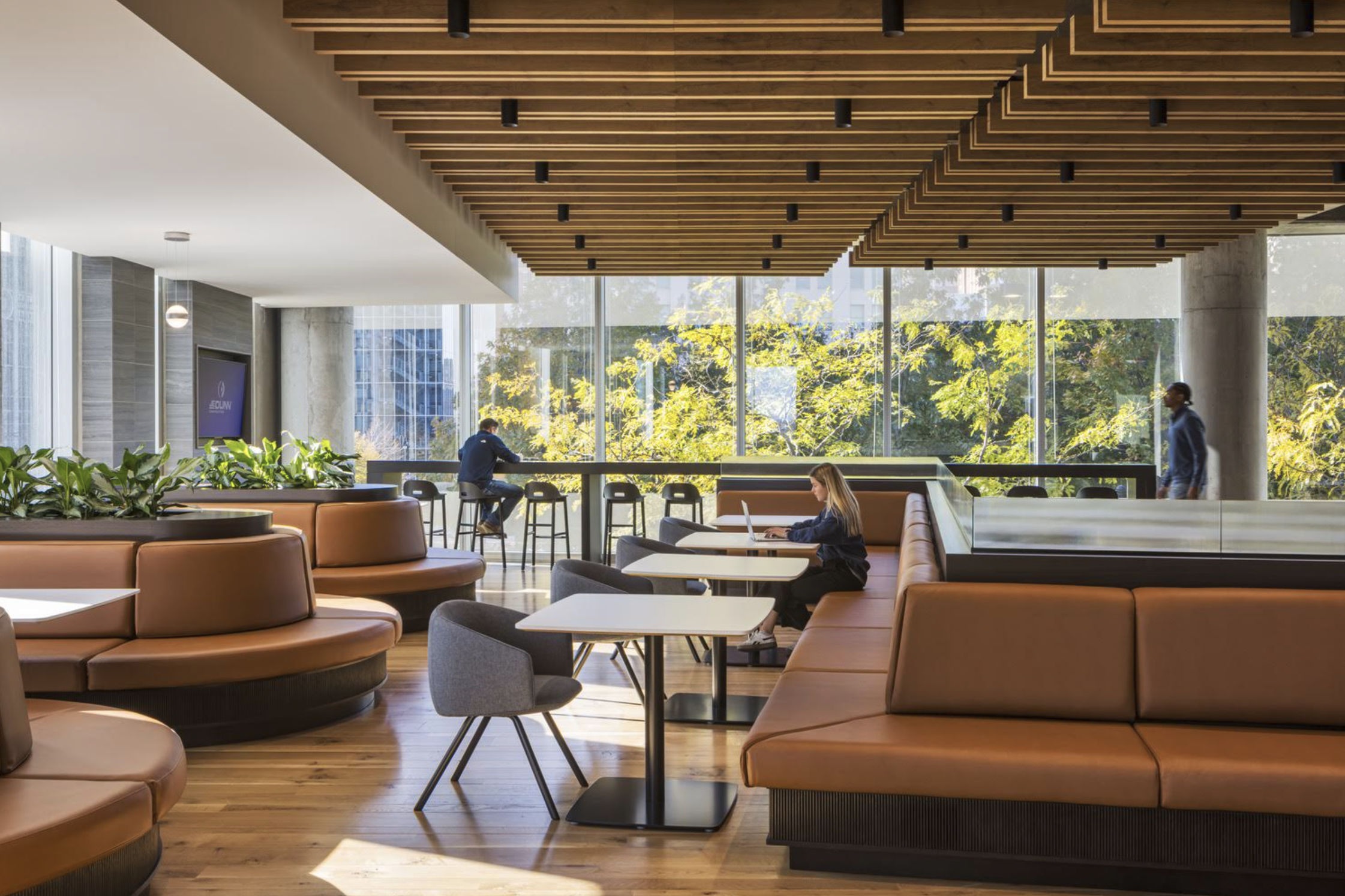
“Flight to quality” remains dominant. Tim Ockinga (JE Dunn) added that landlords must now build spaces better than home offices to win talent back. That means open collaboration zones, cafes, on-site fitness with active programming, and ample “third places” within the office.

Andrew Brain (Brain Group) observed growing interest in fractional-use spaces — shared training rooms, conference suites and drop-in work zones that tenants can access without paying for full-time occupancy. His Park 39 project is now 98% leased, up from 50% pre-COVID, driven by flexible usage models.

Repurposing & Suburban Shifts

Ward noted that while C-class buildings continue to struggle, B-class space remains competitive in suburban markets. Urban locations are seeing selective conversions to multifamily, especially where tax credits are available.

On the construction side, Ockinga cited JE Dunn’s pivot to prefab manufacturing as a way to combat labor shortages and inflation. “Labor is the top constraint,” he said. “We’re innovating by building offsite in controlled environments—it’s safer, more efficient, and helps balance limited skilled workforce.”

Programming, Retail Synergy & Amenity Wars

Audrey Navarro (Clemens Real Estate) highlighted the value of retail as placemaking. Coffee shops, plazas and pop-up spaces help lease-up velocity in new mixed-use developments, especially in emerging submarkets.

But she stressed that it’s not just design; it’s about programming. Landlords like Corporate Woods are hiring staff to activate common spaces with workshops and community events, borrowing tactics from multifamily to boost tenant retention.

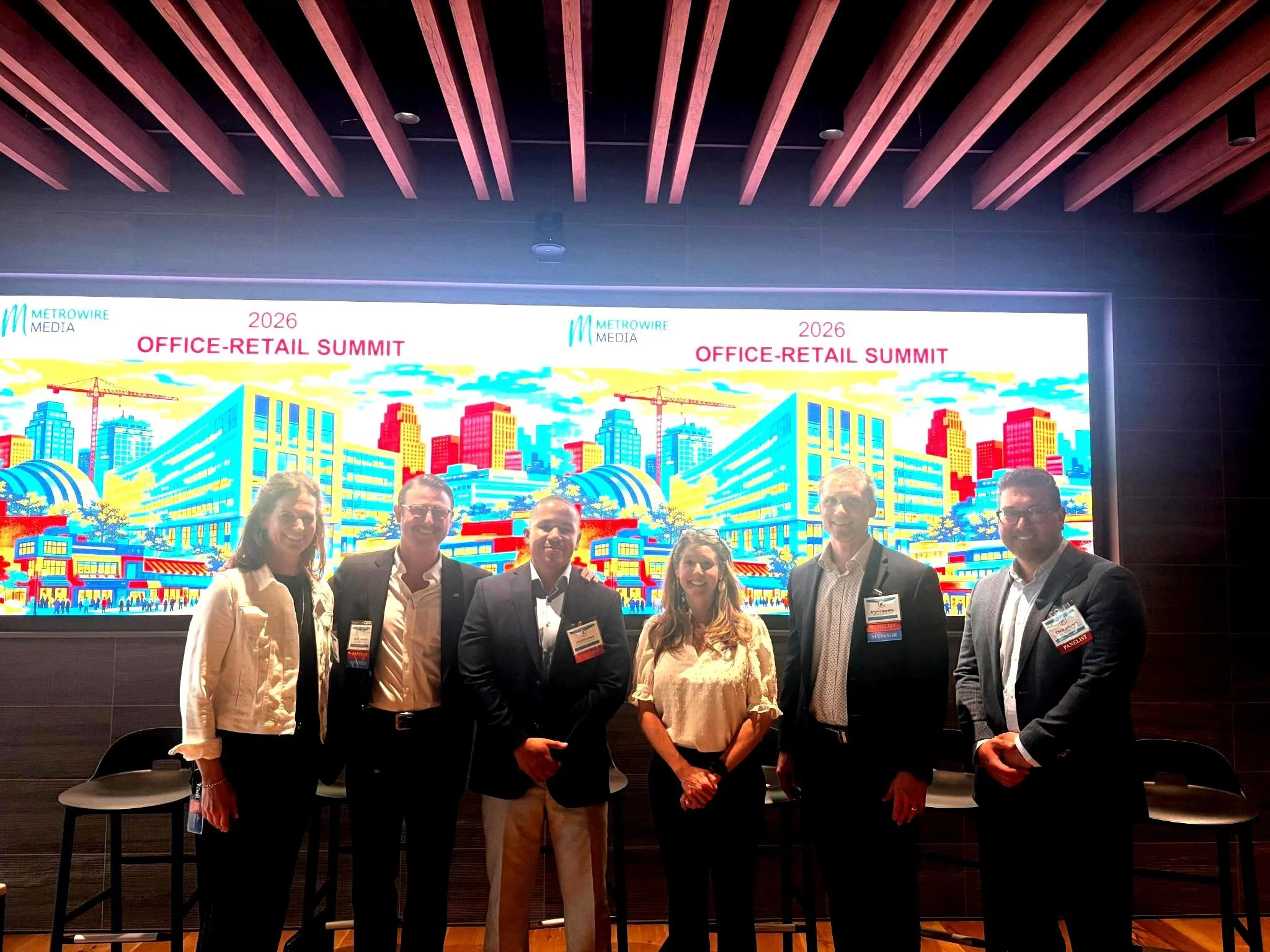
Above: Attendees of the MWM KC RETAIL + OFFICE SUMMIT networking before the panel discussion.

Capital Stacks & Creative Financing

Brain was blunt: “Office is a four-letter word to lenders right now.” His firm is front-loading equity—75% or more—on new deals while seeking nontraditional financing paths. Navarro shared a compelling recent deal on the Plaza where a seller, driven by legacy rather than returns, offered 2% seller-financing to achieve his desired valuation.

Where Economic Development Meets Real Estate

Samantha Jefferson (Kansas City Area Development Council) emphasized that company relocation decisions are increasingly tied to culture fit. Suburban settings appeal to distributed workforces; urban neighborhoods win with lifestyle and walkability. The key, she said, is matching space to company DNA.

She also noted the KCADC’s growing role in positioning Kansas City to national and international firms, especially ahead of the 2026 FIFA World Cup, which she called a “worldwide commercial for our region.”

Looking Ahead: 2026 and Beyond

Panelists were asked to forecast the next 3–5 years in office and retail:

  • Ward: Flight to quality will continue. As interest rates ease, Class A leasing and development will pick up.

  • Brain: Fractional space and flexibility will be key. Landlords must add shared-use environments to compete.

  • Navarro: Kansas City must avoid a one-size-fits-all approach. Success will come from diversity of inventory.

  • Ockinga: Corporate buildouts are on the rise again. Large tenants are ready to reinvest in headquarters space.

  • Jefferson: The key to long-term growth? Talent. Kansas City must continue producing a skilled, accessible workforce.

The final word came on market activity expectations. Most panelists predict moderate gains in leasing and transactions in 2026, spurred in part by the World Cup and improving capital conditions.

Next Up at MetroWire: The Industrial Summit, Oct. 30, will explore trends shaping KC’s booming logistics and manufacturing landscape.


Header image: The 2025 MWM Retail + Office Summit panelists from left to right–Tom Ward, Beck Johnson (Moderator), Samantha Jefferson, Tim Ockinga, Audrey Navarro, Andrew Brain, and Russ Pearson with BoxDevCo Real Estate at the podium.