Sports Development

Wyandotte County faces a crowded incentive landscape as Chiefs stadium talks intensify

Kansas politics and local development buzz have converged in an unprecedented way: the Kansas City Chiefs’ potential move across state lines has turned Wyandotte County and neighboring cities like Olathe into arenas for competing economic incentives. What began as a singular bid for an NFL stadium has mushroomed into a complex web of STAR bond districts, municipal tax pledges, and fierce negotiations involving key decision-makers and business partners statewide.

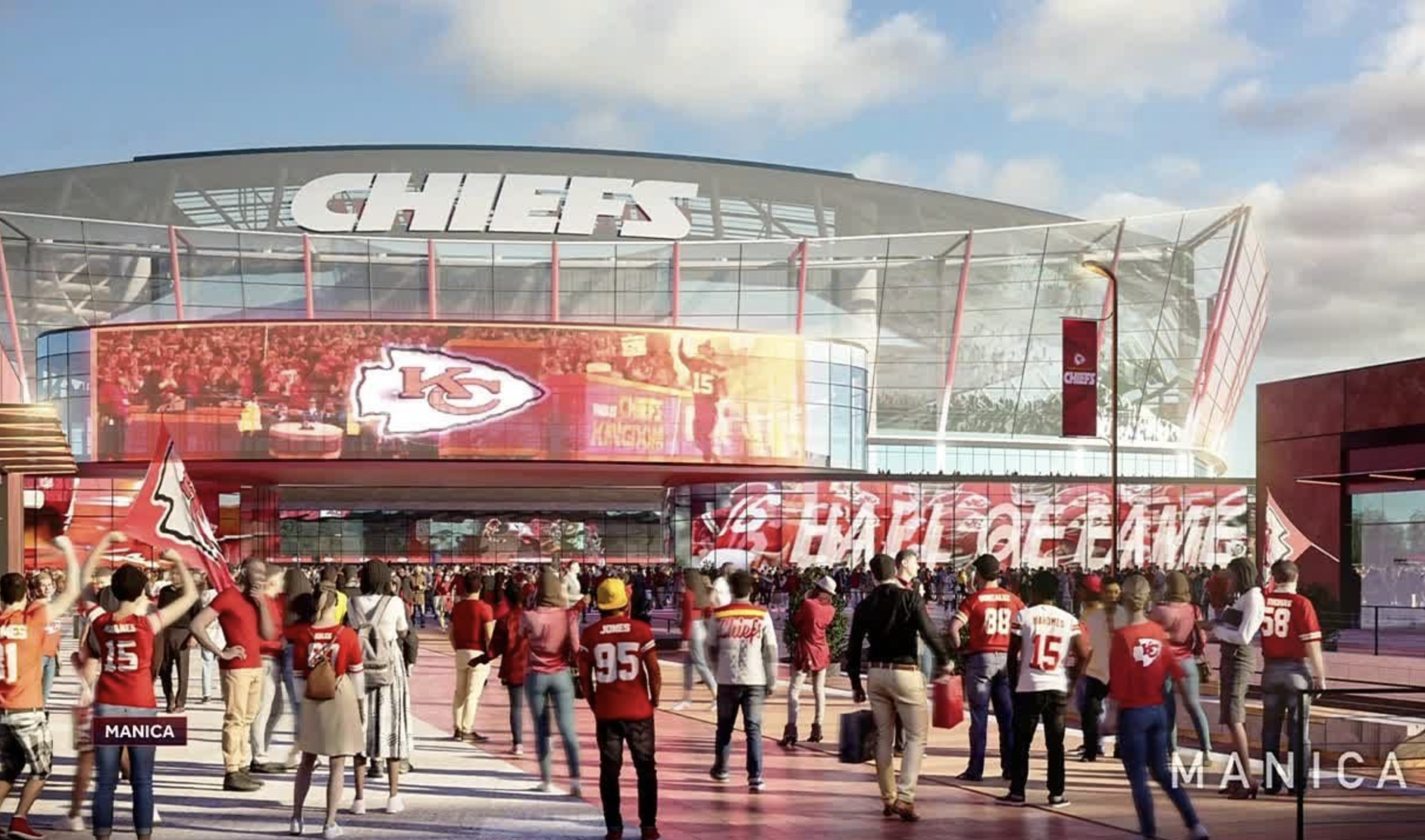
At the heart of the effort is a massive plan to build a $3 billion domed stadium in Wyandotte County, paired with a new Chiefs headquarters and training facility in Olathe, Johnson County — a project with total development costs approaching $4 billion. The state of Kansas and the Chiefs organization negotiated a public-private partnership that uses STAR (Sales Tax and Revenue) bonds to finance up to 60 percent of the public portion of the work, with the team covering the remaining share. STAR bonds allow public sales tax generated within a designated district to be used to repay bondholders without creating new tax levies on residents.

In Wyandotte County, the Unified Government (UG) of Wyandotte County and Kansas City, Kansas, has held spirited hearings on an ordinance that would establish a STAR bond district stretching more than 200 acres between 118th and 126th streets. Under the proposal, Wyandotte County would pledge future local sales tax, part of county sales tax, and up to 8 percent of transient guest taxes collected in the district toward bond repayment for up to 30 years. A key figure at recent hearings was Todd LaSala, outside development counsel for the UG, who outlined the financial mechanics and conditions for local participation.

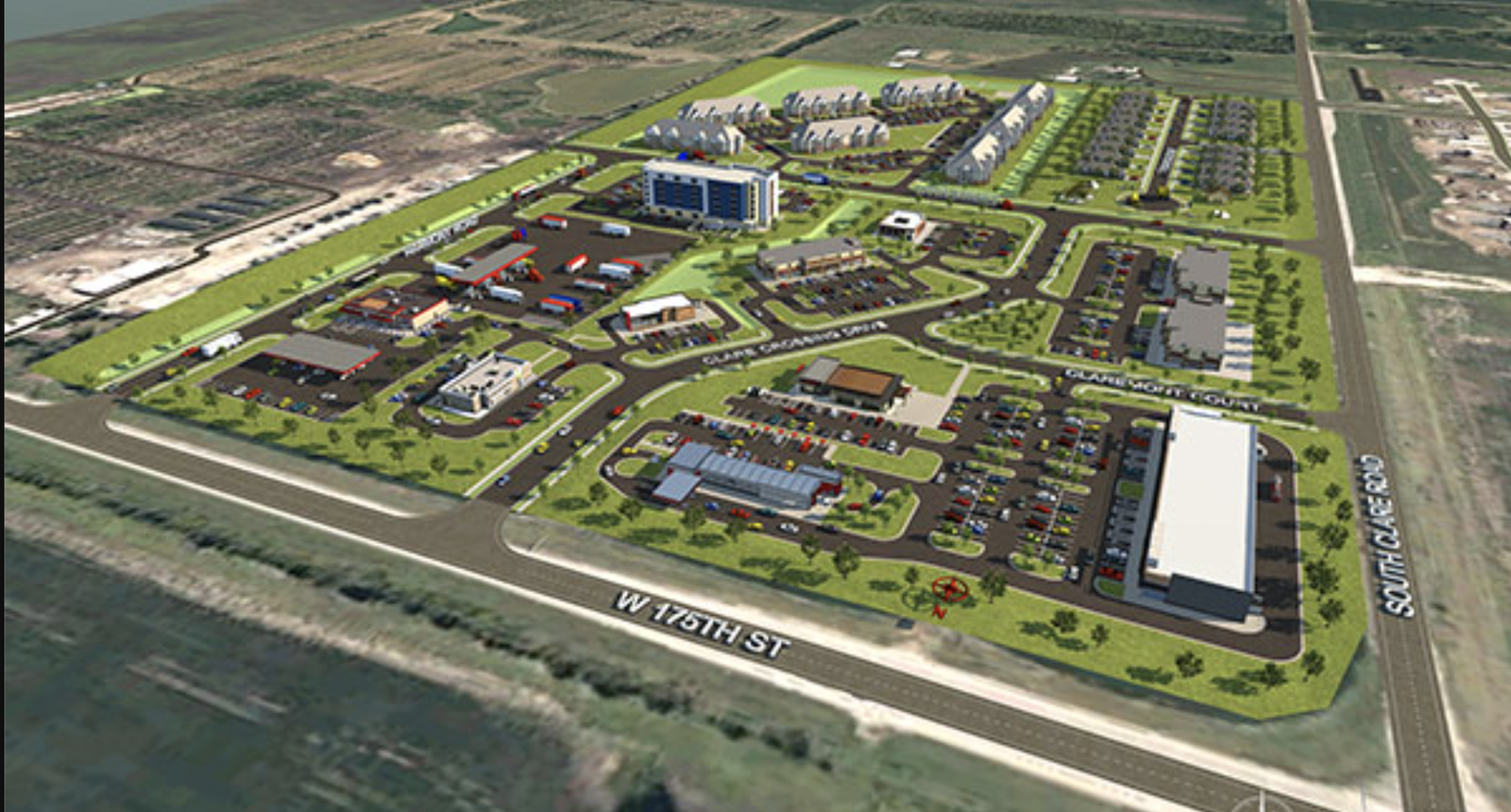
Meanwhile, in Olathe, city leaders have moved aggressively on their piece of the Chiefs puzzle. The Olathe City Council voted unanimously to pledge local sales and hotel tax revenue from a 165-acre development site at College Blvd. and Ridgeview Rd. to support STAR bonds for the Chiefs’ headquarters and practice facility. As part of that plan, Olathe would redirect 1 percent of city sales tax and portions of county and hotel taxes generated in the “base revenue area” toward bond repayment. This commitment stretches up to three decades but avoids raising existing tax rates. Mayor John Bacon and council members championed the measure as a catalyst for jobs and long-term economic growth, even amid vocal public debate.

The Chiefs organization, led by Chairman and CEO Clark Hunt, has signaled strong support for both STAR bond districts, making clear that local incentives were a crucial part of the overall agreement with the state. Gov. Laura Kelly and state legislative leaders also played central roles in crafting the incentive framework, including the use of Kansas’s Attracting Professional Sports to Kansas Fund alongside STAR bonds to sweeten the deal without imposing new statewide taxes.

For Wyandotte County and its neighbors, this isn’t just a stadium bid — it’s a test of economic strategy under pressure. With multiple communities pledging future tax revenues and public hearings drawing packed rooms, the Chiefs project has become a catalyst for reconsidering how incentives are used, who pays the price, and how long the benefits must be weighed against competing development needs. 


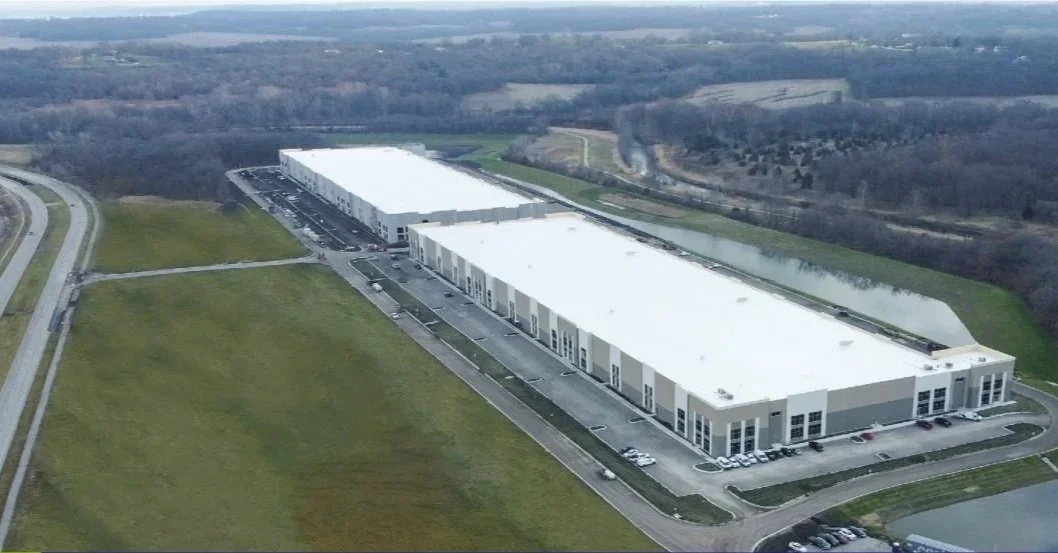
Header image A rendering of a domed Kansas City Chiefs stadium in Wyandotte Co., Kansas. Image | Manica Architecture
KC Current stadium brings new life to Riverfront

KC Current stadium brings new life to Riverfront

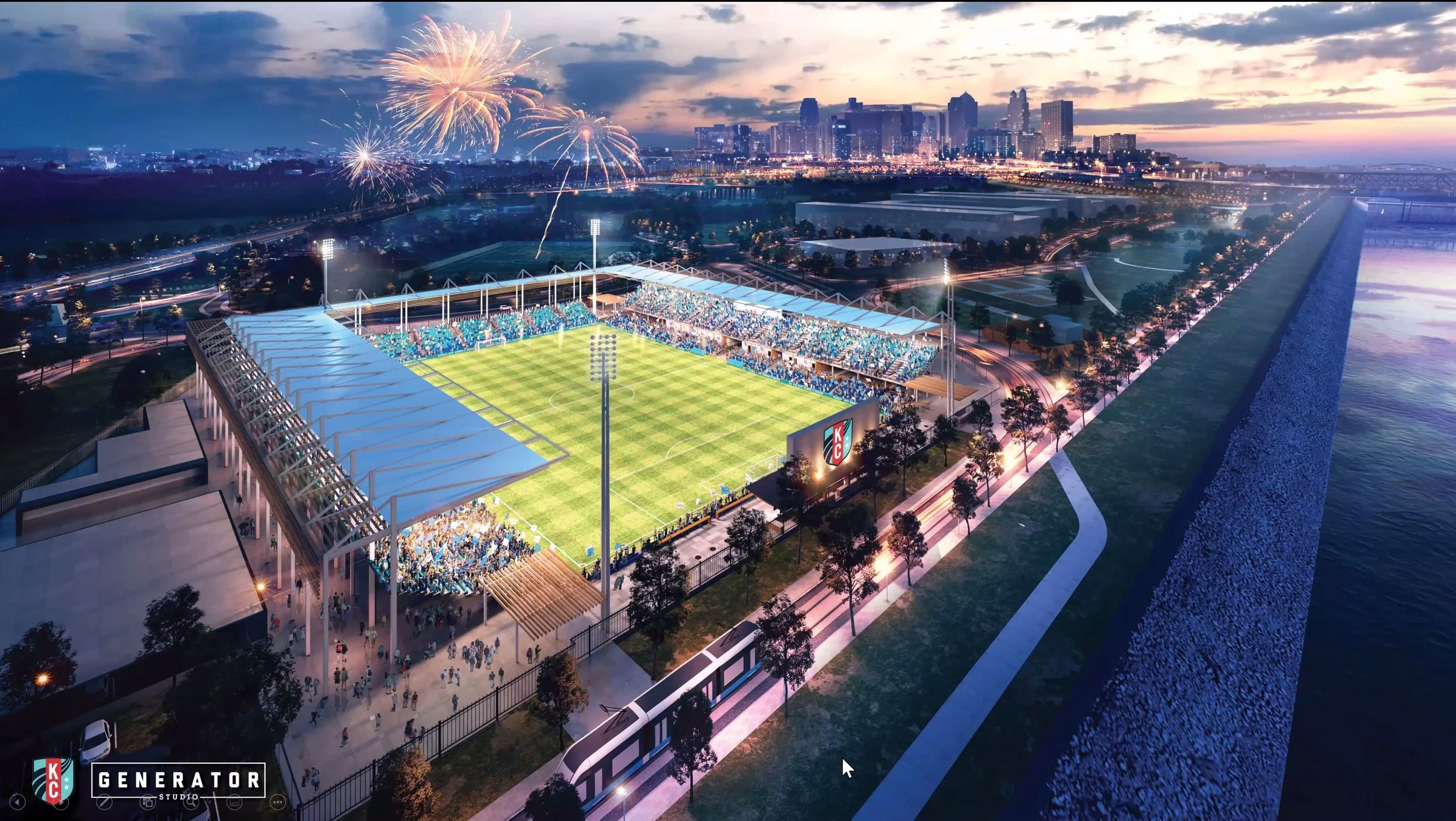
Image credit: Generator Studio.

KC design firms lead collegiate esports guidelines

KC design firms lead collegiate esports guidelines

Populous and Henderson Engineers designed the state-of-the-art Esports Stadium Arlington which opened in November 2018. The $10 million, 2,500-seat facility is the largest and most flexible esports facility in North America and was converted inside an existing convention center in collaboration with the City of Arlington (Texas). Spectators in the photo watch a Counter-Strike: Global Offensive (CS:GO) match during the Esports Championship Series presented by FACEIT. Photo Credit: Ross Stewart, courtesy of Populous and Henderson Engineers

Populous helps lead national esports movement

In a nod to what is being called the “next generation consumer,” Kansas City-based Populous is teaming up with Comcast Spectacor and The Cordish Companies to build Fusion Arena, a $50 million esports and entertainment venue in the heart of the Philadelphia Sports Complex. 

“Fusion Arena represents a watershed moment for the competitive gaming market,” said Populous Senior Principal Brian Mirakian. “We’re taking our 36 years of designing iconic experiences for traditional sports- settings like Yankee Stadium- and applying those same principles of design to the virtual world of gaming.”

The future home to the Philadelphia Fusion esports franchise will have seating for up to 3,500 guests and will serve as the “western hemisphere’s largest ground-up, purpose-built esports venue,” according to a release. 

Earlier this month, Mirakian spoke at SXSW and discussed how esports venues can bring cities and sports teams new revenue streams, increased commerce and development and reinvigorated neighborhoods. 

The rise of esports development and design was a big topic for panelists at MetroWire Media’s Game On event covering sports and entertainment development and design on March 7.

“Esports is exploding as more universities starting to offer scholarships,” said James Dietz of Henderson Engineers, which served as the low-voltage engineering firm of record for the Esports Arlington Stadium. “These facilities require high connectivity and people are starting to look at a specific sport and turn it into more of a fan experience for video gamers out there.”

Overland Park-based Dimensional Innovations also is seeing more opportunity in esports, particularly on college campuses. “We are working on two university gaming/training facilities, so there is definitely a strong trend in that marketplace,” added DI co-founder Justin Wood

Populous’ Philadelphia venue will incorporate industrial materials that pay tribute to that city’s heritage as “workshop of the world” and will include a 6,000-square foot public entry and 2000 square feet of interactive media hovering 30 feet above. 

In addition to hosting competitive gaming events and elite training, the arena will be designed to host a variety of live entertainment programming and experiences, offering unique seating experiences such as balcony bars, club seats with USB ports, flexible loge boxes and exclusive suites. Additionally, nearly 10,000 square feet will be dedicated to a training facility, broadcast studio and team offices. 

“Fusion Arena will set the gold standard for competitive gaming and debut on one of the country’s most exciting platforms of sports and entertainment...” said Blake Cordish, Principal of The Cordish Companies, which also served as master developer of the Kansas City Power & Light District.  

Game On takeaway: 'Were all technology firms. We just don't know it yet'

The Kansas City region's internationally acclaimed sports construction and AEC industry was the topic of MetroWire Media's Game On Sports and Entertainment Event on Thurs., March 7 at Children's Mercy Park. 

Here are some highlights from our star-studded lineup:

"The conversations we used to have are so outdated, it's amazing. Every year the conversation changes... The stuff that Silicon Valley is developing now will hit the sports industry in a couple years and it will blow your mind." -Andy Heitmann, VP Construction, Turner Construction.

"We're all technology firms. We just don't know it yet... Technology is impacting everything we do... From security to fan engagement, it's driving the fan and athlete experience." -James Dietz, AVP, Henderson Engineers.

“We have spent a lot of time developing sponsorship integrations that create great fan experiences. The idea is that venues and teams have opportunities within the built environment to tell stories using sponsor dollars as opposed to team’s dollars.” -Justin Wood, Partner, Dimensional Innovations

"The most important thing we can do is to create adaptable frameworks for buildings... 5G is on the way and that will transform the experience." -Kelly Holton, senior designer, Populous

"Engaging people with the live experience is our focus and challenge." -Jeff Sittner, Burns & McDonnell Sports Design Build team leader

"How do we take what we know about the fans and deliver what they want? It begins with knowing who is in the building." -Jason Houseworth, President, FanThreeSixty.

Special thanks to Sporting KC Executive Vice President John Moncke for serving as guest speaker and to our Platinum Sponsor, Turner Construction.

Click here to view a slideshow of our Game On event!