MWM Kansas CIty

Mixed-use development seeks to add new energy to Gardner’s industrial edge

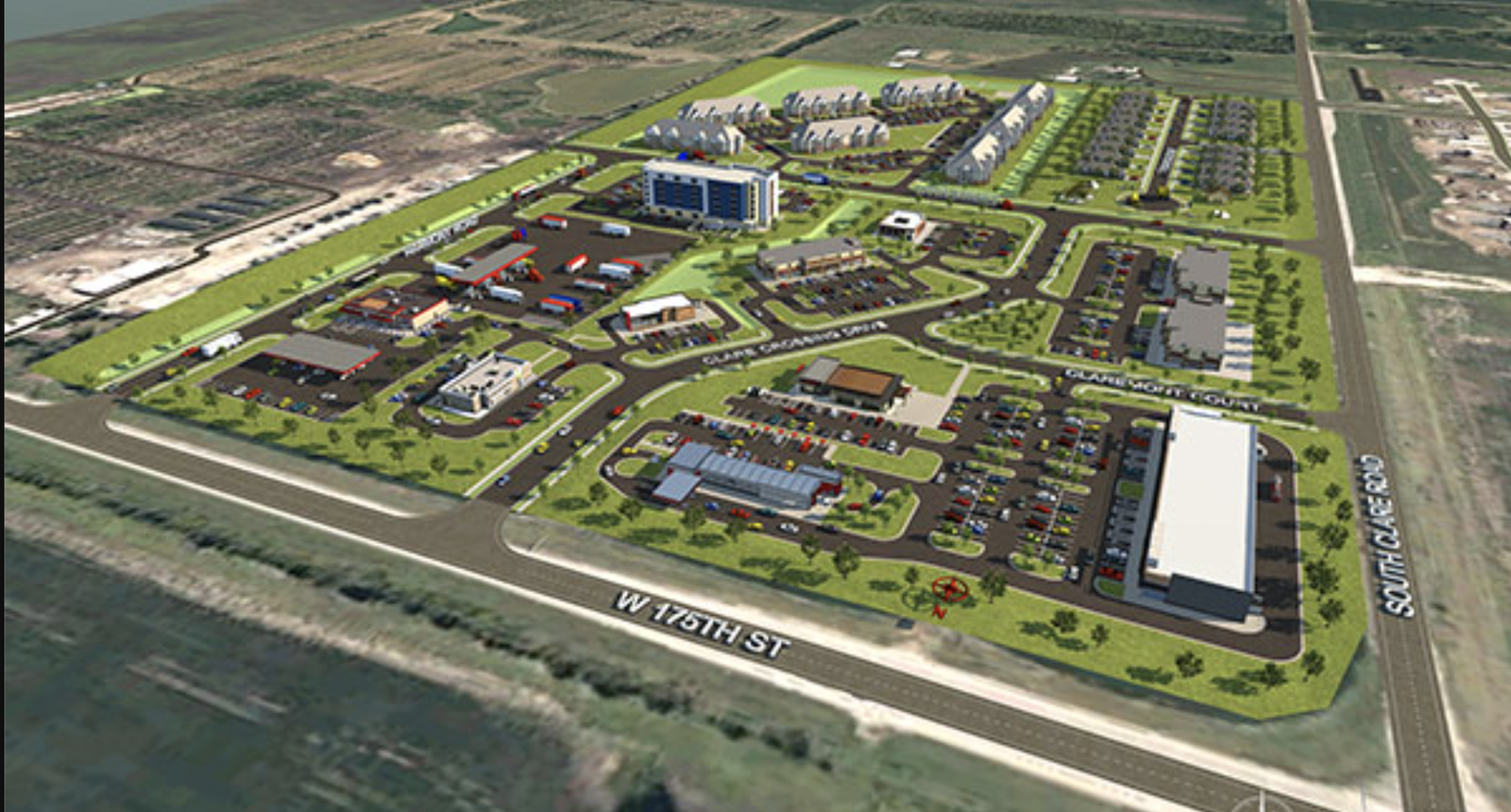
A long-stretch of industrial warehouse properties along the I-35 corridor in southern Johnson County is poised for a dramatic transformation, as developer Block & Company, Inc., Realtors and partners unveil plans for a mixed-use retail and rental housing development that could redefine a historically industrial section of Gardner.

The project, dubbed Clare Crossing, spans roughly 58 acres at the southeast corner of 175th St. and South Clare Rd., with immediate access to Interstate 35, positioning it within one of the region’s most rapidly growing suburban markets. The area has long been dominated by logistics, distribution, and manufacturing buildings due to its connectivity and flat parcel layouts, but retail and residential options have been sparse east of I-35 — until now.

Block & Company is teaming with Acclivity Capital, a Colorado-based development firm, to bring the vision to life. Retail offerings are expected to include a mix of drive-through and sit-down restaurants, small-shop space, automotive services, hotels, and complementary uses such as gas stations or medical offices. All pad sites are being marketed for lease, sale, or build-to-suit, giving flexibility to potential tenants and investors.

A key piece of the design includes a residential component developed by Mill Creek Residential Trust LLC, a national rental housing company. Mill Creek plans to build a 247-unit build-to-rent townhome community featuring two- to four-bedroom units averaging about 1,727 SF. The rental homes will offer private entrances, attached garages, and community amenities like a swimming pool, fitness studio, and landscaped courtyards.

Financial backing for the project includes participation from All Pro Capital LLC, which brings nearly two decades of real estate investment experience and an asset portfolio valued at about $1.8 billion, and Arvest Bank, a regional lender serving Arkansas, Kansas, Missouri, and Oklahoma.

The development comes as southern Johnson County continues to attract population growth and industrial investment, with job creation in logistics and manufacturing generating daytime demand for shops and services. Clare Crossing’s mix of retail and housing is intended to support that growth while offering a new neighborhood feel in a part of Gardner long defined by warehouses and truck traffic.

Planners say the project could act as a catalyst for additional commercial and residential investment along the I-35 corridor, bringing needed amenities to workers, residents, and visitors alike. Construction timelines have not been publicly released.


Header image: A rendering of Clare Crossing, a new mixed-use development moving forward in south Johnson County, Kan.Image | Block & Co, Inc. credit Driggs Design Group, PA

Parade Park’s next chapter is a bold vision for affordable and modern housing

Parade Park Homes, established in 1963, holds a significant place in Kansas City's history as the city's oldest Black-owned housing cooperative. Situated near the historic 18th and Vine District, the complex originally featured 510 townhouse units, providing affordable housing and fostering a sense of community among its residents. 

Over the years, Parade Park faced numerous challenges, including deteriorating infrastructure and financial difficulties. By 2022, the cooperative defaulted on a $10 million loan, leading the U.S. Department of Housing and Urban Development (HUD) to take control of the property. Inspections revealed unsafe living conditions, prompting HUD to initiate foreclosure proceedings in 2023. 

In response to these challenges, Kansas City officials developed a plan to preserve and revitalize Parade Park. In December 2023, the City Council authorized the acquisition of the property from HUD, aiming to protect current residents and prevent displacement. The city partnered with Flaherty & Collins Properties, a real estate developer based in Indianapolis, to spearhead the redevelopment efforts. 

The redevelopment plan, announced in early 2024, is a comprehensive $275 million initiative designed to transform Parade Park into a vibrant, modern community. The project envisions the construction of over 1,000 new residential units, including market-rate, affordable, family, and senior housing options. Additionally, the development will feature 15,000 SF of commercial space and 26.61 acres of open space, enhancing the neighborhood's appeal and functionality. 

Above: The Parade Park Homes redevelopment Master Plan showing the breakdown of housing categories. Image courtesy of the City of Kansas City, Missouri.

A significant milestone in the redevelopment effort occurred in January 2025, when HUD awarded a $15.5 million grant through its Section 202 Supportive Housing for the Elderly Program. This funding is allocated to provide capital and rental assistance for low-income seniors aged 62 and above at Parade Park Homes, ensuring that the community remains inclusive and supportive of its aging residents. 

The redevelopment is planned in phases, with the initial phase focusing on constructing 200 market-rate housing units, 200 low-income tax credit housing units, an 80-unit intergenerational senior housing development, and the aforementioned commercial space. This approach aims to revitalize the neighborhood while preserving its historical significance and cultural heritage. 

Community engagement is a cornerstone of the redevelopment process. Residents and stakeholders are encouraged to provide feedback and share ideas to ensure the project aligns with the community's needs and aspirations. This collaborative approach aims to create a revitalized neighborhood that honors its rich history while offering modern amenities and housing options. 

The transformation of Parade Park Homes represents a significant investment in Kansas City's East Side, reflecting a commitment to preserving affordable housing and fostering community development. By addressing past challenges and implementing a forward-thinking redevelopment plan, Parade Park is poised to become a vibrant, inclusive community that honors its historical roots while embracing future growth.


Header image: A rendering shows what the new apartments could look like in the new Parade Park Homes community. Image credit: Moody Nolan

The evolving office space trends shaping the future of commercial real estate

The commercial office space market is undergoing significant shifts as it adapts to a post-pandemic world. Office valuations, which have been slipping since the pandemic, continued their decline in 2024. According to data from CommercialEdge, the average sale price of office buildings dropped by 11% last year, reaching $174 per SF, down from $196 in 2023. This decline comes as businesses adjust to hybrid work models and reduce their office footprints, further pushing down demand for traditional office spaces.

The federal government is also facing real estate challenges. The General Services Administration (GSA), which manages a substantial real estate portfolio, has been actively reassessing its needs and has already started trimming its office space. In the Washington, D.C. area, leases with early termination clauses are expected to be among the first targets for cuts, as they provide more flexibility. These measures reflect broader efforts within the government to optimize its real estate holdings, potentially impacting millions of square feet of office space over the coming years.

In the private sector, the commercial real estate market continues to evolve as tenant expectations shift. The rise of hybrid work models, along with economic pressures, has led to increased vacancy rates, particularly in central business districts (CBDs). Companies are looking for spaces that foster collaboration, creativity, and employee well-being, which has led to a demand for high-quality, amenity-rich properties. Amenities such as wellness centers, green spaces, and on-site cafes have become priorities for tenants seeking to enhance their workplace environments.

Developers are responding by reimagining office spaces to meet these changing needs. Sustainability features, including energy-efficient designs, green building certifications, and smart technologies, are becoming more common as businesses prioritize environmental responsibility. At the same time, many older office buildings are being repurposed into mixed-use developments or residential properties, creating opportunities for investors who can navigate these complex conversions.

While the demand for traditional office space has decreased, there are still opportunities for flexible office spaces and suburban developments. As more companies decentralize their offices, suburban areas are seeing a resurgence in demand for well-located office properties that balance accessibility and cost-effectiveness. Investors and developers focusing on these emerging trends are poised to capitalize on new growth areas.

Looking ahead, the commercial office market is expected to continue evolving, driven by changes in work habits, tenant preferences, and environmental considerations. As the market adapts to these new realities, developers and investors must remain agile and open to innovative solutions, including flexible office spaces, suburban office developments, and sustainability-focused properties. While the market may never fully return to pre-pandemic conditions, opportunities remain for those who are prepared to navigate the ongoing changes in the commercial real estate landscape.


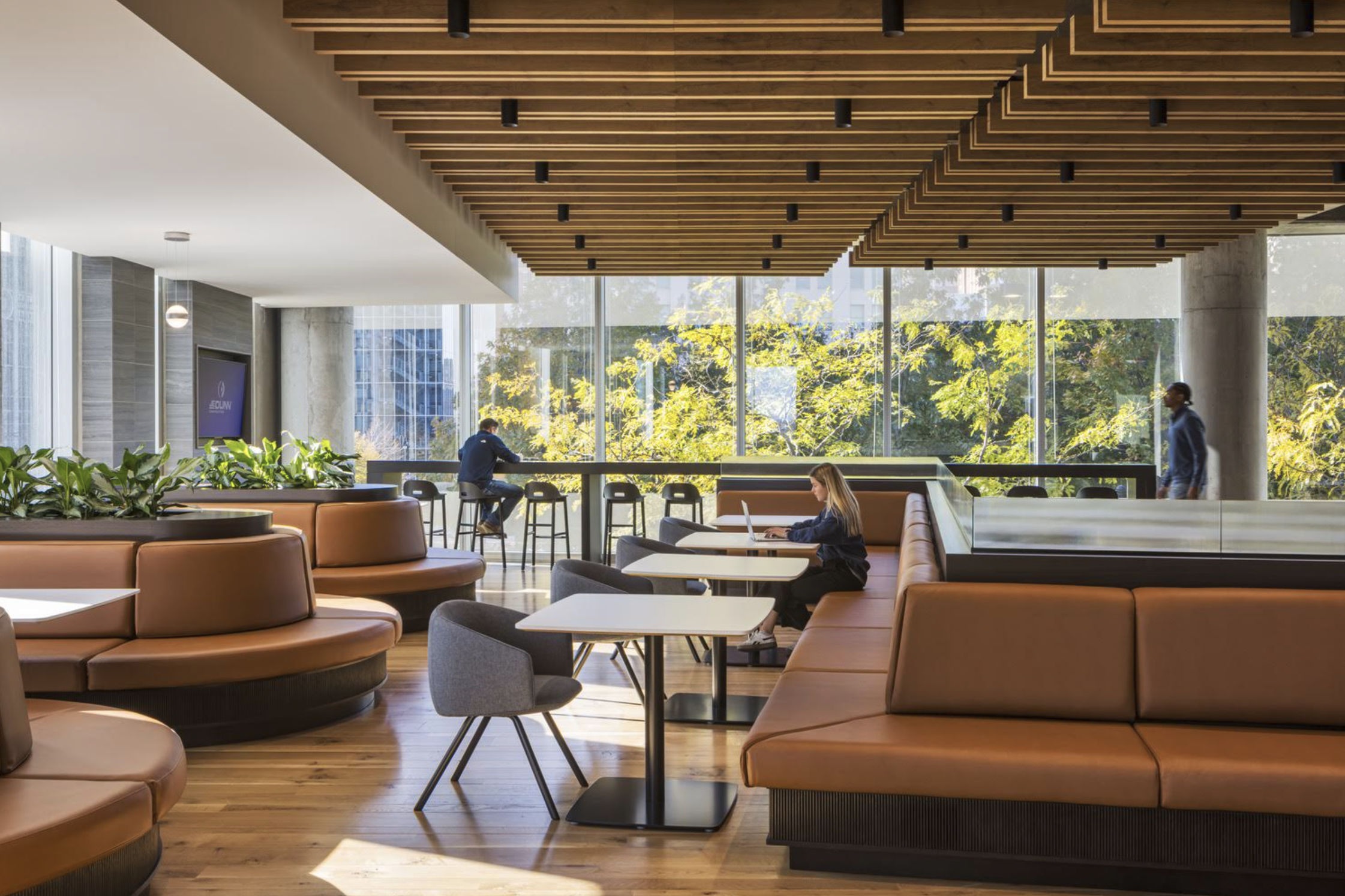
Header image: 46 Penn Centre just off the Country Club Plaza in Kansas City, Mo. Image courtesy of Block & Company

2024 KCADC Annual Meeting highlights $1.8B of new investment across the region

The Kansas City Area Development Council (KCADC) hosted its 2024 Annual Meeting last week, drawing over 2,000 civic and business leaders to celebrate a year of robust regional growth and strategic industry advancements. Under the theme “FLEX,” the event underscored the region’s adaptability as a cornerstone of its success. It highlighted achievements in the Kansas City metro area, including 18 counties across Kansas and Missouri.

Record-Breaking Investments and Job Creation

This year, KCADC and its partners secured commitments from 16 companies, resulting in $1.8 billion in capital investments, nearly 1,500 new jobs, $104.7 million in wages, and 2.3 million SF of new development. These milestones reflect Kansas City’s growing prominence as a hub for innovation and opportunity.

Google’s $1 billion data center in Kansas City, Mo., was among the most notable investments in 2024. Alongside its infrastructure project, Google committed to advancing sustainability by adding 400 megawatts of carbon-free energy to the grid. The company also demonstrated a strong community focus, contributing $100,000 to the North Kansas City School District’s STEM initiatives and announcing an additional $120,000 investment to strengthen STEM programs in Kansas City Public Schools.

Strengthening Global Recognition

Increased media attention has bolstered Kansas City’s growing reputation. Over 630 stories spotlight its economic wins and quality-of-life benefits, reaching an estimated 1.25 billion people globally and enhancing the region’s visibility on the international stage.

KCADC President and CEO Tim Cowden emphasized the importance of leveraging this momentum for future growth, attributing the success to a unified regional vision.

Keynote and Awards

Lisa Bodell, CEO of FutureThink and a best-selling author, delivered the keynote address, offering actionable insights into how simplification can drive efficiency and amplify impact. Her message resonated with attendees, providing tools to help businesses streamline operations and focus on meaningful work.

KCADC has also received accolades for its efforts to promote the region. The organization earned two gold medals from the International Economic Development Council, recognizing its KC Options Magazine and the “KC Design Draft” campaign for excellence in economic development marketing.

Building for the Future

As Kansas City continues to grow, leaders across industries remain focused on fostering a resilient and inclusive economy. From groundbreaking investments in infrastructure and education to enhanced global recognition, the region is poised for sustained success.

The KCADC Annual Meeting reinforced the importance of flexibility and collaboration in shaping the future, ensuring Kansas City remains a leader in innovation and a magnet for talent and investment.


Header image: Board of Directors incoming co-chair and Evergy President/CEO, David Campbell speaks at the 2024 KCADC Annual Meeting. Image courtesy of the Kansas City Area Development Council