MWM KC

Royals Stadium debate pits economic promise against community pushback

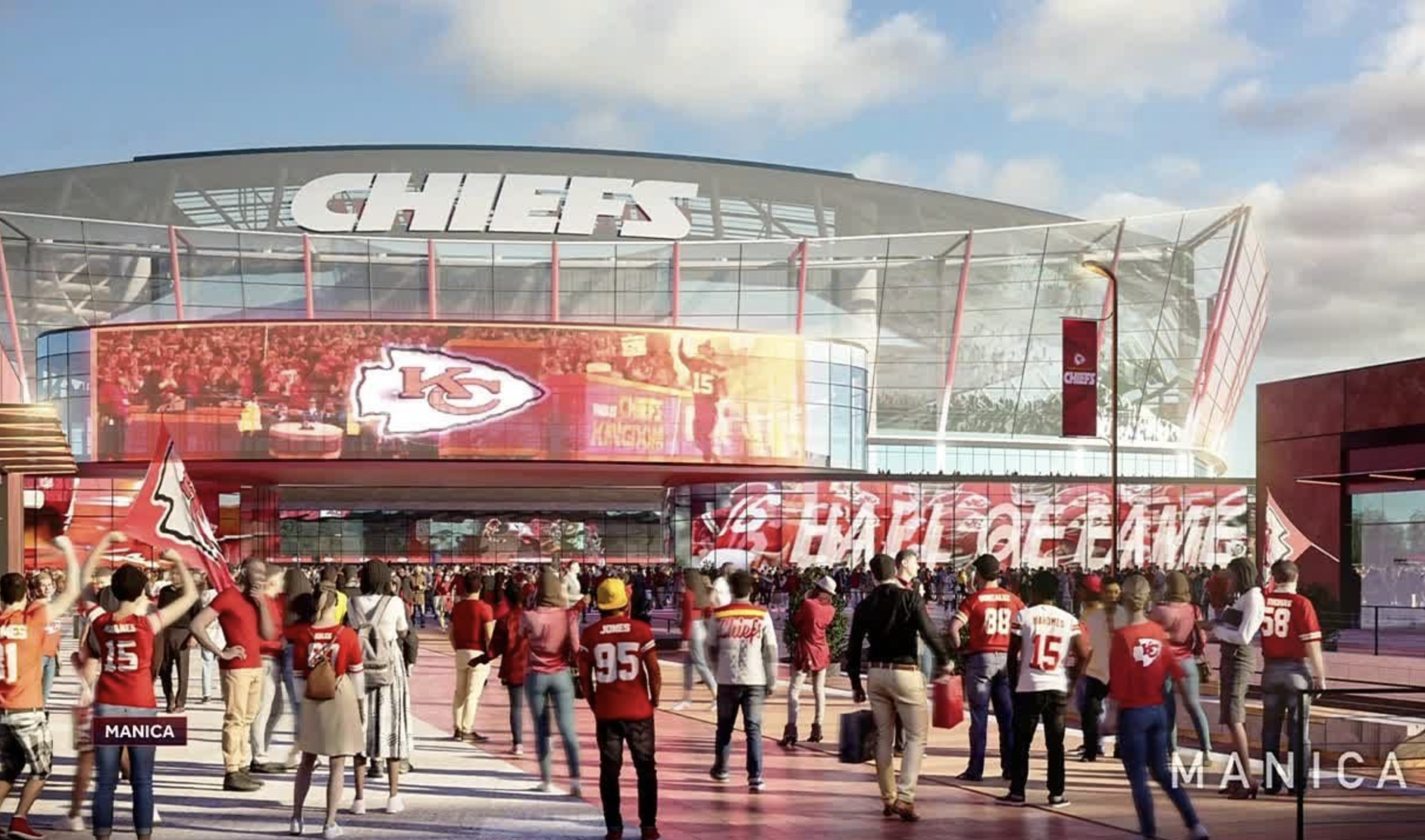
The Kansas City Royals are weighing three potential locations for a new ballpark as their lease at Kauffman Stadium approaches its end, but a growing wave of local opposition — most loudly voiced in Johnson County — has turned the search into a high-stakes political and economic tug of war.

Team officials have identified North Kansas City, a site just south of downtown Kansas City, and the Aspiria campus area in Overland Park as the primary options under consideration. The Aspiria site, near 119th Street and Nall Avenue, drew public attention after a Royals affiliate purchased the property’s mortgage as part of a broader site-evaluation process.

Supporters of a move point to potential economic benefits: a modern stadium could spur mixed-use development, increase hotel and restaurant business, and expand the region’s entertainment footprint, particularly if paired with residential and office projects that promote walkability and year-round use. Proponents say a thoughtfully designed ballpark can act as a catalyst for urban renewal and new tax revenues without forever burdening taxpayers.

But the proposal at Aspiria has encountered intense resistance from suburban neighbors and municipal leaders worried about traffic, neighborhood character and the loss of existing jobs. T-Mobile, which maintains a major presence at the former Sprint campus, warned it could relocate more than 3,500 employees if a stadium were built on the site, saying the campus cannot accommodate both a corporate workforce and a major-league ballpark. That threat has become a central talking point for opponents who say the immediate economic costs could outweigh long-term gains.

Leawood and other Johnson County communities have hosted town halls, organized petitions and issued formal letters opposing the Overland Park option, arguing residents were left with more questions than answers about traffic mitigation, public financing and the long-term master plan for the area. More than 1,300 signatures have been collected on a petition opposing a stadium at the Aspiria campus, and local elected officials have publicly registered their concern.

North Kansas City and the downtown site offer different trade-offs. North Kansas City supporters emphasize better connectivity to existing transit arteries, shorter commutes for many metro residents and the chance to integrate housing and retail around the ballpark. A downtown-adjacent location promises higher foot traffic and tourism synergies but raises familiar worries about displacement, parking strain, and whether increased development around a stadium will serve longtime residents or primarily outside investors.

State and local deadlines add urgency. Kansas and Missouri lawmakers have moved incentives into place, and advisory deadlines this winter and next year have focused attention on the timetable for a deal — elevating both public pressure and political risk for officials who must decide whether to back taxpayer support for infrastructure and transit improvements.

The Royals insist no final decision has been made and that they are continuing to evaluate options in both states, but the path forward will require negotiating a delicate balance: placating anxious suburbs, retaining major employers, protecting neighborhood character and building a venue robust enough to anchor future development. Whatever site is chosen, the outcome will reverberate beyond baseball — reshaping traffic patterns, employment locations and the economic map of the Kansas City region for decades. 


Header image: A rendering of a new Kansas City Royals stadium proposed just south of downtown Kansas City, Mo. Image | Kansas City Royals

Children’s Mercy moves forward adding new medical office building to Overland Park campus

City planners have given preliminary approval for Children’s Mercy to add a four-story medical office building and lobby extension to its Overland Park hospital campus, a move officials say will consolidate outpatient services, add parking, and support a wider $152 million expansion of the facility.

The Overland Park Planning Commission this summer unanimously approved a revised development plan and forwarded the proposal, which covers the site near 5808 West 110th St, to the City Council with conditions that address stormwater, signage, mechanical screening, and pedestrian access.

Hospital officials have said the office building is a central element of the system’s multi-phase program to modernize the Kansas campus, consolidate outpatient clinics now scattered across multiple locations and free up space inside the hospital for renovated inpatient and procedural services. The health system announced the broader $152 million project in April, describing the medical office building as part of work that also includes surgical upgrades, new service offerings and exterior and parking improvements.

Children’s Mercy’s public materials and local news reports say the new outpatient facility is intended to create a more seamless experience for patients and families and to concentrate specialty clinics and administrative offices that currently occupy a variety of sites. Project schedules published by the hospital indicate the medical office building is slated to open in the summer of 2027, with other campus renovations rolling into 2029.

The planning documents submitted to the city include site maps, stormwater studies and design standards that will guide the next stage of approvals; they require the hospital to resolve engineering and landscaping details before a building permit is issued. Those conditions are typical for campus expansions that abut established neighborhoods and major arterials, city staff wrote in a companion report.

If the City Council approves the plan, the project will move into final development review and permitting. Hospital leaders have framed the work as an investment in regional pediatric capacity, saying improvements at Overland Park will benefit families across Kansas while complementing Children’s Mercy’s larger system campuses. 


Header image: A rendering of the preliminarily approved new four-story medical office and lobby extension of Children's MercyOverland Park, Kan. Image | Children's Mercy credit: HDR

Kansas City TIF Commission approves $484 million redevelopment plan for historic Scarritt Building

Kansas City’s Tax Increment Financing (TIF) Commission has approved backing for a roughly $480 million redevelopment plan that would transform the Scarritt Building, a historic downtown skyscraper, into a mixed-use complex featuring a luxury hotel, apartments, retail, and a music venue.

Under the plan, the Scarritt Building at 818 Grand Boulevard would be adaptively reused as a 167-room destination hotel branded by Universal Music. The broader project, located on the 800 block of Grand Avenue, would also include a residential tower with 319 multi-family units, about 28,000 square feet of ground-floor retail, and a 1,400-seat music and entertainment venue.

Port KC, the public development authority driving the project, approved the resolution to issue up to $480 million in taxable revenue bonds to support the development. Construction is expected to take place in two phases over roughly five years, with work on the Scarritt Building renovation slated to begin in 2026.

The Scarritt Building, completed in 1907, is one of downtown Kansas City’s oldest skyscrapers. It has been largely vacant in recent years but carries historic significance, having been added to historic registers.

The redevelopment effort seeks to pair preservation of the landmark building with catalytic growth for the surrounding Grand Corridor. Officials argue that restoring the Scarritt Building — alongside new housing, retail, and entertainment — aligns with broader goals of revitalizing the city’s core and driving long-term economic vitality.

If all goes according to plan, the development could bring new residents, visitors, and cultural amenities to downtown Kansas City, anchored by the historic Scarritt Building and powered by modern investment.


Header image: An aerial rendering highlighting the historic Scarritt Building at 818 Grand Blvd. in the Grand Corridor of downtown Kansas City. Image | Hoefer Welker

Indian Springs redevelopment nears $1 billion with updated plans.

The redevelopment of the former Indian Springs Mall site in Kansas City, Kansas, led by Eastside Innovation Kansas LLC in partnership with Arnold Development Group, has entered a new phase of expansion and escalation in cost. The site, a 90-acre parcel near the intersection of Interstate 635 and Interstate 70, will be renamed Midtown Station and is envisioned as a vibrant, mixed-use destination encompassing residential, retail, sustainable infrastructure and transit-oriented amenities. 

Under the initial plan, the development was expected to include approximately 1,475 apartment units, 63 single-family homes and 150 townhomes, around 280,000 square feet of retail space, a 168-room hotel with conference facilities, a grocery store and a 30-acre solar microgrid powering the site. The projected cost at that time was up to $700 million. 

Recent reports, however, indicate the plan has grown in both scale and cost. As of November 2025, the estimated investment has increased to approximately $951 million. 

This reflects the added complexity and ambition of the project, including deeper commitments to sustainability, transit connections and inclusive housing. According to local coverage, the full build-out may extend over six to twelve years, depending on market conditions and partner negotiations. 

The redevelopment will remain oriented around transit, walkability and sustainability. The design leverages the site’s proximity to major highways and public transit hubs, while the inclusion of the solar microgrid and green building practices underscores its emphasis on future-proof infrastructure. Community stakeholders view Midtown Station as a long-awaited catalyst for renewal in eastern Wyandotte County, replacing the decades-old mall footprint that had become a symbol of decline. 

Approval of a formal development agreement with the Unified Government of Wyandotte County and Kansas City, Kansas is expected in early 2025, with construction slated to begin by mid-2025. 

As details continue to evolve, the expanded budget and enriched program signal a strong commitment by Eastside Innovation and its partners to deliver a transformative project that redefines the site’s future and its place in the region’s growth.


Header image: An aerial rendering of the Indian Springs Mall redevelopment, Midtown Station, in Kansas City, Kan. Image | Arnold Development Group

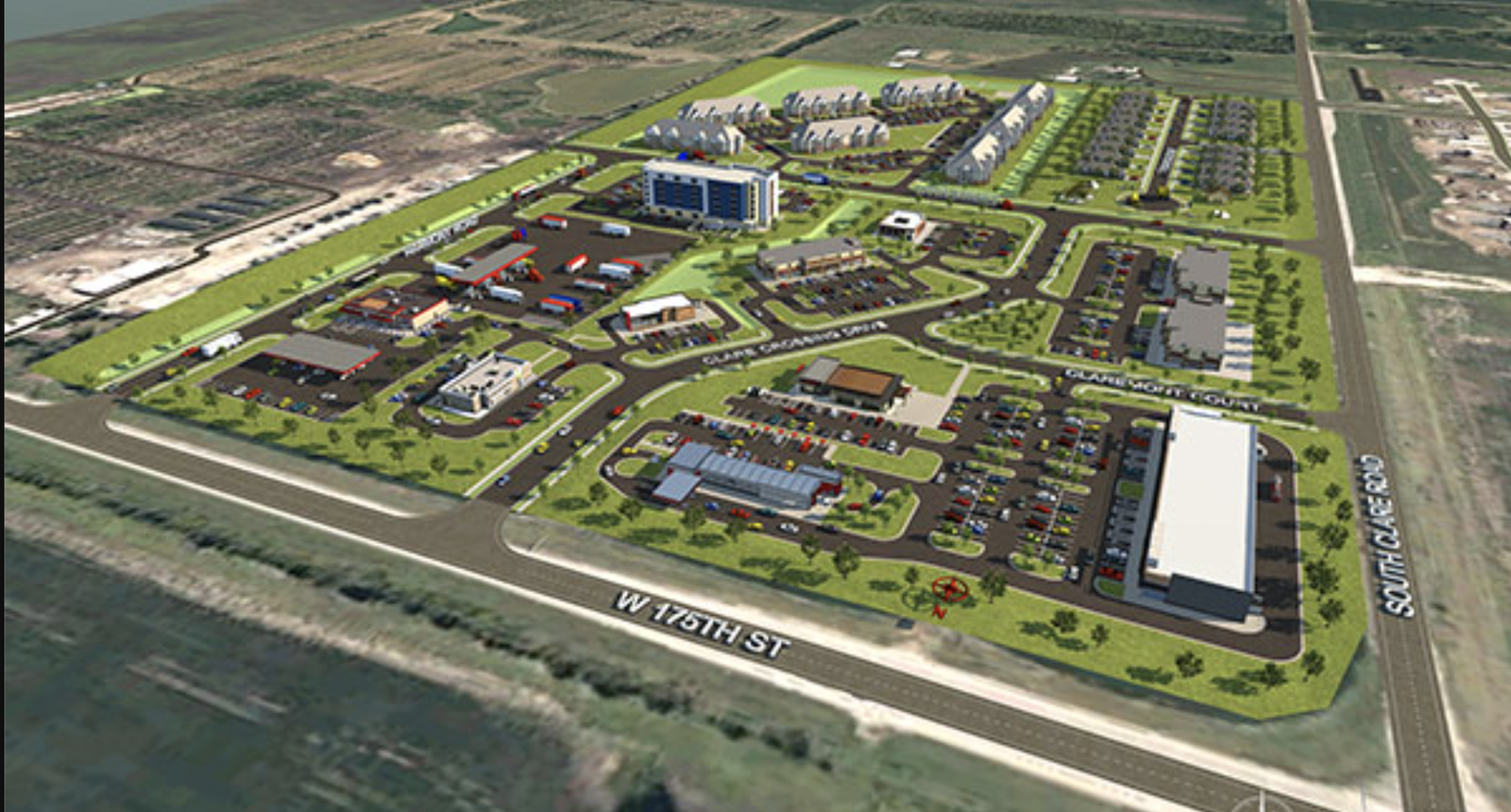
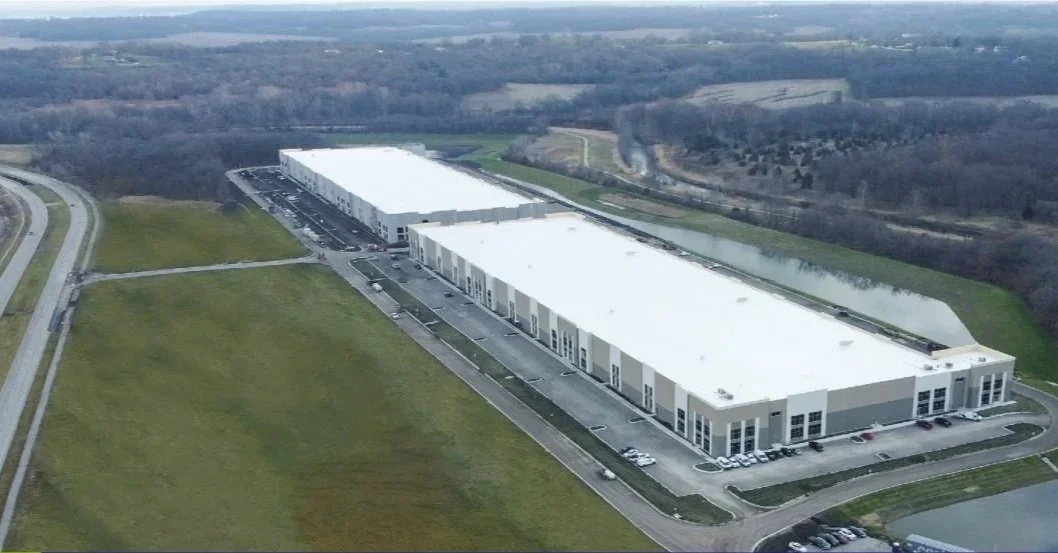
Amazon expands Midwest presence with 1.1 million-SF Olathe facility

Amazon has finalized the purchase of a 1.1 million-square-foot warehouse at the northwest corner of 175th Street and Hedge Lane, strengthening the company’s regional logistics network in the Kansas City metropolitan area.

The new facility, announced Oct. 20, 2025, is among the largest industrial properties in Johnson County. Strategically positioned near major highways and freight routes, the site will serve as a key hub for fulfillment and distribution operations, enhancing Amazon’s ability to meet growing consumer demand across the Midwest.

City and county leaders view the project as a major investment that will bring jobs, infrastructure upgrades, and increased visibility to Olathe’s expanding industrial corridor. Economic development officials collaborated with Amazon to identify and secure the site, citing its accessibility and room for continued growth.

While specific details of Amazon’s operational plans have not been disclosed, similar large-scale facilities typically support hundreds of full-time roles, along with seasonal and contract positions. Local officials emphasized that the project aligns with ongoing efforts to attract high-capacity logistics users and diversify the region’s economic base.

The facility’s scale and location underscore Olathe’s emergence as a distribution hub within the Kansas City market, complementing other major developments along the 175th Street corridor. Construction and site improvements are expected to progress in phases before the building becomes fully operational.

Amazon’s investment marks another step in the company’s continued push to expand its national network, positioning large-format fulfillment centers closer to key population centers for faster, more efficient delivery.


Header image 175th Steet Commerce Center in Olathe, Kan. Photo | McClure