KCMO

Royals Stadium debate pits economic promise against community pushback

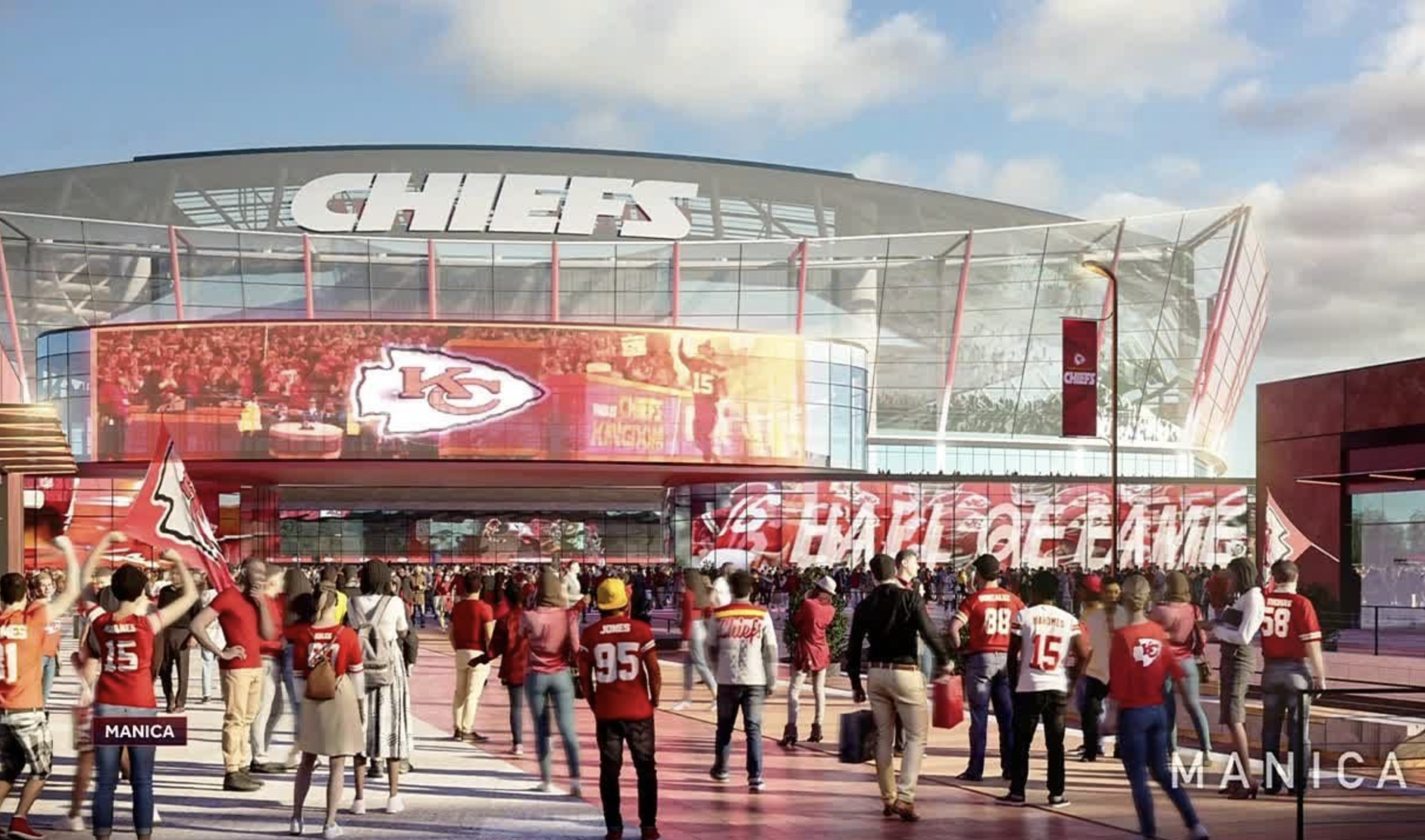
The Kansas City Royals are weighing three potential locations for a new ballpark as their lease at Kauffman Stadium approaches its end, but a growing wave of local opposition — most loudly voiced in Johnson County — has turned the search into a high-stakes political and economic tug of war.

Team officials have identified North Kansas City, a site just south of downtown Kansas City, and the Aspiria campus area in Overland Park as the primary options under consideration. The Aspiria site, near 119th Street and Nall Avenue, drew public attention after a Royals affiliate purchased the property’s mortgage as part of a broader site-evaluation process.

Supporters of a move point to potential economic benefits: a modern stadium could spur mixed-use development, increase hotel and restaurant business, and expand the region’s entertainment footprint, particularly if paired with residential and office projects that promote walkability and year-round use. Proponents say a thoughtfully designed ballpark can act as a catalyst for urban renewal and new tax revenues without forever burdening taxpayers.

But the proposal at Aspiria has encountered intense resistance from suburban neighbors and municipal leaders worried about traffic, neighborhood character and the loss of existing jobs. T-Mobile, which maintains a major presence at the former Sprint campus, warned it could relocate more than 3,500 employees if a stadium were built on the site, saying the campus cannot accommodate both a corporate workforce and a major-league ballpark. That threat has become a central talking point for opponents who say the immediate economic costs could outweigh long-term gains.

Leawood and other Johnson County communities have hosted town halls, organized petitions and issued formal letters opposing the Overland Park option, arguing residents were left with more questions than answers about traffic mitigation, public financing and the long-term master plan for the area. More than 1,300 signatures have been collected on a petition opposing a stadium at the Aspiria campus, and local elected officials have publicly registered their concern.

North Kansas City and the downtown site offer different trade-offs. North Kansas City supporters emphasize better connectivity to existing transit arteries, shorter commutes for many metro residents and the chance to integrate housing and retail around the ballpark. A downtown-adjacent location promises higher foot traffic and tourism synergies but raises familiar worries about displacement, parking strain, and whether increased development around a stadium will serve longtime residents or primarily outside investors.

State and local deadlines add urgency. Kansas and Missouri lawmakers have moved incentives into place, and advisory deadlines this winter and next year have focused attention on the timetable for a deal — elevating both public pressure and political risk for officials who must decide whether to back taxpayer support for infrastructure and transit improvements.

The Royals insist no final decision has been made and that they are continuing to evaluate options in both states, but the path forward will require negotiating a delicate balance: placating anxious suburbs, retaining major employers, protecting neighborhood character and building a venue robust enough to anchor future development. Whatever site is chosen, the outcome will reverberate beyond baseball — reshaping traffic patterns, employment locations and the economic map of the Kansas City region for decades. 


Header image: A rendering of a new Kansas City Royals stadium proposed just south of downtown Kansas City, Mo. Image | Kansas City Royals

Mid‑America Real Estate sells Summit Fair, a leading Lee’s Summit retail destination

Mid‑America Real Estate Corporation’s Investment Sales Group announced the sale of Summit Fair, a well‑known retail and dining destination in the southeastern suburbs of Kansas City. Principals Ben Wineman and Joe Girardi served as the exclusive listing brokers on behalf of the seller, Phoenix‑based RED Development. On the buyer’s side, Block & Company, Inc., Realtors — represented by David Block and Zach Albrecht — acquired the property on behalf of a private investment group.

Located off Interstate 470 and U.S. Highway 50 in Lee’s Summit, Summit Fair is an open‑air “lifestyle center” boasting roughly 510,000 square feet of retail space and an occupancy rate near 90%. Anchors in the center include top national names like Dick's Sporting Goods, H&M, DSW and shadow‑anchors such as JCPenney and Furniture Mall of Missouri. The property also supports a broad mix of inline tenants, from retailers and fitness studios to restaurants and specialty shops — including Lululemon, Sephora, Orangetheory Fitness, Pure Barre, and many others.

According to the buyer’s announcement, Summit Fair attracts more than 4.3 million visits annually — placing it among the top 7 percent of shopping centers in Missouri by foot‑traffic performance. The lifestyle center’s pedestrian‑friendly layout, landscaping and walkable storefronts contribute to its popularity as a community gathering place.

With this acquisition, Block & Company now manages ten multi‑tenant centers in Lee’s Summit and plans to build upon Summit Fair’s success. The firm intends to expand the tenant mix, lease available space, and program community‑oriented events — efforts aimed at enhancing Summit Fair’s role as a long-term retail and social hub for area residents.

While earlier listing materials from Mid‑America reported a square‑footage figure of approximately 241,923, the buyer’s and public‑market sources align on the 510,000 SF benchmark. This suggests the larger number likely reflects the full center footprint rather than a subset — underscoring Summit Fair’s scale and regional importance. 


Header image: The central courtyard of Summit Fair retail center in Lee's Summit, Mo. Image | Mid-American Real Estate

Country Club Plaza owners file Master Plan, detailing vision for revitalization

The new owners of the Country Club Plaza have filed a comprehensive master development plan with the City of Kansas City, outlining a long-term vision to preserve the district’s historic character while reshaping its future as a modern, mixed-use destination.

Submitted by Gillon Property Group, the master plan serves as a roadmap for improvements over the next 10 to 20 years across the landmark shopping center. It aims to balance the Plaza’s century-old charm with new investment, evolving retail trends, and growing demand for residential and office space in Kansas City’s urban core.

At the heart of the plan are five guiding goals: enhancing the public realm, improving walkability, promoting a mix of uses, allowing flexibility in redevelopment, and maintaining the Plaza’s iconic Spanish-Mediterranean architecture.

Proposed updates include wider sidewalks, expanded outdoor seating, and reconfigured streets to make the area safer and more pedestrian-friendly. The plan also calls for more green space, community gathering areas, and event programming designed to increase year-round activity. Vehicle traffic would be reduced or redirected in select areas to create a more pedestrian-focused environment.

The redevelopment framework envisions a broader mix of uses beyond retail, with space reserved for offices, hotels, and potential residential projects. Building height limits ranging from 200 to 275 feet would ensure that new construction remains compatible with the district’s existing scale and architectural identity.

In addition to preserving the Plaza’s terra cotta facades, tile roofs and ornamental details, the proposal outlines a phased approach to investment — beginning with immediate improvements to streetscapes and landscaping, followed by longer-term adaptive reuse and infill development.

City officials will now begin reviewing the plan, which will include opportunities for public input and further refinement. Community meetings are expected later this year before the plan moves to the Kansas City Planning Commission for consideration.

The submission represents a significant milestone for one of Kansas City’s most recognizable destinations, signaling a commitment to revitalization that honors its past while adapting to new patterns of how people live, work, and shop. If approved, the plan could guide the Plaza’s evolution well into the next generation.


Header image: A rendering showing some changes proposed in the latest master plan for the Country Club Plaza in Kansas City, Mo. The plan highlights less retail and more green space for visitors. Image | Charter Holdings

The Improve I-70 KC Project is underway and set to bolster development opportunities

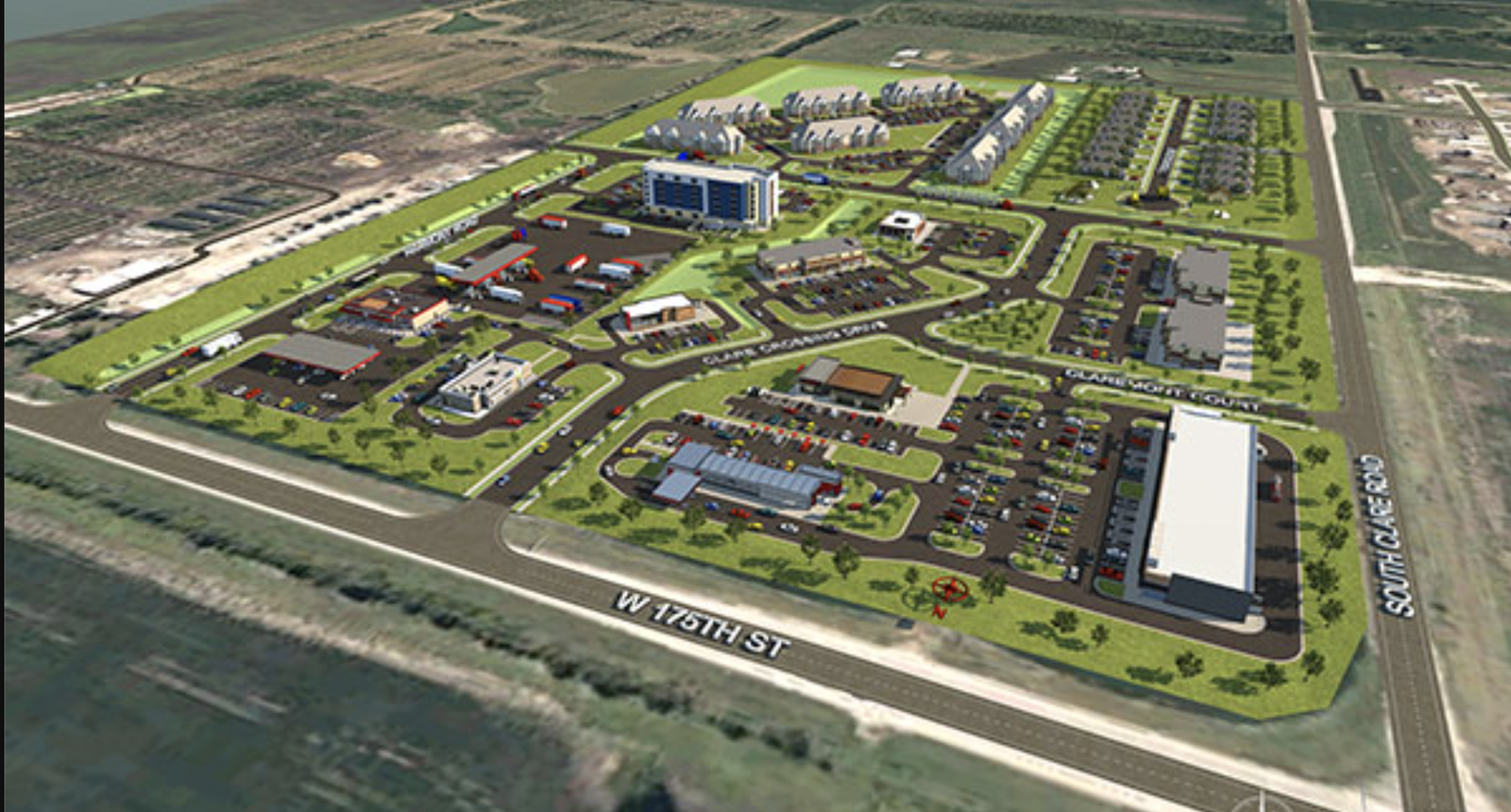
Work has started on the Improve I-70 KC project, a $237 million initiative aimed at reshaping a heavily traveled corridor through the city. The improvements are expected to ease congestion, enhance freight mobility, and create ripple effects across Kansas City’s commercial real estate market.

The Missouri Department of Transportation, in partnership with the Federal Highway Administration, is leading the design-build project. Construction will stretch between The Paseo Boulevard and the U.S. 40/31st Street interchange and continue through spring 2028. Plans include adding an additional eastbound lane, replacing 15 bridges, rehabilitating seven others, and realigning multiple interchanges to improve safety and traffic capacity.

Because I-70 serves as a key freight artery, industry observers note that more reliable travel will increase the appeal of warehouse, logistics, and industrial properties near the corridor. Retail and mixed-use developers are also watching the project closely, as upgraded interchanges and pedestrian improvements could spark redevelopment and attract new investment.

The project will be carried out by Clarkson-Radmacher Joint Venture, which was awarded the design-build contract in 2024. It is part of a larger statewide program to modernize nearly 200 miles of I-70 by 2030, underscoring Missouri’s long-term commitment to infrastructure and economic growth.

For commercial real estate professionals, the construction may bring short-term challenges, but the long-term outlook is widely seen as positive. Improved access, stronger freight efficiency, and renewed infrastructure are expected to drive property value gains and open doors for new development along the corridor. As Kansas City positions itself for continued growth, the I-70 project stands as both a transportation upgrade and an investment in the region’s commercial future.


Header image: Aerial view of the I-70 and I-435 interchange on the east side of Kansas City, Mo. Image | MODot

Conexon sets sights on Crown Center with new downtown headquarters lease

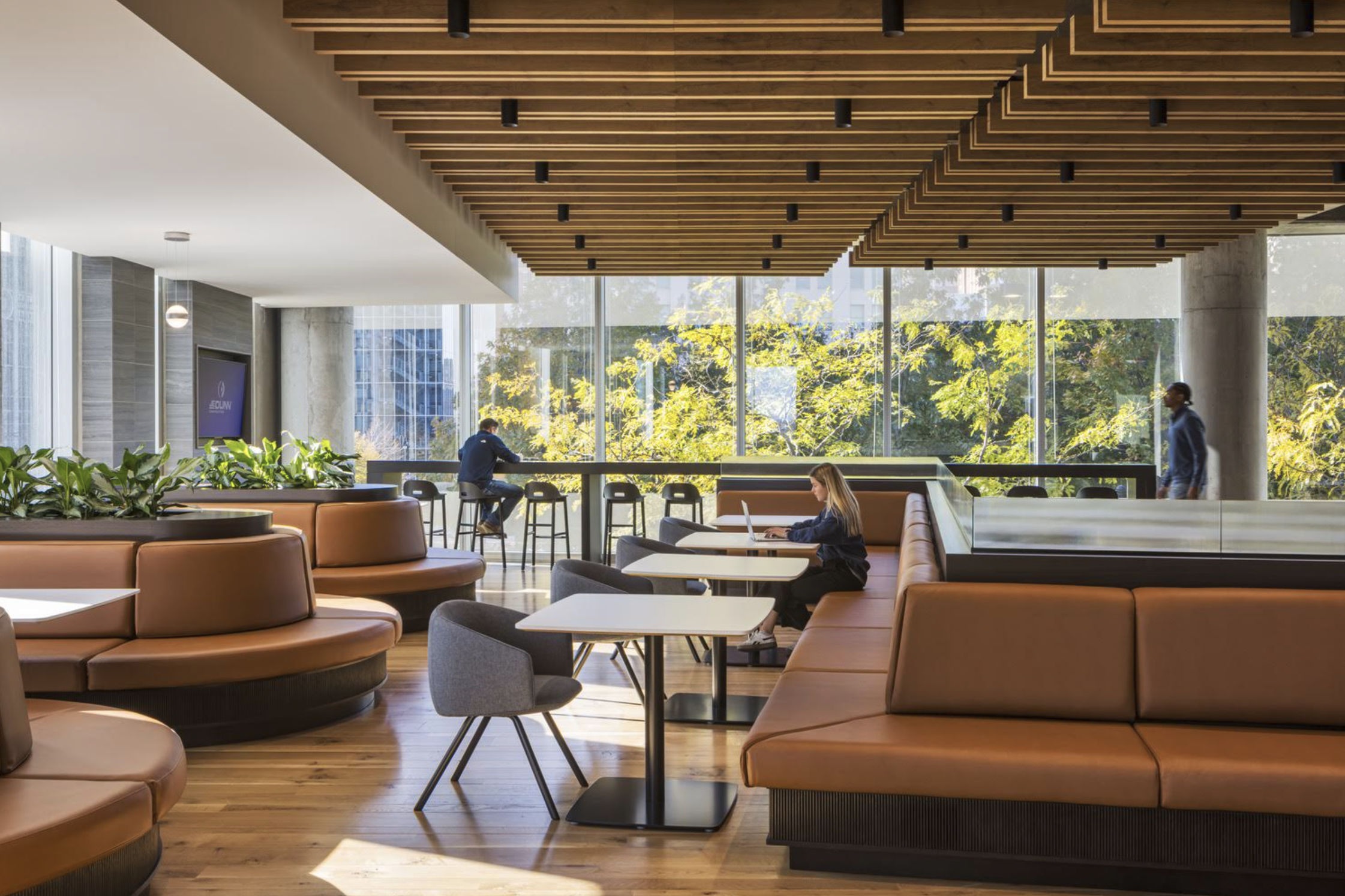
Conexon, a leading rural fiber broadband design and deployment firm, has signed a lease for a new headquarters at 2300 Main St., an 11-story Class A office building near Crown Center and Union Station in Kansas City. The move underscores the area’s growing appeal as a destination for corporate tenants.

The 2300 Main building, which spans approximately 520,000 SF, recently underwent more than $7 million in upgrades, including modernized building systems, lobby improvements, landscaping, and elevator enhancements. These improvements helped raise occupancy from 76 percent to roughly 90 percent.

Conexon, founded by co-CEO Randy Klindt, will consolidate its operations in the new space, which will house network design, construction management, operations, sales, and marketing, as well as a state-of-the-art network operations center and technical support call center. Klindt said the location allows the company to stay close to partners and clients while benefiting from Kansas City’s central location in the Midwest tech and rural broadband markets.

The lease highlights Crown Center’s evolution as a walkable, amenity-rich district combining office space, hotels, restaurants, retail, cultural venues, and open green spaces. Plans for a nearby streetcar expansion, expected to begin operations in 2025, will further improve connectivity for employees and tenants.

Conexon’s headquarters is seen as a boost for downtown Kansas City, reinforcing the city’s emerging status as a hub for tech and infrastructure companies while attracting and retaining talent.


Header image: 2300 Main Street Building near Crown Center and Union Station will be the new HQ for Conexon. Image | Van Trust Real Estate