Sports & Recreation

Chiefs’ move to Kansas could transform commercial development across the metro

The Kansas City Chiefs’ planned move to the Kansas side of the Kansas City metro area is already reshaping expectations for commercial growth, real estate investment, and long-term economic development. While the relocation would mark the end of the team’s decades-long run in Missouri, it is widely viewed by Kansas officials and developers as a generational opportunity to anchor new construction and private investment around a modern NFL stadium.

The proposed project centers on a new domed stadium in Wyandotte County, a move that would position the region to compete for major events beyond professional football, including concerts, conventions, and national sporting events. Economic development leaders say the stadium itself is only part of the story. The surrounding land is expected to attract a wave of mixed-use development designed to create year-round activity rather than a venue that sits largely idle outside of game days.

Developers are already speculating about new hotels, restaurants, and entertainment concepts aimed at capturing crowds drawn by games and special events. Retail space, office buildings, and residential projects are also likely, following a national trend in which sports venues anchor walkable districts that blend work, housing, and leisure. Similar developments around newer NFL stadiums have shown that teams increasingly serve as catalysts for broader commercial ecosystems rather than standalone attractions.

The Chiefs’ potential relocation is also expected to influence development patterns beyond the stadium site. Areas along major highway corridors in Kansas could see increased interest from employers seeking proximity to a high-profile destination and improved infrastructure. Hospitality and service industries are anticipated to benefit most immediately, while longer-term growth could include corporate offices and regional headquarters drawn by the visibility and prestige associated with the franchise.

Supporters argue the move would solidify the Kansas side of the metro as a hub for sports-driven economic development, while critics raise concerns about public financing and the loss of revenue for Missouri. Even so, real estate professionals note that large-scale stadium projects often generate momentum that extends well beyond initial projections, especially when paired with intentional planning and private-sector participation.

If the relocation proceeds, the Chiefs’ new home could reshape the commercial landscape of the metro area for decades, signaling a shift in how professional sports franchises influence urban growth, land use, and regional competition in the Kansas City area.


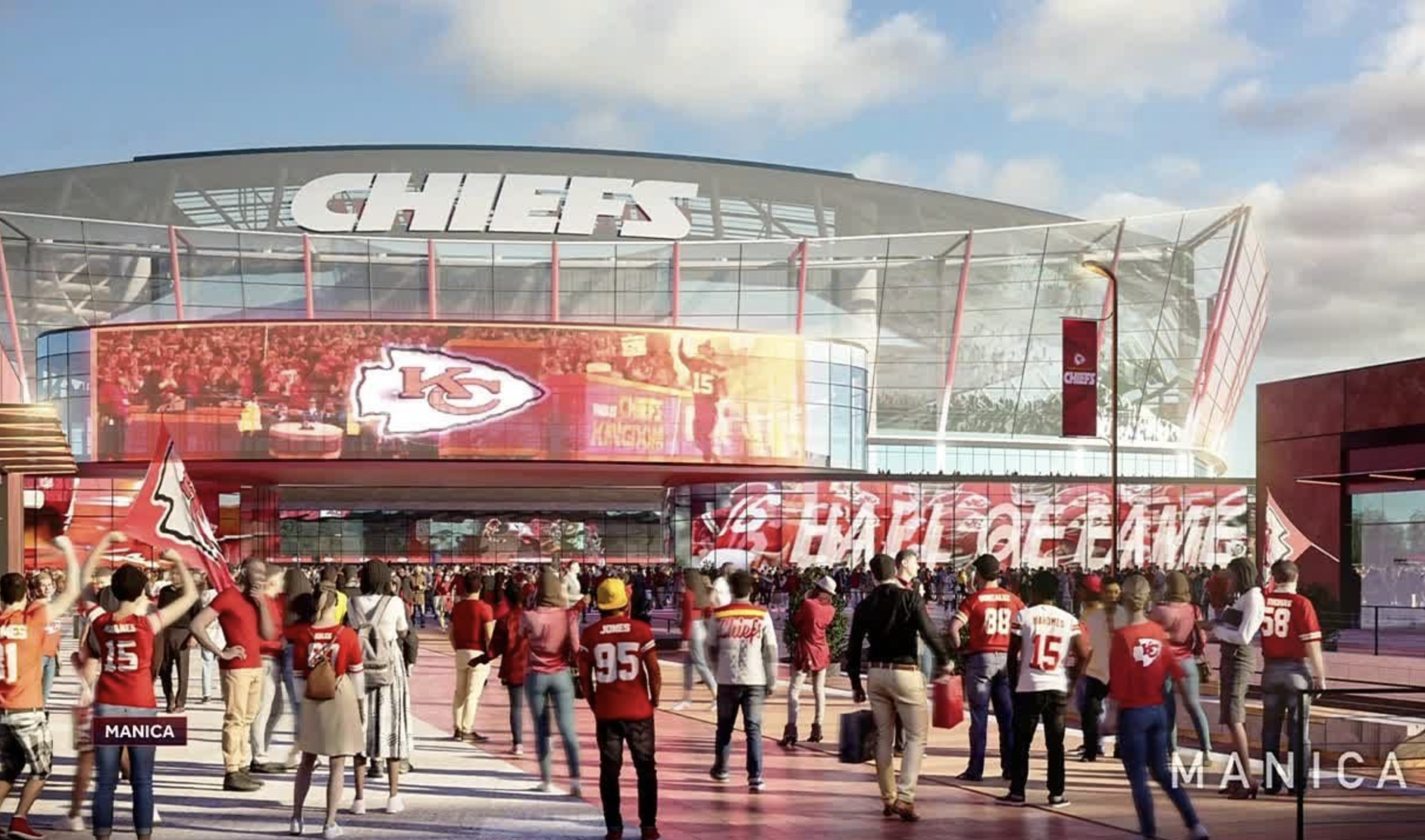
Header image: A rendering of a new Kansas City Chiefs stadium that may be built near the Legends in Wyandotte County, Kan. Image | Manica

Royals Stadium debate pits economic promise against community pushback

The Kansas City Royals are weighing three potential locations for a new ballpark as their lease at Kauffman Stadium approaches its end, but a growing wave of local opposition — most loudly voiced in Johnson County — has turned the search into a high-stakes political and economic tug of war.

Team officials have identified North Kansas City, a site just south of downtown Kansas City, and the Aspiria campus area in Overland Park as the primary options under consideration. The Aspiria site, near 119th Street and Nall Avenue, drew public attention after a Royals affiliate purchased the property’s mortgage as part of a broader site-evaluation process.

Supporters of a move point to potential economic benefits: a modern stadium could spur mixed-use development, increase hotel and restaurant business, and expand the region’s entertainment footprint, particularly if paired with residential and office projects that promote walkability and year-round use. Proponents say a thoughtfully designed ballpark can act as a catalyst for urban renewal and new tax revenues without forever burdening taxpayers.

But the proposal at Aspiria has encountered intense resistance from suburban neighbors and municipal leaders worried about traffic, neighborhood character and the loss of existing jobs. T-Mobile, which maintains a major presence at the former Sprint campus, warned it could relocate more than 3,500 employees if a stadium were built on the site, saying the campus cannot accommodate both a corporate workforce and a major-league ballpark. That threat has become a central talking point for opponents who say the immediate economic costs could outweigh long-term gains.

Leawood and other Johnson County communities have hosted town halls, organized petitions and issued formal letters opposing the Overland Park option, arguing residents were left with more questions than answers about traffic mitigation, public financing and the long-term master plan for the area. More than 1,300 signatures have been collected on a petition opposing a stadium at the Aspiria campus, and local elected officials have publicly registered their concern.

North Kansas City and the downtown site offer different trade-offs. North Kansas City supporters emphasize better connectivity to existing transit arteries, shorter commutes for many metro residents and the chance to integrate housing and retail around the ballpark. A downtown-adjacent location promises higher foot traffic and tourism synergies but raises familiar worries about displacement, parking strain, and whether increased development around a stadium will serve longtime residents or primarily outside investors.

State and local deadlines add urgency. Kansas and Missouri lawmakers have moved incentives into place, and advisory deadlines this winter and next year have focused attention on the timetable for a deal — elevating both public pressure and political risk for officials who must decide whether to back taxpayer support for infrastructure and transit improvements.

The Royals insist no final decision has been made and that they are continuing to evaluate options in both states, but the path forward will require negotiating a delicate balance: placating anxious suburbs, retaining major employers, protecting neighborhood character and building a venue robust enough to anchor future development. Whatever site is chosen, the outcome will reverberate beyond baseball — reshaping traffic patterns, employment locations and the economic map of the Kansas City region for decades. 


Header image: A rendering of a new Kansas City Royals stadium proposed just south of downtown Kansas City, Mo. Image | Kansas City Royals

Kansas City Sports Commission and Visit KC join forces in new Downtown KC office

Kansas City Sports Commission and Visit KC join forces in new Downtown KC office

Feature rendering credit: Helix Architecture + Design

KC Current's new stadium poised to revolutionize women's athletics

KC Current's new stadium poised to revolutionize women's athletics

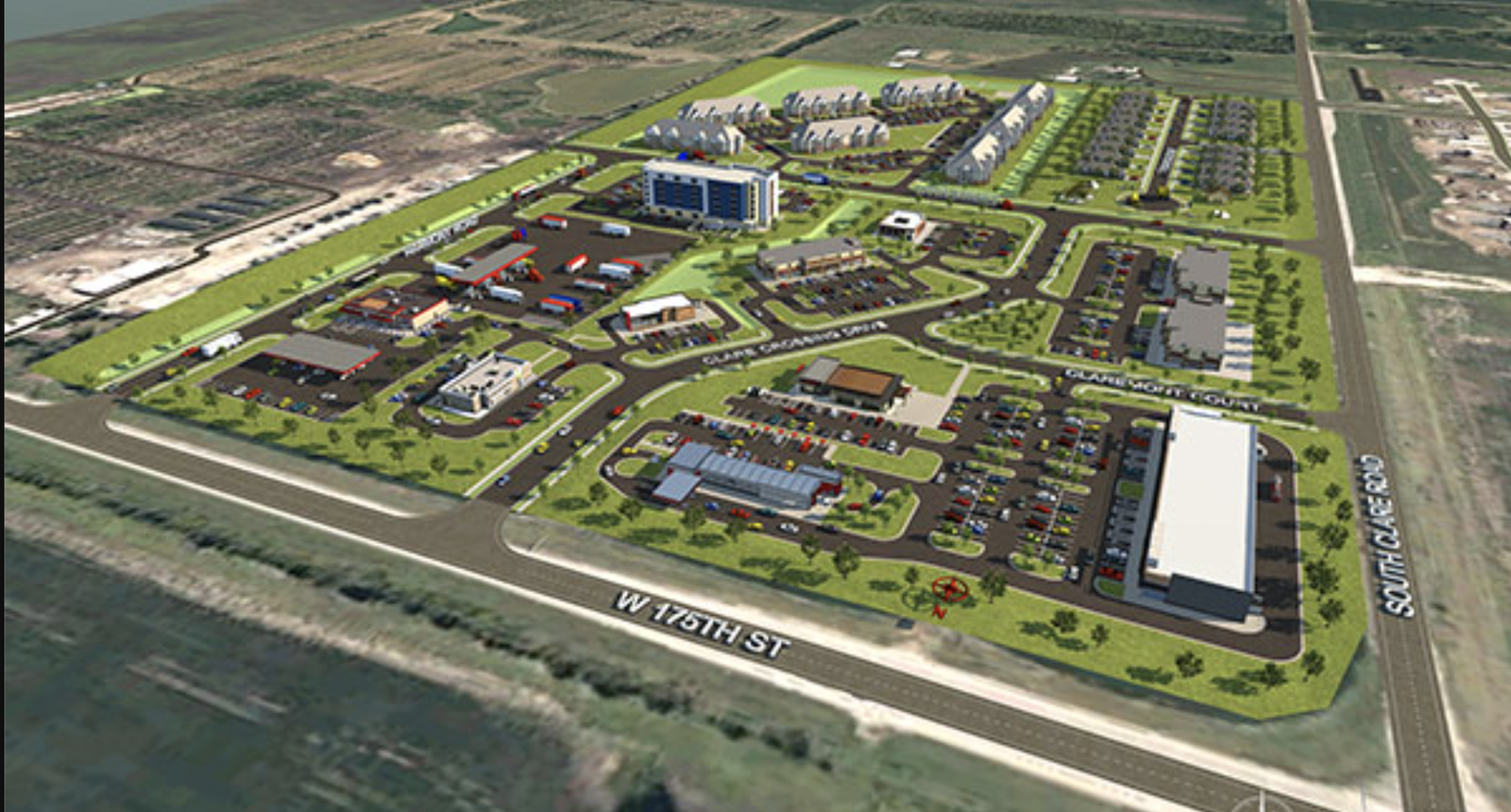
Feature image/Rendering credit: Generator Studio.

Bluhawk breaks ground on $750M multi-sport complex

Bluhawk breaks ground on $750M multi-sport complex

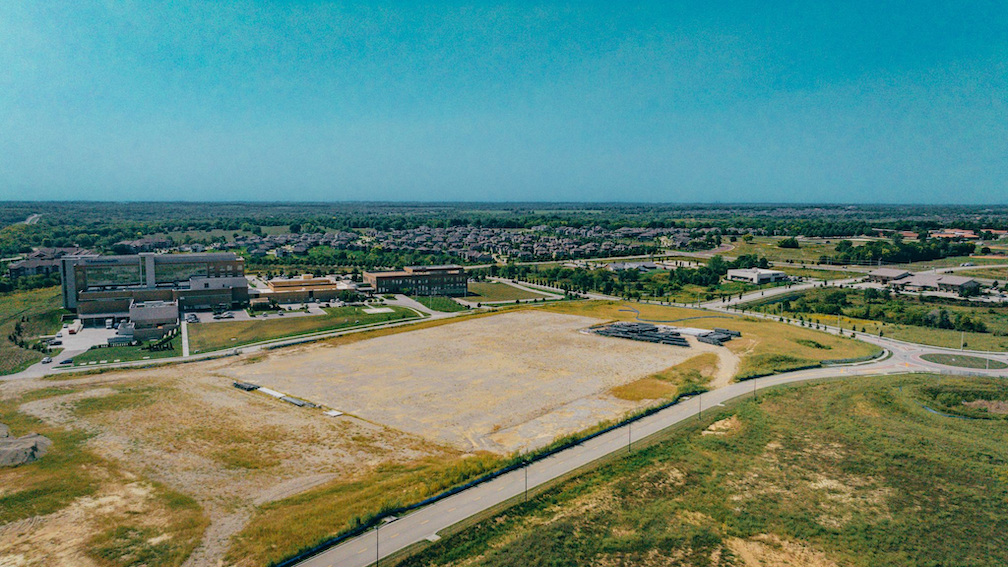
Feature Photo: Groundbreaking of the first phase of Bluhawk’s multi-sport complex, Advent Health Sports Park at Bluhawk, began today in Overland Park, Kan. PHOTO COURTESY OF TREASURE ADVERTISING.