Google

Kansas City Industrial Growth: Smarter Sites, Stronger Collaboration

MetroWire Media closed out its 2025 programming with a standout KC MWM Industrial Summit, hosted at Johnson County Community College. With rising construction costs, evolving tenant expectations, and major infrastructure needs, our expert panel explored what’s driving Kansas City’s industrial momentum—and how the region is positioning for what’s next.

Special thanks to our sponsors who made this event possible:

Platinum Sponsors: JE Dunn Construction, Miller Stauch Construction
Bronze Sponsors: Bartlett & West, ARCO, Seal-O-Matic, Armstrong
Brew Crew Sponsors: Capitol Federal, KC SmartPort, BHC, studioNorth Architecture

What Makes KC Competitive?

Chris Gutierrez of KC SmartPort opened the conversation: “Every company that comes here asks how we got Missouri and Kansas in the same room from the start. That collaboration is our edge.” He emphasized KC’s multimodal freight infrastructure, industrial developer base, and workforce reliability as top selling points.

Construction Cost Pressure and Preconstruction Strategy

Ryan Schroeder of Russell Construction pointed to a slowdown in private investment due to high interest rates, but stressed that early collaboration is a winning formula: “Clients want cost and schedule certainty. That means contractors must be involved from the design phase, not just at bid time.”
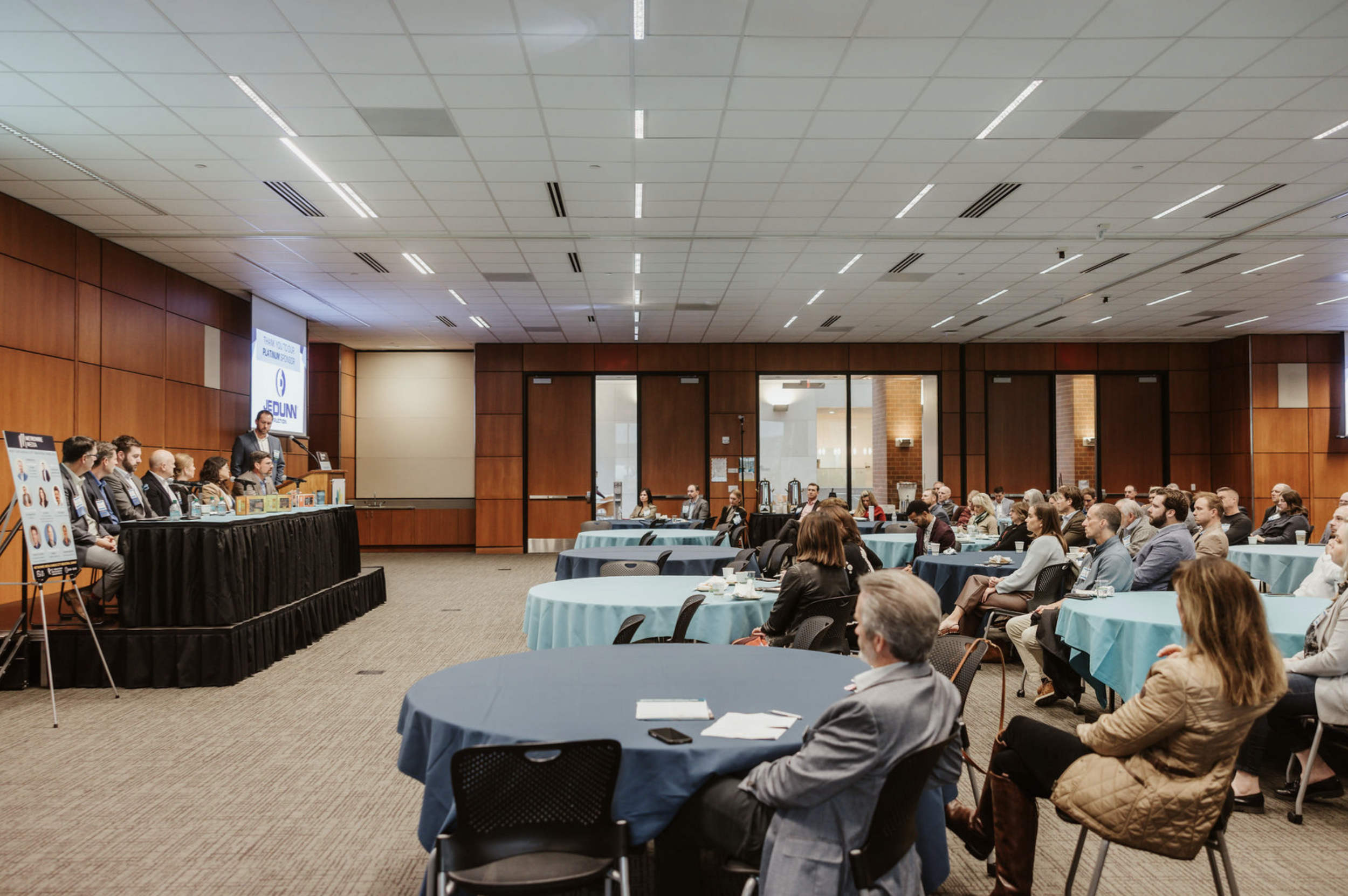
Above: Attendees at MetroWire Media’s 2025 Industrial Summit listen in as the panel discusses the current state of Kansas City’s industrial real estate market. Image | BGSTUDIOS PHOTOGRAPHY + FILM

Speculative vs. Build-to-Suit: Staying Disciplined

Brent Peterson of NAI Heartland provided perspective from the leasing and capital markets side: “KC has been disciplined about what we build, and that’s why we’re still absorbing. Most activity today is build-to-suit, but spec buildings remain vital—especially smaller footprints under 500,000 SF.”

Infrastructure Is Now a Front-End Issue

Krizia Diaz, leading JE Dunn’s industrial manufacturing sector, discussed how “pad-ready” doesn’t always mean infrastructure-ready: “We’re helping clients pivot mid-project to phase development or self-supply utilities like wastewater treatment or power generation. That shifts design, cost, and timeline significantly.”

Flexibility in Design: The New Standard

Kevin Polit of studioNorth Architecture explained how flexible shell buildings support long-term utility: “You’re not just designing for one tenant anymore. You’re building a platform that can support automation, manufacturing, cold storage, or ESG upgrades over decades.”

John Krudwig of Bartlett & West agreed, adding: “We’re designing spec with build-to-suit in mind—high-performing roof structures, flat floors, even modular under-slab systems for future use. It’s more rewarding, more strategic.”

Automation Expectations Are Real—and Rising

Karley Felz, an automation systems expert, shared how tenant demands are shifting: “Automation is no longer optional. With labor tight, tenants want high-speed connectivity, stronger slabs, and wider column spacing. We’re seeing higher employee satisfaction too—robots aren’t replacing people, they’re supporting them.”

Data Centers: Boon or Bottleneck?

The discussion turned to KC’s growing data center market. With Meta and Google investing billions, power availability is now a gating factor. “These aren’t one-and-done builds,” said Gutierrez. “They upgrade every two years. But they also generate secondary demand—construction, manufacturing, automation. It’s an ecosystem.”

Panelists noted the need for better long-term planning around power generation, with Kevin Polit citing innovations like small modular nuclear reactors as viable mid-term solutions. Brent Peterson explained that the “$100 billion” data center numbers are cumulative over decades, reflecting upgrades, infrastructure, and equipment, not just construction.

Above: Guests mingle at the MWM 2025 Industrial Summit at Johnson County Community College before the panel discussion.

Looking Ahead: Where's the Growth?

The panel identified I-35 south of Olathe, Liberty/Northland, and Lee’s Summit as key corridors for future development. “We need more product,” said Gutierrez. “When interest rates drop, we’ll need those buildings ready to go.”

John Krudwig confirmed that multiple spec projects are in design across the region. Peterson added: “Post-2008, speculative development changed our market. If you build it—smartly—they will come.”

The Workforce Pipeline Starts Now

Several panelists praised Kansas City’s workforce development infrastructure, with Ryan Schroeder sharing a personal anecdote about a Rockhurst student exploring trade school: “This generation sees the trades differently—and we should be encouraging that.”

In Closing: Collaboration Remains KC’s Superpower

Angela Dicioccio, MetroWire’s Event Director, wrapped the event: “What makes Kansas City work is the collaboration between developers, designers, builders, and economic partners. We’re already planning for 2026—and with the World Cup coming, Kansas City is about to take the global stage.”


Header image: Panelists discuss what's driving the Industrial real estate market in the Kansas City region at MetroWire Media's 2025 Industrial Summit at the Regnier Center- Johnson County Community College. Image | BGSTUDIOS PHOTOGRAPHY + FILM

From Buc-ee’s and Google to Margaritaville and Panasonic, big names are betting on KC

MetroWire Media hosted its KC Mega Developments Summit 2025 last week. Panelists Mike Bell, SVP of Hunt Midwest; Tim Holverson, president of De Soto Economic Development Council; Greg Kindle, president of Wyandotte Economic Development Council; Bart Lowen, VP of development at Price Brothers; Jolene Mead, SHRM-SCP, chief of staff at Port KC; and Richard Napper, managing partner of NAR Realty Consulting, LLC, showcased some of the mega-developments in the Kansas City area in which their organizations are involved. Terrell (TJ) Jolly, MBA, founder and CEO of Integrity Capital Management, LLC, moderated.

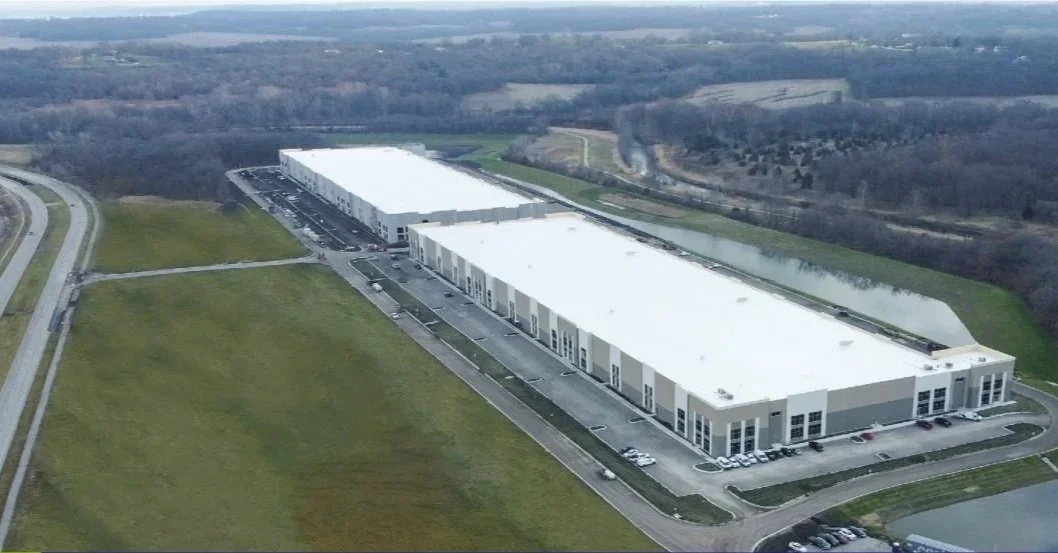
Bell said the 3300-acre KCI 29 Logistics Park is the only mega site in the state of Missouri. The project, located in what Hunt Midwest describes as the logistics epicenter of the United States, will house more than 20 million SF of class-A industrial space. According to Bell, Ace Hardware is locating its 1.5 million SF distribution center there, and Project Falcon (revealed in the press to be Amazon.com, Inc.) is also taking space.

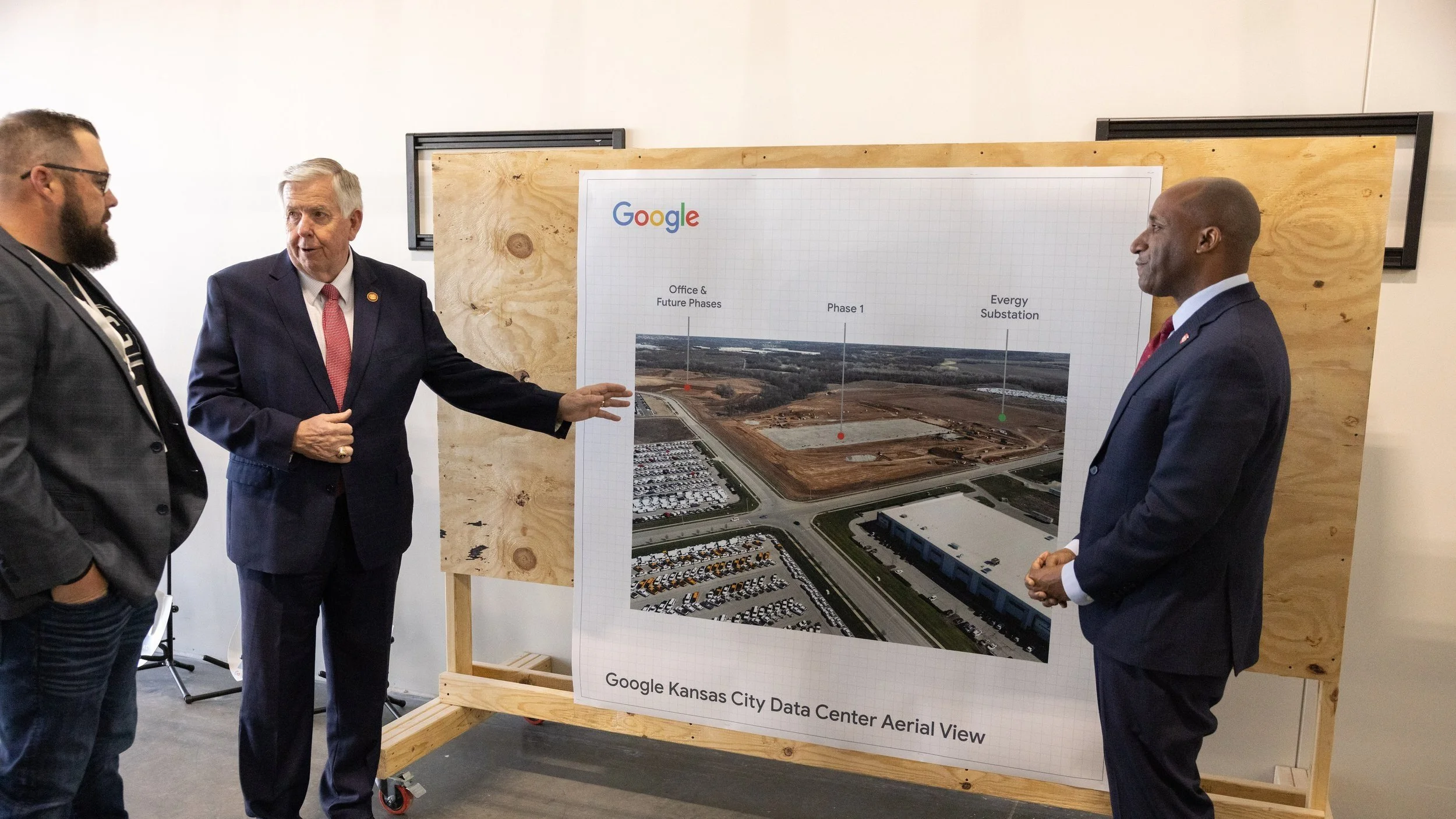
In March of last year, Google announced it was building a $1 billion data center at Hunt Midwest Business Center.

“Google was the first hyper-scaler that actually looked at Kansas City. . . . The other thing for Kansas City is that this is the largest single investment that Google ever made,” said Bell.

Bell said Google will bring in people to train and who will work on the project.

“If you ask Google, and this was in one of their press releases, it’s a generational job for them. So these construction workers, it’s not temporary. . . . [S] Some of those folks will be there, literally get married, have kids, and see their kids graduate. So, that has a major impact on Kansas City. Not to mention because it’s technology, other companies want to be nearby, and we’re seeing it right now,” Bell said.

Bell said Google is also working with the North Kansas City School District, creating a public-private partnership in which Google helps the schools and the workforce and training. This partnership will ultimately promote the spec development of industrial projects and attract manufacturing jobs to Kansas City, said Bell.

“We’ve done $6.2 billion over the last 10 years in Wyandotte County. This year I would expect that our capital investment goal would be closer to a $1 billion. . . . These numbers are really big,” said Kindle.

One mega project in the works in Wyandotte County is Buc-ee’s, which will be located near the Kansas Speedway. The project is outside of the STAR Bond district, and Buc-ee’s will pay property taxes from day 1, Kindle said.

“Buc-ee’s has a cult following. Everybody loves Buc-ee’s. . . . It sucks you in, and then 45 minutes later, you come out with $50 worth of things you didn’t think you really needed. About 120 fuel pumps plus the electric charging. It is like a city. Five thousand plus people a day will visit Buc-ee’s in that location, and 70 percent of those folks will be from outside of Wyandotte County. . . . There will be tons of folks coming through there. . . . The project has 250 employees, and they pay really good wages,” said Kindle.

Wyandotte County is also home to a state-of-the-art youth sports facility developed by Homefield, a local amateur youth sports company. The facility is located near the site of the former Schlitterbahn Waterpark, which Homefield dismantled. Napper said the project features an indoor volleyball and basketball facility.

Above: Over 200 attendees listen in on the current Kansas City metro area mega-developments at the 2025 KC Mega Development Summit hosted by Metrowire Media at the Aspira Campus auditorium.

“Really what we want to do is give the youth athlete and their parents the best facilities possible and then in between games overnight give them food and lodging and entertainment options that are better than they’ve had anywhere else,” Napper said.

Some amenities under development for these visitors include the Margaritaville Hotel Kansas City, a $150 million, 229-room full-service resort, and Atlas9, an entertainment venue, which Napper described as an immersive museum that is “unlike anything you’ve ever seen.” Dimensional Innovations is partnering on the Atlas9 project.

Approximately 25 miles to the south of the Homefield project sits Bluhawk, a mixed-use development anchored by the recently opened AdventHealth Sports Park, a 420,000 SF youth sports facility. The first phase of the project is complete. Ninety-seven percent of the built retail space is occupied, said Lowen.

“Youth sports is, in my opinion, tomorrow’s anchor to mixed-use developments,” he said.

Because the Bluhawk project is using STAR Bonds, it must attract visitors from out of state.

“You’ve got to create something that is going to drive people to that location. Quite simply, it’s taking all those experiences and putting it in one walkable[location]—I call it adjacency—that just brings all of that together to a place that just creates a qualitative experience that everybody wants. Just put it all together. Just offer it,” said Lowen.

According to Holverson, the $4 billion Panasonic electric vehicle battery plant under construction is transforming the community of De Soto, Kansas, which boasts approximately 6700 residents. With the plant has come new infrastructure as well as much private sector investment, including more than 1000 apartment units, approximately 500 single-family homes, a number of townhomes and duplexes, and new retail. The plant is projected to employ, ultimately, 4,000 people.

“De Soto’s sales tax revenues are up 88 percent year over year. Starting maybe from a smaller number, but we’ve seen tremendous growth and really just project that to continue on,” Holverson said.

Improvements to the Berkley Riverfront represent the culmination of a plan that’s been in play for 35 years, Mead said.

“I think we’ve arrived at something really great,” she said.

The opening in 2018 of the Union Berkley Riverfront Apartments, a mixed-use residential project developed by Flaherty & Collins Properties, brought residents back to the Riverfront.

“People hadn’t lived on the Riverfront for decades, and I think that’s really impressive. It’s kind of been just the building blocks to get us where we’re at,” she said.

The partnership between Port KC and Kansas City Current also has been transformative for the Riverfront development, including the construction of the

CPKC Stadium is the first in the world purpose-built women’s stadium, Mead said.

Another project which has been several years in the making is the South Loop Project, which Mead called “game-changing”. Plans for the collaborative effort led by Port KC, Downtown Council of Kansas City and Kansas City, Missouri, include creating a sustainable urban park over Interstate 670.

“It’s going to bring people back Downtown in droves, even more so than now. And we all know that life is better when there is green space and when there is access to green space,” Mead said.


Header image: Lisa Shackelford (far left) with the panelists at the 2025 KC Mega Development Summit (L to R): Terrell (TJ) Jolly, Mike Bell, Jolene Mead, Richard Napper, Greg Kindle, Tim Holverson, Bart Lowen. Image credit: Jacia Phillips | Arch Photo KC

Kansas City lands $1 billion Google data center

Kansas City lands $1 billion Google data center

Feature photo credits: Eli Tawil | Google