What once stood as the headquarters of a nonprofit serving people with disabilities is being reborn into a cornerstone of St. Louis’ life-sciences economy. Washington University in St. Louis and its development affiliates have broken ground on Catalyst: Powered by WashU, a $100 million transformation of the former Goodwill Industries complex into a dynamic bioscience innovation hub in the heart of the Cortex Innovation District.
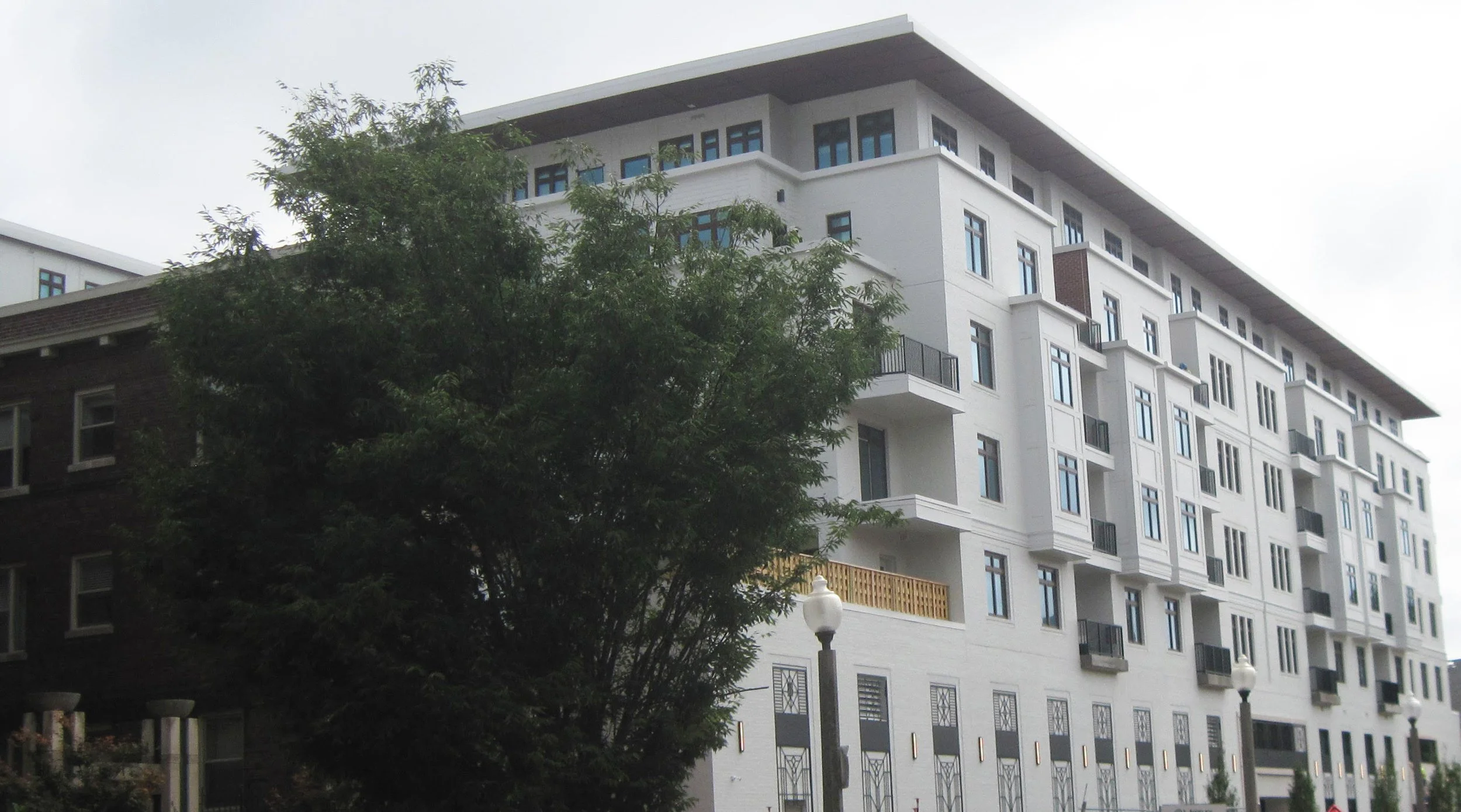
The seven-story midcentury building at 4140 Forest Park Blvd., long vacant since Goodwill’s departure, is undergoing extensive renovation and expansion. The 120,000 SF historic structure will be restored and integrated with a new 50,000 SF, four-story addition, creating roughly 163,000 SF of modern lab, office, and collaboration space tailored to mid- and late-stage bioscience startups.
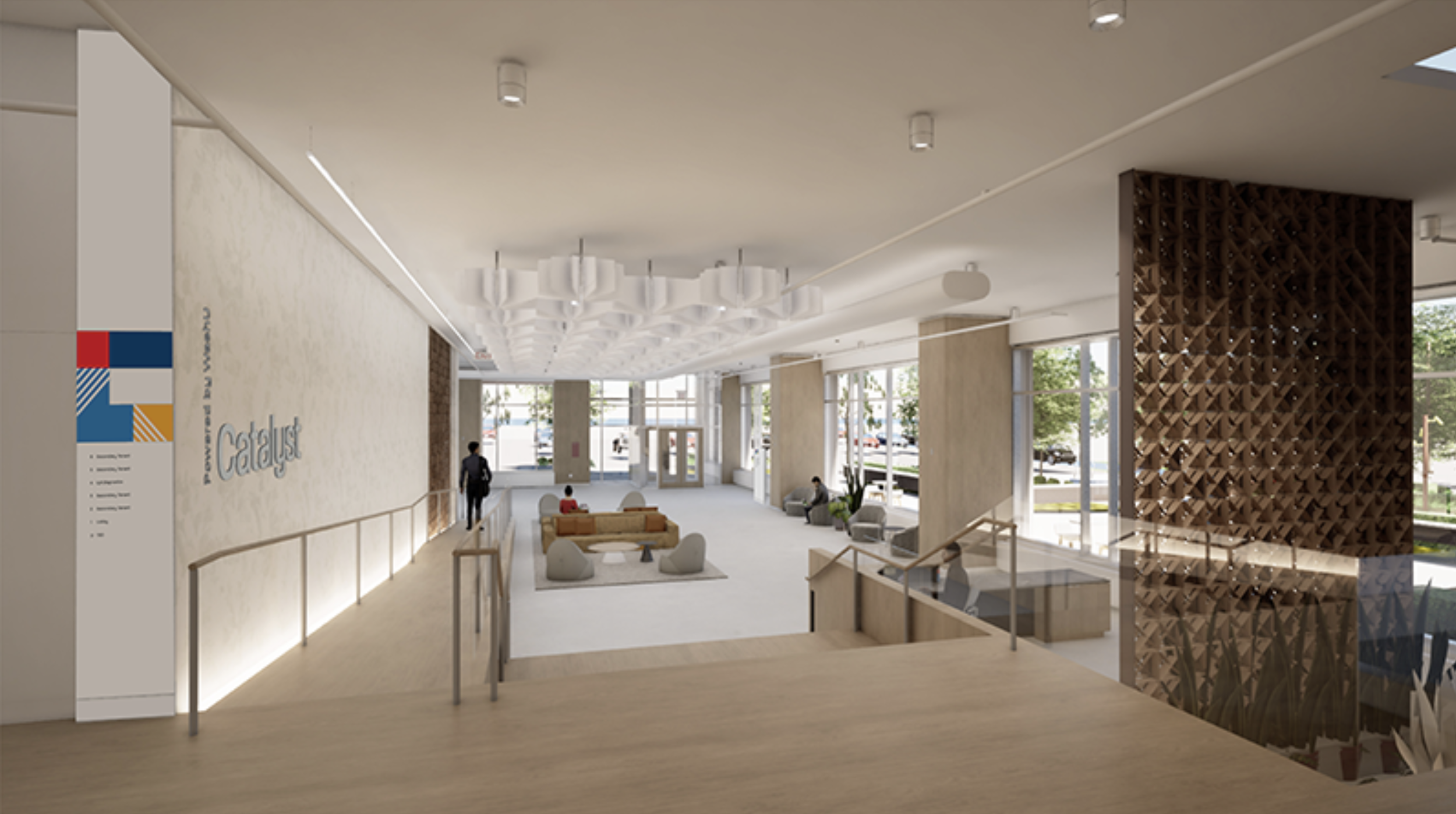
Washington University’s affiliate BOBB LLC is leading the redevelopment with HOK as the project’s architect and Tarlton as construction manager. The redevelopment aims not only to preserve architectural character — the building is on the National Register of Historic Places — but also to enhance it with contemporary amenities, including a ground-floor lobby with a coffee bar and shared meeting areas, and multiple elevators to improve access throughout the facility.
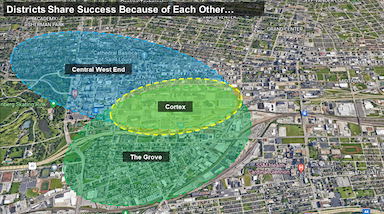
Officials describe Catalyst as graduation space — high-quality infrastructure that enables bioscience companies to scale operations beyond the early incubator phase. Cortex, the 200-acre innovation community co-founded by WashU and anchored in Midtown, has long attracted startups and established players alike by offering access to talent, capital, and facilities. Still, demand for wet labs and specialized space has outpaced supply, making Catalyst’s arrival timely for the region’s ecosystem.
C2N Diagnostics, a local success story with deep WashU roots, is the anchor tenant and first occupant. The company, known for developing advanced blood tests for Alzheimer’s disease and other neurodegenerative conditions, will lease more than 82,000 SF for its headquarters and CLIA-certified laboratory, occupying the first three floors. C2N’s expansion is expected to elevate both its global impact and local job creation.
Doug Frantz, WashU’s vice chancellor for innovation and commercialization, noted that the redevelopment represents far more than a simple property upgrade. He emphasized that Catalyst is designed to unlock new potential by reducing barriers for startups moving toward commercialization.
Cortex leaders believe the new hub will play a central role in attracting and retaining top scientific talent, helping ensure that major breakthroughs developed in St. Louis continue to grow there. Cortex CEO Sam Fiorello has described the project as a strong demonstration of regional collaboration that reinforces the city’s standing as a leading destination for biotech and life sciences.
Construction continues through 2026, with C2N’s move planned for late that year and additional lab and office spaces available for lease. As Catalyst rises from its historic roots, it embodies both St. Louis’ industrial legacy and its aspirations as a national innovation leader.
Header image: A rendering of a common area within the four-story, 163,000 SF Catalyst redevelopment in the Cortex Innovation District of WashU. Image | HOK