Redevelopment

Catalyst hub redevelopment positions St. Louis as a rising leader in bioscience innovation

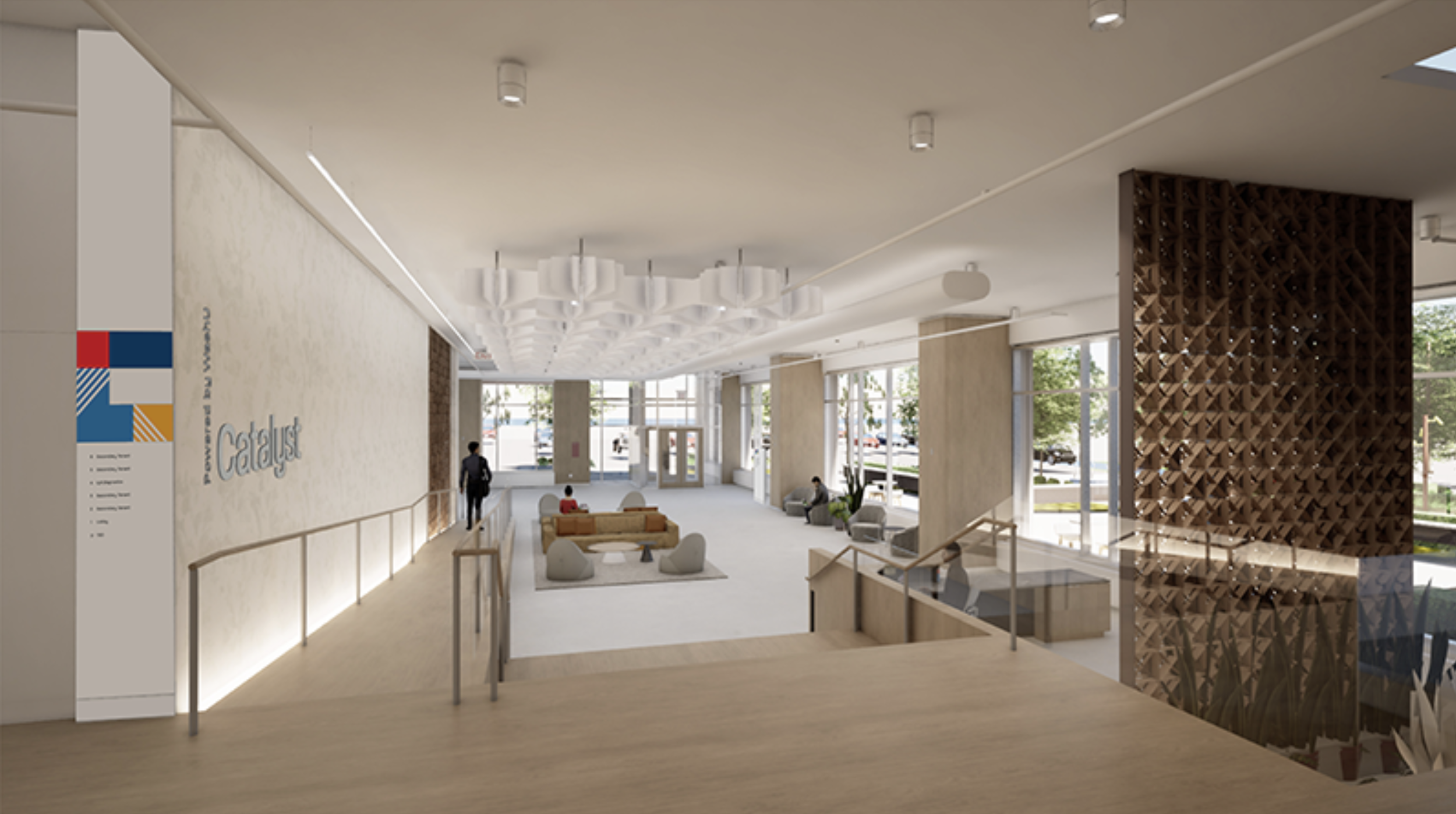
What once stood as the headquarters of a nonprofit serving people with disabilities is being reborn into a cornerstone of St. Louis’ life-sciences economy. Washington University in St. Louis and its development affiliates have broken ground on Catalyst: Powered by WashU, a $100 million transformation of the former Goodwill Industries complex into a dynamic bioscience innovation hub in the heart of the Cortex Innovation District.

The seven-story midcentury building at 4140 Forest Park Blvd., long vacant since Goodwill’s departure, is undergoing extensive renovation and expansion. The 120,000 SF historic structure will be restored and integrated with a new 50,000 SF, four-story addition, creating roughly 163,000 SF of modern lab, office, and collaboration space tailored to mid- and late-stage bioscience startups.

Washington University’s affiliate BOBB LLC is leading the redevelopment with HOK as the project’s architect and Tarlton as construction manager. The redevelopment aims not only to preserve architectural character — the building is on the National Register of Historic Places — but also to enhance it with contemporary amenities, including a ground-floor lobby with a coffee bar and shared meeting areas, and multiple elevators to improve access throughout the facility.

Officials describe Catalyst as graduation space — high-quality infrastructure that enables bioscience companies to scale operations beyond the early incubator phase. Cortex, the 200-acre innovation community co-founded by WashU and anchored in Midtown, has long attracted startups and established players alike by offering access to talent, capital, and facilities. Still, demand for wet labs and specialized space has outpaced supply, making Catalyst’s arrival timely for the region’s ecosystem.

C2N Diagnostics, a local success story with deep WashU roots, is the anchor tenant and first occupant. The company, known for developing advanced blood tests for Alzheimer’s disease and other neurodegenerative conditions, will lease more than 82,000 SF for its headquarters and CLIA-certified laboratory, occupying the first three floors. C2N’s expansion is expected to elevate both its global impact and local job creation.

Doug Frantz, WashU’s vice chancellor for innovation and commercialization, noted that the redevelopment represents far more than a simple property upgrade. He emphasized that Catalyst is designed to unlock new potential by reducing barriers for startups moving toward commercialization.

Cortex leaders believe the new hub will play a central role in attracting and retaining top scientific talent, helping ensure that major breakthroughs developed in St. Louis continue to grow there. Cortex CEO Sam Fiorello has described the project as a strong demonstration of regional collaboration that reinforces the city’s standing as a leading destination for biotech and life sciences.

Construction continues through 2026, with C2N’s move planned for late that year and additional lab and office spaces available for lease. As Catalyst rises from its historic roots, it embodies both St. Louis’ industrial legacy and its aspirations as a national innovation leader. 


Header image: A rendering of a common area within the four-story, 163,000 SF Catalyst redevelopment in the Cortex Innovation District of WashU. Image | HOK

Fire casts new doubt on Gateway South’s redevelopment vision

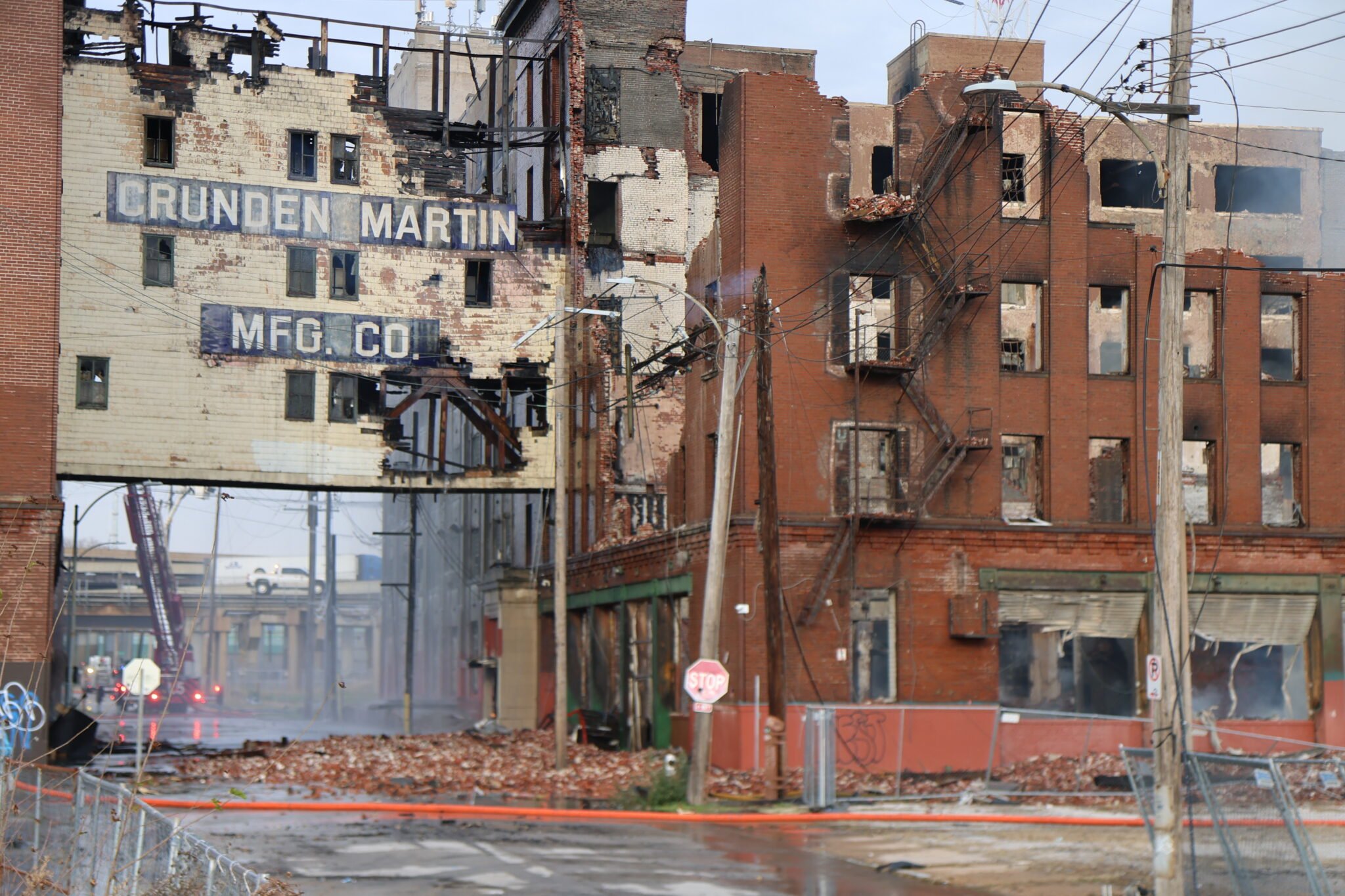
The ambitious Gateway South redevelopment just south of the Gateway Arch National Park counts among its backers several well-known development and investment firms — and those relationships will now shape how the project pivots in the wake of the devastating warehouse fire.

The master developer of Gateway South is Good Developments Group (GDG), which has assembled roughly 100 contiguous acres of former industrial land along the downtown riverfront. GDG is working in a joint venture with at least two principal investors: Vault Partners — a Houston-based investment firm — and Millstone Company, a Clayton-based real-estate and private-equity firm.

In addition, the marketing and leasing of the project’s industrial and office components have been entrusted to large brokerage firms. Cushman & Wakefield leads outreach for industrial tenants, while CBRE handles Class A office leasing — part of its original commitment to unlock up to 500,000 square feet of office space within the first phase.

The involvement of these firms will likely influence how Gateway South responds to the fire’s fallout. For example, the financing structure already relies heavily on tax incentives, including historic-preservation tax credits, brownfield credits, and property tax abatements — tools that were integral to the project’s financial viability prior to the fire. With the destruction of part of the historic Crunden‑Martin Manufacturing Company complex — once slated to form the “innovation core” of the district — developers may now need to reassess which tax credits remain applicable, or whether new public subsidies will be required.

Furthermore, the financial and reputational strength of Millstone Company and Vault Partners could prove critical — their backing makes the project more credible to prospective tenants, lenders, and public-funding authorities at a time when confidence may waver. Millstone’s involvement in particular was viewed as a coup for the relatively young Good Developments Group, giving the effort local gravitas and deep experience.

Still, the fire complicates matters. Plans to reuse and repurpose the Crunden-Martin buildings formed the centerpiece of the project’s economic case and identity. With that vision disrupted, the development team may pivot toward building new structures, or redistributing planned uses across other parcels — moves that could require renegotiating financing, zoning, and incentive agreements.

Even so, developers say the broader ambition has not changed. Backup financing — including roughly $155 million in industrial revenue bonds — remains in place for the first phase, and the project’s design and leasing partners remain committed. How quickly Gateway South adapts will depend on whether the existing partners — Good Developments Group, Vault Partners, and Millstone Company — can retool the project’s economics and attract new tenants, even as they weigh the loss of historic fabric against potential for a re-imagined district.


Header image: A massive fire last Friday at the Crunden-Martin Manufacturing Company warehouse building is still under investigation. Photo | NEXTSTL

Demolition of the Millennium Hotel marks the beginning of Cordish’s major redevelopment

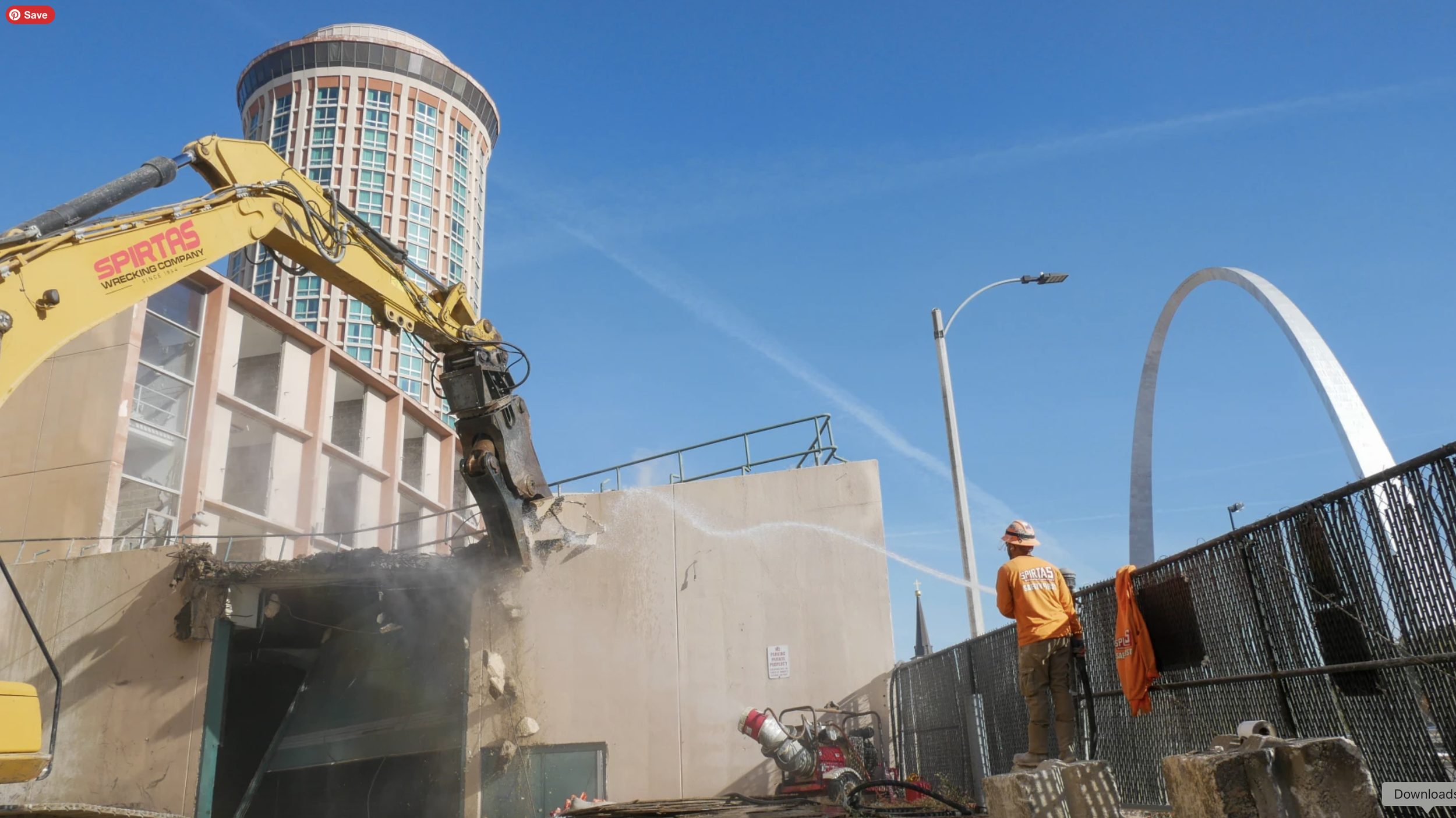
Demolition is officially underway at the former Millennium Hotel site in downtown St. Louis, signaling the tangible start of a long-planned transformation of the 28-story complex. The project is being led by The Cordish Companies, which was selected earlier this year by the Gateway Arch Park Foundation.

At an estimated cost of $670 million, Cordish’s proposed redevelopment spans roughly 1.3 million square feet and is set to include a mix of upscale residential units, Class A office space, a food hall, public event space, and an outdoor amphitheater. The plan also calls for dedicated public amenities such as landscaping, pedestrian-friendly walkways, art installations, and possibly even a facility to house the Gateway Arch National Park’s archives.

The Land Clearance for Redevelopment Authority recently gave the green light for Cordish to proceed as developer, accelerating key pre-construction steps. The Gateway Arch Park Foundation, which holds ownership of the site, has coordinated the effort alongside several public and civic partners—including the St. Louis Development Corporation (SLDC), Greater St. Louis, Inc., and planning and design experts such as PGAV.

To carry out the demolition, the Foundation has contracted Spirtas Wrecking Company and Environmental Operations Inc., which completed remediation of hazardous materials before structural teardown began. The work is being done in phases: the central tower was tackled first, followed by the south tower, and ultimately the north tower.

Officials estimate the demolition process will take one to two years to fully clear the site. Once cleared, Cordish is expected to break ground on construction, though the precise timing for full development has not yet been publicly announced.

Beyond the physical redevelopment, the Gateway Arch Park Foundation is also launching a community-driven story-collecting initiative to preserve the memories tied to the former hotel. The effort is aimed at archiving oral histories, photographs, and personal reflections, linking the site’s past to its future.

Taken together, the project—backed by Cordish, the Gateway Arch Park Foundation, SLDC, Greater St. Louis, Inc., and planning partners—promises to reimagine a key downtown location. It aims not only to deliver commercial and residential value, but also to strengthen connections between the Gateway Arch, Ballpark Village, and the heart of downtown St. Louis.


Header image: Spirtas Wrecking along with Environmental Operations Inc. begin demolition of the Millennium Hotel in Downtown St. Louis. Photo | The Gateway Arch Park Foundation

City of St. Louis begins Workhouse demolition, opening doors to future site plans

Demolition has commenced on St. Louis' Medium Security Institution, commonly known as the Workhouse, marking a pivotal step in the city's criminal justice reform efforts. The facility, operational since 1966, had been criticized due to substandard conditions and allegations of human rights violations. 

Mayor Tishaura O. Jones, who prioritized the closure of the Workhouse upon taking office in 2021, emphasized the significance of this development. The facility ceased operations in June 2021, with detainees transferred to the St. Louis City Justice Center

In September 2024, the city announced plans for the demolition, initially slated for December 16, 2024. However, environmental assessments revealed the presence of lead and asbestos, necessitating remediation and delaying the process. 

The demolition contract, valued at approximately $2.24 million, is funded through the city's building repair budget. 

Concurrently, the city is seeking community input for a memorial at the site to acknowledge those affected by the facility's history. Submissions for the memorial are being accepted until May 13, 2025. 

Looking ahead, the city is evaluating proposals for the site's redevelopment. Preliminary plans include constructing an animal shelter, conducting further environmental evaluations, and potentially relocating aspects of the city's tow lot to the area. These initiatives align with the city's commitment to repurposing the site to benefit the community and address past shortcomings.

The demolition of the Workhouse signifies a transformative period for St. Louis, reflecting a broader commitment to enhancing the criminal justice system and ensuring that past challenges are addressed constructively.


Header image: The Workhouse, a medium security jailhouse, is being demolished and prepped for redevelopment. Photo credit: Spectrum News | Elizabeth Barmeier

One Foundry Way brings modern living and historic charm to Midtown

Tenants are now settling into One Foundry Way, a transformative addition to Midtown St. Louis and the first high-rise market-rate apartments in the area in nearly 50 years. The mixed-use development, located at 3835 Foundry Way along Vandeventer Ave., represents Phase 2 of the City Foundry STL redevelopment project.

Lawrence Group led the $96 million initiative, serving as the lead architect and interior designer.

One Foundry Way builds upon the success of City Foundry STL Phase 1, a bustling hub for dining, retail, and entertainment that opened in 2021. The redevelopment revitalized a 15-acre historic foundry, used initially by Century Electric Company for motor and generator manufacturing, into a modern urban destination.

Above: A street-level view of One Foundry Way, a mixed-use redevelopment in Midtown St. Louis. Image credit: Sam Fentress Photography

One Foundry Way's eight-story residential tower rises above a six-level parking structure with 481 spaces. The ground floor features retail spaces designed to blend seamlessly with the dynamic commercial environment of City Foundry STL.

The residential portion includes 270 luxury apartments in studio, two-, and three-bedroom layouts. Interiors emphasize a blend of modern and industrial design, incorporating floor-to-ceiling windows, exposed concrete elements and warm natural materials.

Above: Inside one of the luxury apartments at One Foundry Way. Image credit: Sam Fentress Photography

Residents enjoy premium amenities such as a rooftop pool, zen garden, fitness center, lounges, bike storage, fire pits and a dedicated dog run. The design prioritizes communal and outdoor gathering spaces, fostering social connections and shared experiences. The features complement the vibrant atmosphere of City Foundry STL and contribute to its reputation as a central hub for city life.

ARCO Construction was the project's general contractor, completing the development within a year. New + Found spearheaded the effort, continuing its vision of reinvigorating Midtown St. Louis.


Header image: The open-air pool deck of One Foundry Way sits atop the enclosed parking garage adjacent to the 8-story luxury apartments in Midtown St. Louis. Image credit: Sam Fentress Photography

Downtown Chesterfield takes a step toward progress with redevelopment plans in motion

The Downtown Chesterfield redevelopment project is advancing with the approval of its site development concept plan, even as the design of its centerpiece grand staircase undergoes further refinement. Chesterfield's City Council's decision on Dec. 2 allows the ambitious multi-phase development to move forward while addressing conditions for future municipal zoning approvals.

The mixed-use project, spearheaded by TSG Downtown Chesterfield Redevelopment LLC, aims to transform the south side of I-64, east of Chesterfield Pkwy., into a vibrant urban district. Plans include a high-rise office tower, a hotel, retail spaces, residential buildings, and a 3.3-acre central park. Once complete, the district will host a bustling community with hundreds of shops and restaurants, corporate headquarters, office spaces, and thousands of residents.

Key features of the site include a five-level above-ground parking garage relocated northwest of the central park. With entrances on Green Blvd. and Downtown Chesterfield Blvd., the garage is strategically positioned to serve park visitors and amphitheater patrons. A proposed grand staircase will enhance accessibility, providing a direct pedestrian link between the parking garage and the central park. Designed for both functionality and aesthetics, the staircase will feature a 20-foot width and integrated lighting for safety and visibility.

Street infrastructure plans emphasize walkability and connectivity. Sidewalks along primary streets will be wide enough to accommodate patio seating or open-space features, allowing developers flexibility. Landscaped islands, tree-lined streets with decorative grates, and thoughtfully placed furnishings such as benches, planters, and bike racks will enhance the pedestrian experience. Cohesive street lighting and decorative fountains will further unify the district's visual identity.

Two planned roundabouts—one at Clarkson Rd. on the eastern edge of the site and another along Chesterfield Pkwy. on the west—will improve traffic flow within the development. Four major intersections within the district will be elevated and adorned with decorative pavers arranged in herringbone or basketweave patterns, creating visual interest and a sense of place. Nearby sidewalks will feature complementary accent treatments, and pedestrian paths are also being considered to improve accessibility.

The City Council's approval came with the condition that a redesign of the grand staircase must be submitted and approved before the first municipal zoning approval (MZA) is granted. An MZA is a prerequisite for obtaining building permits from St. Louis County. This condition was initially recommended during the Planning and Public Works Committee of the Whole meeting on Nov. 21.

Downtown Chesterfield's phased development aims to create a dynamic environment where urban living, commerce, and recreation converge.

As plans progress, the project's careful attention to design and functionality is poised to redefine Chesterfield's landscape, offering a vibrant destination for residents, businesses, and visitors alike.


Header image: Crews continue with the demolition of the Chesterfield Mall, making way for the mixed-use Downtown Chesterfield Development. Image courtesy of The Staenberg Group

Brentwood gives green light to $436 million Manchester Road Corridor project

Brentwood gives green light to $436 million Manchester Road Corridor project

Feature rendering credit: Green Street Real Estate Ventures LLC

It's a yes! Greater St. Louis all in on Downtown revitalization projects

It's a yes!                                                   Greater St. Louis all in on Downtown revitalization projects

Photo credit: Tiffany Cade/Unsplash

$40 million affordable housing project heads to Central City

Building on continued momentum in St. Louis’ Central City, a groundbreaking new housing project will bring attainable housing through over 160 new units - over 80 of which will be workforce-targeted rents - to the Central City’s Forest Park Southeast neighborhood.

Union At The Grove, a $40 million multifamily development, is comprised of six individual buildings on Hunt, Vista and Norfolk Avenues, between Newstead and Taylor Avenues, just east of Kingshighway.

Green Street St. Louis developed the project with support from a consortium that includes Greater St. Louis, Inc., IFF, and Washington University Medical Center Redevelopment Corp. (WUMCRC), a partnership between BJC Healthcare and Washington University School of Medicine in St. Louis.

“As we focus on inclusive economic growth for our region, the project sends a strong signal about what is being done to begin a resurgence in the Central City in St. Louis,” said Valerie E. Patton, Chief Diversity, Equity and Inclusion Officer for Greater St. Louis, Inc. and president of the Greater St. Louis Foundation.

In addition to Union, recent developments highlighting the resurgence in the Central City include the first fully protected bike and pedestrian infrastructure in the city that will connect the Tower Grove Park and the Shaw neighborhood to Forest Park Southeast and Cortex; continued significant development taking place in and around Cortex itself; the construction of the new NGA West headquarters, projected to open in 2025; and additional hundreds of millions of dollars of new and adaptive re-use real estate development underway in the City. As has been reported in recent years, more than $8 billion in development is underway, planned or has been recently completed in the City.

“Union At The Grove is a natural extension of Green Street’s continued commitment to the City of St. Louis and Midtown redevelopment through partnership and community revitalization,” said Joel Oliver, Green Street senior vice president for development.

Developing new workforce housing is critical to inclusive growth, and approximately 52 percent of the Union’s units will have attainable rents so that health care employees and medical school staff can live near where they work. The units with attainable rates will be blended throughout each of Union’s six unique buildings.

Amenities include private entrances, courtyards and walking paths; shared rooftop terraces, balconies, and barbecue areas; and bike storage, mail, and secure package areas. The properties are walking distance from Forest Park, Tower Grove Park, Cortex and the Washington University Medical Campus.

“Social, environmental and economic inequities are recognized as major contributors to health disparities,” says Richard Liekweg, BJC HealthCare president and CEO.

“This project demonstrates that health care organizations can play a part in strengthening our neighborhoods and communities. Having new, attractive and attainable housing adjacent to our academic campus where some 20,000 employees work will facilitate access to jobs, while also strengthening communities,” Liekweg said.

Beginning in 1996, WUMCRC has purchased properties in the neighborhood with the long-term goal of attracting developers with strong records in redeveloping and supporting mixed-income, diverse communities. Union At The Grove is the final segment of this effort to improve the quality of life for residents in neighborhoods that border the Medical Campus. WUMCRC also has supported neighborhood investments in safety, jobs, education and the development of The Grove, the entertainment and commercial district along Manchester Road.

“In recent years the market has done a great job supplying high quality market rate and we have been able to find resources to build and maintain low-income housing units in the neighborhood. This project fills in the missing middle – those who earn too much to qualify for subsidized housing and too little to afford market housing,” said Hank Webber, Washington University’s executive vice chancellor and chair of the WUMCRC board.

Construction is slated to start February 1, 2020 with an official groundbreaking ceremony targeted for spring of this year. The project did not make use of federal or state tax credits or incentives and is applying all funds from the 10-year tax abatement it received into the newly formed Newstead West Community Improvement District for the purpose of making infrastructure improvements that would otherwise not be completed. These improvements include:

  • Resurfacing of streets and alleys

  • Rebuilding sidewalks and curbs

  • Installing new streetlights

  • Helping heal the City’s grid by reopening the cul-de-sacs on Vista and Norfolk at Taylor

“This development checks a couple of important boxes for our community. It adds density to support our efforts for more environmentally sustainable development and less car dependency. It also has a workforce housing component to assure our neighborhoods remain economically diverse. Both are core values of the 17th Ward,” said 17th Ward Alderman Joe Roddy.

Development of Union is being led by Green Street, which has advanced approximately $100 million worth of other projects in the Forest Park Southeast neighborhood. Green Street Building Group is managing project construction with said construction financing provided by Colliers International, arranged by Kyle Howerton of George Smith Partners.

IFF provided Newstead West Community Improvement District a bridge loan to provide upfront funding for infrastructure improvements that would have otherwise been available spread out over a decade.

CentralCitySTL is an initiative of the newly formed economic development organization Greater St. Louis, Inc. that combines the work of Arch to Park and Design Downtown STL. The Arch to Park Equity Fund made a patient capital investment to help make this major development possible.

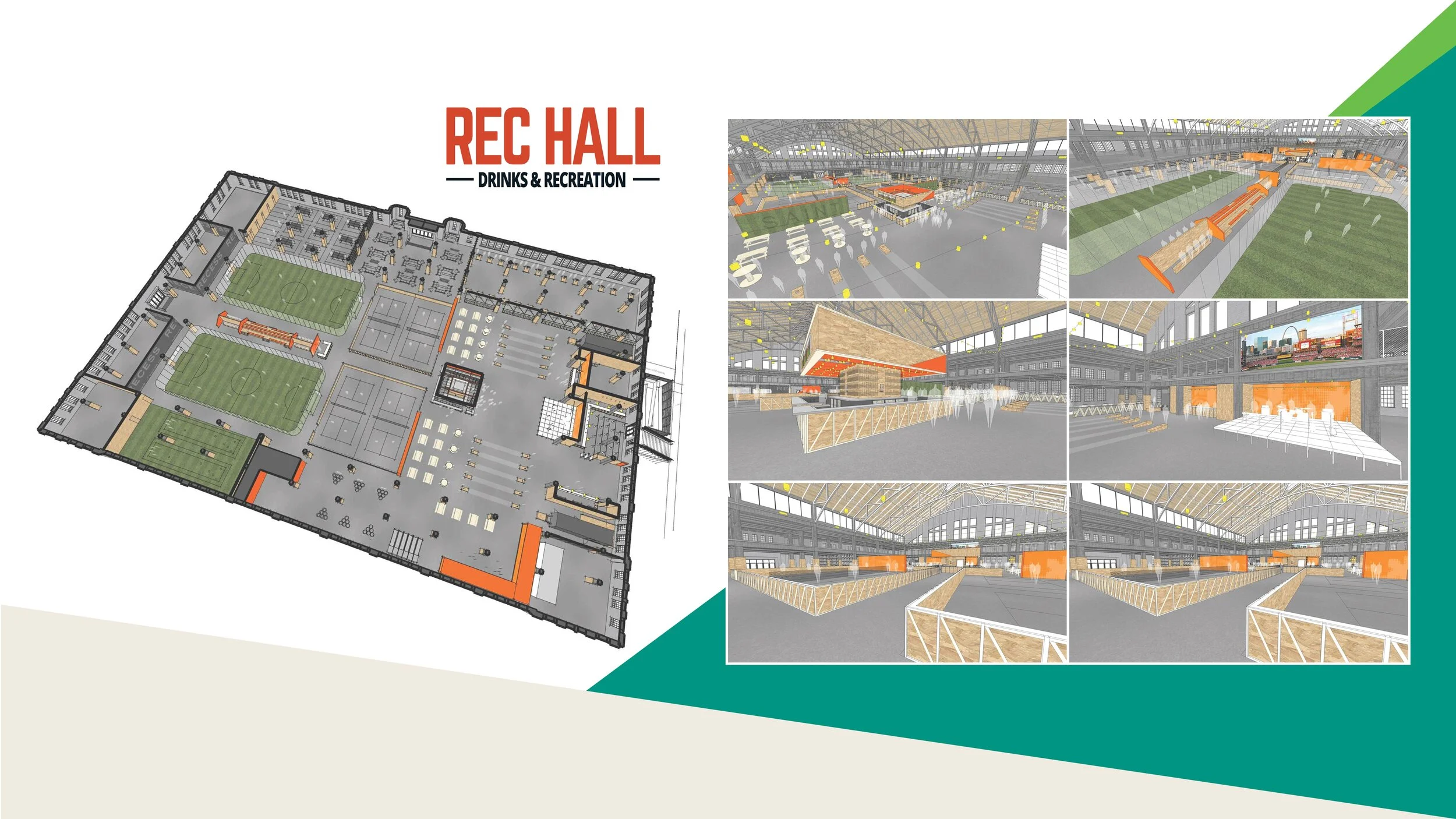
Rec Hall to anchor $55 million redevelopment at The Armory

Rec Hall to anchor $55 million redevelopment at The Armory

Rendering credit: HDA Architects

Green Street announces 'The Oscar' mixed-use development

Green Street Development has purchased a 17.5 acre site to redevelop into a high-density, mixed-use development at the eastern side of Sheboygan, Wis.

Located at 1440 S. 16th St., “The Oscar” will join the current site of the Van Der Vaart Concrete Company, formerly known as the Oscar Zimbal Brick Co.

The Oscar will consist of 240 apartments, a new Kwik Trip and a 1.5-acre lot for future redevelopment. The multifamily portion will provide a mix of one, two and three-bedroom apartments across three buildings with underground, temperature-controlled and secured parking.

The Oscar is a workforce housing development and will offer all of the top amenities and features that are expected in a new Class-A, residential community - but with a discount to other new apartments in town.

Van Der Vaart is moving just south of the site, allowing for The Oscar development, but will remain a member of the Sheboygan Economic Community.

“Green Street and our community partners share a vision to transform this site into its highest and best use, creating a unique sense of place while continuing to support local industry,” said Joel Oliver, senior vice president of development for Green Street St. Louis.

The Oscar is the largest known housing development in the city of Sheboygan and Green Street’s largest multifamily project to date. Consistent with Green Street’s track-record of award-winning, urban projects, the intention for the overall development is to provide a neighborhood-like feel while integrating distinctive architectural features to establish an exceptional community.

“The Oscar brings a new choice in living to the Sheboygan area as demand for residential and mix-use development quickly grows. Rosemann is excited to design this distinctive community and looks forward to collaborating with Green Street and teaming up with its project partners, said Jarrett Cooper, vice president/studio director with Rosemann & Associates, P.C., St. Louis, who is the architect on the project.

Other project partners include general contractor, ARCO Construction and project engineer, Stock and Associates. Colliers International is providing the construction loan and BMO Harris is participating as an equity partner.

The first phase of The Oscar is scheduled to open in September 2021.