Last week KCRAR Commercial hosted its annual commercial real estate forecast to discuss the local and national state of the commercial real estate market as well as projections for what lies ahead.
Dr. Ted Jones, senior vice president/chief economist at Stewart Title Guaranty Company; Abby Corbett, managing director/senior economist at CoStar Group; and Danielle Grimelli, market analyst at CoStar; joined moderator Max Wasserstrom, CFA, senior vice president at Block Real Estate Services for the virtual presentation.
Looking at the big picture, as challenging as 2020 has been, the news is not all unfavorable. Jones began by pointing out that Goldman Sachs predicts 2020 will see a total drop in GDP of 4.6%, but that GDP will be up by 6.2% in 2021.
“Folks, that is a recovery that most of us would have only dreamed of when we shut down the country last March and April,” Jones said.
“Do you want to know where the economy and the demand for commercial real estate is going? It’s all about jobs,” said Jones.
In 2020, the country on average lost every job that was created since 2010 when the country started to pull out of the last recession. However, Jones said jobs are coming back at a much faster pace than anticipated.
As we know, job losses have hit the leisure/hospitality segment of commercial real estate the hardest, losing one-half of all their industry-related jobs in March and April. Although some of these jobs have been recovered, Jones said we will not get all leisure and hospitality jobs back for probably 3 or 4 more years. Citing Business Travel News, he said hotels won’t get back to pre-pandemic occupancies until 2024 and room rates until 2025.
On a local level, Missouri lost 11.9% and Kansas lost 10% of jobs in the early months of the pandemic, but Missouri since has recovered 58.6% of those lost jobs and Kansas 52%. Jones said it will be a few years until all the jobs are recovered.
Jones said one of the major factors helping economic recovery is cheap energy. The oil industry has increased production by nearly 40%, but it has cut jobs by 20%, which is why the oil industry continues to survive.
“I guarantee you every business in America right now is doing this exact same thing. And that’s why I think it’s going to be a year or two or three before we get all these jobs back,” said Jones.
Jones said the pandemic has accelerated trends that were already underway.
“We were already buying e-commerce. We were already mitigating and minimizing the demand for Main Street retail store front properties. But look what we’ve done. We’ve fast forwarded this thing. We actually zoomed it up,” said Jones.
“We’re selling more stuff than any time in history. But, what we’re buying is different, and where we buy it is different,” he said.
In May, the CEO of OpenTable predicted that 25% of all restaurants would permanently close due to the pandemic, but the American Restaurant Association’s Independent Restaurant Coalition forecast in June said that 85% of independent restaurants (which comprise 70% of all restaurants) may permanently close by the end of 2020, which would constitute a loss of 59.5% of all restaurants.
Turning to commercial real estate sales, Jones noted that the decline in U.S. sales in the third quarter of 2020 was 67%, almost the same decline experienced in the third quarter of 2008 (66.6%). Kansas City, however, has fared better. In the third quarter of 2008, Kansas City saw a 68% drop in sales; whereas, in the third quarter of 2020, the drop was only 50%.
“Kansas City is doing quite well holding onto sales,” Jones said.
Jones noted that, in our lifetimes, borrowing has never been cheaper, but commercial real estate has never been more risky.
“We don’t know what it’s worth because we don’t know who is going to pay rents. We know that we need less office space, and we know we need less retail space,” said Jones.
Jones predicted that the country will be out of its recession by the third quarter of 2021.
“The good news is that we entered this downturn with the best wage growth in ten years. What’s helping us out are low interest rates and cheap energy unless you are in an oil and gas producing area,” Jones said.
“I think office and retail demand are forever reduced. It’s a track we were already on. I think industrial is forever up. We’re going to build a lot more stuff. I think we’re going to build a lot more stuff in Mexico, Canada and the U.S.,” he said.
Corbett said that as a result of pandemic job losses, personal consumption spending plummeted by 19% before rebounding in the second quarter. Even so, she said, consumers are spending approximately 3.4% less than pre-pandemic. In addition, spending on services, the larger component of total expenditures, is still more than 7% below February levels.
Total retail sales may have bounced back, said Corbett, but not all categories have fared well. E-commerce has grown 21.6% since February, while electronics and appliance stores, clothing and accessories stores, gas stations and food services and drinking establishments have seen negative growth.
Corbett said CoStar predicts that the country will get back to the end of 2019 GDP output level by about the end of 2021.
“But, we’ll remain smaller than we would have without the pandemic for quite some time,” Corbett said.
With respect to the employment outlook, Corbett said jobs will come back over the next couple of years and will recover to end of 2019 levels by the end of 2022 and then flatten out.
“And also never getting back on a pre-pandemic growth path,” she said.
Corbett said that CoStar’s forecasts assume no new virus outbreaks and shutdowns in the fall and winter and a fiscal relief package of approximately $1.5 trillion for this year.
“Both those assumptions as of right now, do not appear very likely so the forecast is then sort of tilted to the downside,” Corbett said.
She added that the third risk to the economic outlook is the high level of corporate debt.
“There are still millions of highly indebted firms who are increasingly seeking to avoid defaults either by undercutting cost cutting or reducing head count and capital expenditures. . . . We’re seeing that in retail obviously with retailers reducing their footprints, closing stores. We’re seeing it on the office side,” Corbett said.
Grimelli, a market analyst for the Kansas City market, discussed the state of Kansas City’s economy and employment. She said job losses were so extreme that it ate away at the area’s five year growth.
With respect to the metro’s multifamily market, Grimelli noted that there is still quite a bit of supply underway which has been absorbed well, depending on where it’s located. Multifamily properties located in downtown Kansas City, the Plaza area and midtown are suffering.
“We’ve brought on the majority of inventory there in recent years so that’s contributing to higher vacancy rates along with the fact that the live-work-play [tenants] are confined to their homes. So now we’ve seen this exodus from the urban core areas out to more spacious areas in the suburbs like Johnson County,” she said.
Grimelli said the multifamily daily asking rents saw an almost immediate dip when the pandemic hit, but they’ve recovered pretty well across Kansas City.
She predicts that there will be slow rent growth through the end of 2020, with rent losses pushed off into 2021.
However, that rent growth recovery is dependent on “how we handle this pandemic, how we’re able to socially distance, whether we get a vaccine, how we get stimulus deployed,” Grimelli said.
Grimelli said that the metro area has seen a reduced demand for office space, but that trend was already under way when the pandemic hit. And, sublet space on the market for the office sector has increased dramatically, Grimelli said.
“We already have seen rent losses in the office sector. We expect those to continue going forward before we would start any sort of recovery,” she said.
Grimelli predicts that the Kansas City area will experience a severe downside going forward in the retail sector, including in retail rent growth. There is very little retail space under construction, and Kansas City retail investment was already slowing when the pandemic hit.
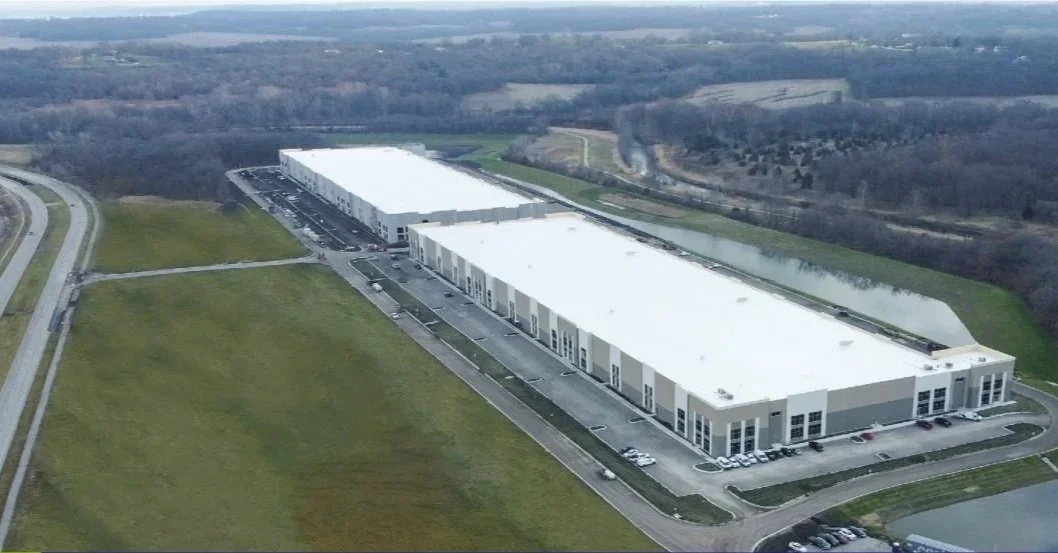
Kansas City’s industrial market has the strongest outlook, and Grimelli predicts a moderate upside. Vacancies are rising slightly because there is some significant inventory underway.
Grimelli also expects a slight decline in industrial rent growth heading into the end of 2020 and early 2021 before a strong turn around.