Northpoint's $60 million CORE apartment complex heads to Berkley Riverfront

NorthPoint Development's $60 million apartment complex, CORE, is heading to the Berkley Riverfront area in Kansas City, Mo.

The Port KC board unanimously approved the development earlier this week, which includes a revenue bond for up to $49 million in financing. The bond will be repaid by NorthPoint and its financial partner in the project, Northwestern Mutual.

CORE, an acronym for Connecting Our Riverfront to Everyone - also named by NorthPoint - will be the second apartment development in the Berkley Park area and Northpoint's third development in downtown Kansas City in the past couple of years.

The 355-unit community will showcase studio, one- and two- bedroom apartment homes offering a modern and convenient lifestyle within the urban core.

Amenities include a heated, saltwater swimming pool, poolside pickleball and bocce ball, a two-story fitness center and yoga studio, a library lounge, private conference rooms, a 16-ft indoor rock climbing wall, a virtual sports simulator, a WIFI lounge with gaming systems, co-working spaces and a pet spa.

Apartment home finishes will include custom melamine cabinetry, stainless steel appliances, modern backsplash, wood-plank flooring, oversized windows, keyless entry and modern hardware and lighting.

The NorthPoint development includes eight acres, previously owned by Port KC, just east of the Bar K dog park, restaurant and bar. Additional plans include adding a private street through the development as well as 70 parking spaces for public use, including Bar K patrons.

Plans to extend the KC streetcar to the Berkley Riverfront area is also in the works, according to Port KC.

Construction is scheduled to begin this summer, with the first phase of the apartments estimated to be complete in Fall 2021. The entire development is estimated to be complete in Fall 2022.

To view a complete rendering portfolio of the CORE Apartments, you may visit NSPJ's website here.

Dentons shares observations of COVID-19 impact on U.S. commercial real estate

Real estate practice attorneys from Dentons, the world’s largest multinational law firm with $2.36 billion in annual income, recently held a webinar to share challenges their clients are experiencing due to COVID-19.

The live webinar included insight from William Taxay, Dentons, Pittsburg, Tandy Patrick, Dentons, Louisville and John Snyder, Dentons, Kansas City; and was moderated by David Quam, public policy group, Dentons, Washington, D.C.

Taxay began by addressing challenges faced by buyers, sellers, owners and developers and the logistical issues involved with closing transactions during a pandemic. For example, finding appraisers, recording offices and notaries is no longer an easy task.

Although some states have adopted electronic notary services (Kansas adopted electronic notary in 2005 and Missouri recently signed off on it on April 6, 2020), something as simple as recording a deed or initiating a title search, is now challenging in some jurisdictions. 

New development, which requires planning commissions, zoning commissions and local council meetings to hold a public meeting before moving forward, is inevitably going to slow down.

“We are still closing deals (because) we were signing up deals before this started and during this (pandemic),” Taxay said.

Patrick discussed issues with landlords and tenants, as many tenants are giving notice that they are unable to make their next payment. These notices have precipitated a review of existing leases by both landlords and tenants.

“It’s no surprise that most of our force majeure clauses in current leases do not mention the word ‘pandemic.’ Some leases don’t even have a force majeure clause. Some with this type of clause expressly carve out rent and require the tenant to continue paying all monetary obligations notwithstanding the occurrence of a force majeure event,” Patrick said.

If a lease doesn’t contain a force majeure clause, some considerations to look into include:

-Possible actions against personal guarantors on the lease

-Existing business interruption insurance that may provide coverage in this situation

-Other non-monetary existing defaults by the tenant under the lease

-Whether the landlord can apply tenant’s security deposit

-Whether the landlord or tenant in default based on other lease covenants such as continuous operation, abandonment, co-tenancy requirements or interruption of essential services at the property.

“I think most of our force majeure clauses in current leases are likely to be reviewed and revised in the days to come to address specifically rent abatement during a pandemic virus event and it may be a good idea to include a pre-negotiated agreement or formula regarding suspension of rent as well as perhaps requiring business interruption insurance that would cover pandemic events," Patrick said.

Lenders and borrowers are facing their own challenges as well.

“Some federal banks are allowing loans to be closed without appraisal for 120 days because appraisals might not (hold the same value) right now,” Snyder said.

While the borrowers are requesting to delay payments and/or reduce interest rates, lenders are in need of cash escrow and additional collateral, in some cases.

“At some point the reality is, there will be forbearance requests. There will be massive loan defaults. We heard one loan servicer that already has 1,000 forbearance requests in the pipeline. The hotel industry is getting hammered, with occupancy down 70 percent and revenues down 80 percent from this time last year, a historic hit to the industry,” Snyder said.

 _____________________________________________

If you are interested in learning more perspective on COVID-19 and other current issues, you can sign up for Dentons continuing event series here.

Kessinger Hunter sees explosive post-pandemic opportunities for industrial marketplace

Before diving into detail regarding the state of the market “post COVID-19,” it is important to share that Kessinger Hunter employees and brokers are working remotely and doing their very best to stay active and engaged in business while taking care of their families, communities and clients first.

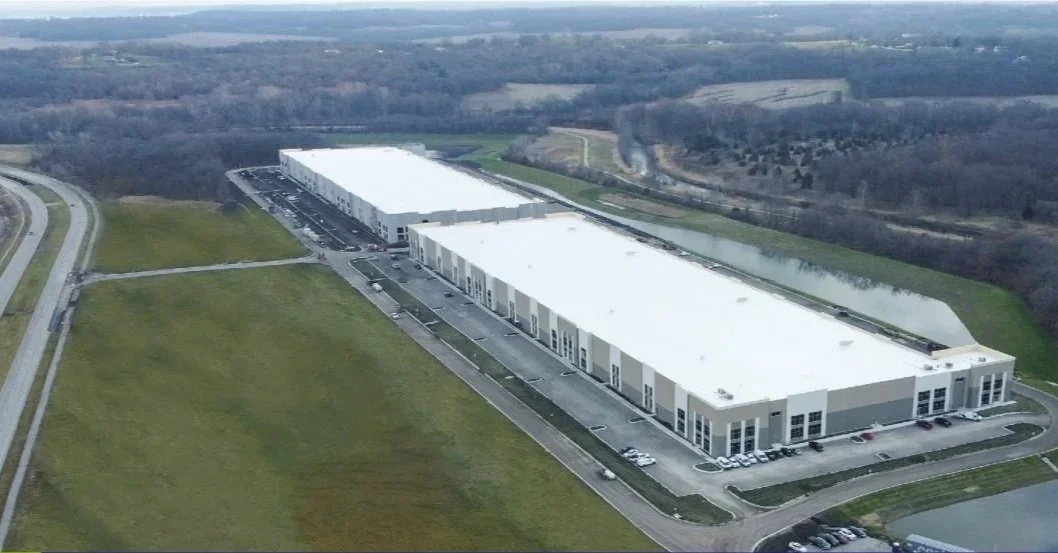
Many industry experts have been discussing what the commercial real estate world will look like once the virus passes and all the stay-at-home orders are lifted. Many of the national brokerage houses have held calls pontificating about the difficult times ahead for commercial real estate once the pandemic has passed. However, leaders and their discussions around the industrial space are concurring, and Kessinger Hunter agrees, that the bulk industrial marketplace will be stronger than ever.

Market conditions suggest three things are going to drive industrial real estate. All will put upwards pressure on space demand and rents.

E-commerce – companies lacking online capabilities or an online presence are missing sales during the stay-at-home orders and are going to be proactive in establishing online capabilities for customers and clients moving forward. Exponential growth is expected in the space these companies lease. Real estate economists project for each $1 billion of new e- commerce business that is created, it drives an estimated need for 1.25 million SF of new industrial space. This growth alone is expected to create another 900 million SF of demand.

Just-in-time warehouses – these warehouses typically only maintain enough inventory on hand to be able to deliver “just-in-time” to the end users. It is anticipated that these operators will add about 5% to their inventory on hand in the future. This is projected to create new demand for 1.2 billion SF of additional warehouse space.

Near shoring – this group of businesses has been hurt by having manufacturing outside of North America. These companies are predicted to bring more manufacturing to the US which will give them greater control over their logistics. This will especially affect the Midwest area of the U.S. where the north-south supply chains go from Mexico to Canada.

It is for these main reasons that Kansas City, and the entire country at large, will see explosive growth once the world returns to “the new normal.” While industrial brokers and developers ride out this difficult time and prioritize taking care of family, the community, and clients, they must also be prepared to keep up with the new industrial norm.

________________________________________

Daniel B. Jensen, SIOR is a principal for Kessinger/Hunter & Company, LC. Dan specializes in industrial brokerage and development on both a local and national level.

Dan is an inductee of the Midwest Real Estate News magazine 2016 Commercial Real Estate Hall of Fame, a member of the Society of Industrial and Office Realtors (SIOR), a member of the KC Area Development Council (KCADC), a board member of the Olathe Economic Development Corporation (EDC) and a member of the Council of Supply Chain Management Professionals (CSCMP). Dan has been active in commercial real estate since 1985.

If you are interested in submitting a guest column for the MWM Newsletter publication, please send to lisa@metrowiremedia.com for consideration.

QuikTrip announces new travel center in Gardner

QuikTrip Corporation (QT) has announced plans to build a new QT Travel Center in Gardner, Ks. at the southwest corner of South Gardner Road and West 188th Street.

“With KDOT and the City of Gardner making the investment to improve the interchange at I-35 and Gardner Road, it opens up the south I-35 corridor for more growth. The location is truly ideal,” said Greg Martinette, president of Southwest Johnson County EDC.

This will be QT’s second location in Gardner, but the first travel center in the area.

“We have a stellar relationship with QuikTrip, and we are thrilled they have chosen to extend their services to the south end of Gardner. QuikTrip is at the heart of the city and an asset to our community,” Mayor Steve Shute said.

KDOT will provide $3.925 million in funding for Phase One to realign 191st St. west of Gardner Rd. and signalization of the intersection ramps. An additional $6 million will be granted for Phase Two for the replacement of the existing Gardner Road Bridge over I-35, with construction set to start in 2022.

KDOT is currently designing a diverging diamond interchange for the area, an emerging concept in roadway design that aims to eliminate left-hand turns into oncoming traffic in an effort to increase safety.

“The location is a perfect fit for the expansion of our Travel Center Network. We hope to have the store open by Spring or Summer 2021,” said Jeremy Crosby, real estate manager for QT.

PURE and simple ways to prepare for office return

As you read this, you’re probably sitting at your dining room table, your living room sofa or some make-shift office in your home.  It may not be designed to be as efficient as your office’s workspace and it may lack good ergonomics, but it is comfortable and safe and you have learned to adapt to your environment to be productive.   

Since forever in time, office spaces existed so that employers could create “work-focused” environments, where productivity could be managed, where workers could communicate more effectively and where collaboration and camaraderie are encouraged.   

In recent years, however, as mobile technologies advanced, more progressive companies embraced the idea of teleworking as a significant way to save in real estate costs and as a way to attract a more mobile and diverse workforce.  Yet, for some industries, and for some businesses, the idea of a full-time remote workforce is still years away. In 2018, less than 25% of the U.S. workforce worked some hours from home on an average day.   

The COVID-19 pandemic, and stay-at-home mandates, thrust all of us into the workplace of the future.  Everyone quickly learned how to create a work-focused enclave in their home.  We learned how to adjust our behaviors and our expectations. And by now we all realize that we can perform our work using a myriad of remote devices.  And technology, not proximity, allows us to communicate, as well as collaborate.  

Unfortunately, the future is not here, and many of us will be going back to the office within the next few weeks.  If COVID-19 is still transmittable, how can workers be expected to go back to the office? What will our employers do to our office environment to reduce the spread of pathogens?  How can we make sure that our co-workers remain respectful of our personal space and continue to social distance? Will it be the same? 

As employers prepare for the end of the quarantine and the work-from-home experiment comes to an end, our fears are providing good fodder for designers, workplace consultants and office furniture manufacturers. 

In the not-so-distant future, workplace design may be reflective of the lessons learned during the pandemic of 2020. There is no reason to delay. In the short-term, employers can make some immediate changes, making the workplace appreciably safer, with little associated cost.

Employers will need to strengthen the distinction between private and shared space. Over the last decade, these lines have blurred and employees will begin to demand more privacy in order to feel safe while doing their work.    Employers can make available more private/restricted areas where employees can go to feel safe, protected, and in control of their environment. 

In the open plan work areas, employers can increase the distance between workers by spreading them further apart or by flipping the orientation of their desks. Shared “hot-desking” should become a thing of the past.  It will be essential in some cases to add cleanable/wipeable privacy screens to help reduce the transmission of pathogens via droplets or aerosolized particles.

With the shrinking of personal workspaces over the years, offices have incorporated collaboration spaces for thought-sharing, idea generation and social interaction.   These will continue to be critical to maintain the moral and productivity of employees working in already cramped personal spaces.  

But how will these look post-COVID-19? The size of collaboration spaces may shrink to limit the number of people using them.  Some collaboration spaces may even have restricted uses to control the number of people who have access.  Furniture may be spread further apart and be designed with antimicrobial fabrics and finishes for easy cleaning. Cleaning supplies could be readily available for users to clean potentially contaminated surfaces.  Improved air filtration systems can be installed to help eliminate the spread of airborne pathogens. 

Employers should consider placing sanitizer dispensing stations throughout the office, especially in social or shared spaces and near break rooms and bathrooms. Over the past month we’ve become accustomed to having antibacterial sanitizers within arm’s reach, at the grocery store, in our automobiles, our purses or bags and around our home.  We are already beginning to change our behavior.  Company-provided sanitizer stations are an effective and inexpensive way to encourage better hygiene.  

Businesses should adopt or modify workplace policies regarding better hygiene, workspace cleanliness, and safe-distancing. Stricter guidelines should be implemented forbidding an employee to come into the office if they, or someone in their family, is a carrier of a potentially contagious virus.  Adopting teleworking protocols after COVID-19 should be an easy first step in increasing employer’s openness to allowing remote work while an employee is convalescing or caring for others.   

Environmental branding companies and flooring manufacturers are quickly innovating products that can be integrated into the interior design of a workspace that will provide visual cues, reminding people of safe social distancing, encouraging hand-washing, and that route people through an office in a way that mitigates the risk of transmission of viruses. These product will help keep our workplace essentially the same, but they will be a constant reminder to everyone how expectations have changed the way we work. 

Many of these products are available for immediate application and the ideas are simple to implement. Employees returning to the office will want to find that their workplace is safe, but that the “new-normal” is still a place where work gets done, is fun and where co-workers can engage and share ideas.  The key to the efficacy of any solution will be in how we change our behaviors and tendencies. 

Jean-Paul Wong is president/CEO of PURE Workplace Solutions, located at 3525 Roanoke Rd in Kansas City, Mo. PURE provides commercial furniture solutions and workplace consulting for all work environments including office, healthcare, education, hospitality and government. 

If you are interested in submitting a guest column for MWM Newsletter publication, please send to lisa@metrowiremedia.com for consideration.